The Evolutionary, Metabolic, and Pathological Reality of Feline Inappetence: Why Rice is Not a Viable Nutritional Strategy for Anorexic Cats
1 week ago
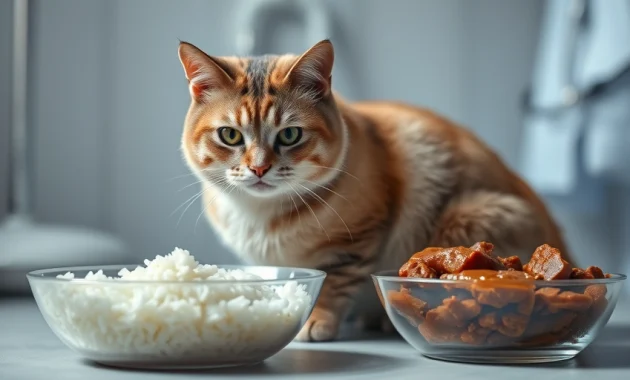
When a companion cat (Felis catus) experiences acute or chronic loss of appetite—referred to clinically as inappetence or anorexia—owners often look for creative immediate dietary solutions. In human medicine, a bland diet consisting of boiled white rice is a standard remedy for digestive upset. This practice leads many to ask: Can cats eat rice to stimulate their appetite, or to serve as a temporary meal replacement during bouts of illness?
From a clinical and evolutionary perspective, feeding rice to an inappetent cat is not only biologically inappropriate but can actively accelerate metabolic crises. Cats are obligate carnivores. Their internal anatomy, enzymatic pathways, and liver metabolism are strictly adapted to process animal tissues, not plant-based carbohydrates.
This comprehensive guide analyzes why felines cannot utilize rice effectively, the life-threatening risks of prolonged fasting, and the correct clinical protocols to restore nutritional balance in a sick cat.
The Obligate Carnivore Blueprint: Feline Evolutionary Biology
To understand why rice fails as a supportive food for sick cats, we must evaluate the unique physiological constraints of the feline metabolic system.
                  [Feline Macronutrient Architecture]
                                   │
         ┌─────────────────────────┴─────────────────────────┐
         ▼                                                   ▼
[Enzymatic Adaptations]                            [Hepatic Constraints]
- Minimal pancreatic amylase.                      - Low glucokinase activity.
- Complete absence of salivary amylase.            - Inability to downregulate protein-
- Reduced intestinal disaccharidases.                cleaving liver enzymes.
The Absolute Absence of Carbohydrate Requirements
Unlike omnivores (humans and dogs), cats have zero dietary requirements for carbohydrates. Over millions of years of evolution, the ancestral wildcat (Felis lybica) survived on a strict diet of small prey—birds, rodents, and insects—which typically contains less than $2\%$ to $10\%$ carbohydrate content on a dry matter basis.
As a result, the feline genome shed the genetic machinery required to process complex starches efficiently:
-
Salivary Amylase: Cats do not produce salivary amylase. The biochemical breakdown of carbohydrates cannot begin in the mouth; any ingested rice enters the stomach completely un-pre-digested.
-
Pancreatic and Intestinal Limitations: Felines express very low levels of pancreatic amylase and intestinal disaccharidases (like maltase and sucrase). The small intestine cannot efficiently break down the long-chain starches found in grains into simple glucose molecules.
-
Hepatic Glucokinase: In the liver, the enzyme glucokinase is responsible for processing large amounts of glucose after a high-carbohydrate meal. Cats exhibit minimal hepatic glucokinase activity. Instead, they rely on gluconeogenesis—the continuous synthesis of glucose from amino acids (proteins) and glycerol (fats)—to maintain stable blood sugar levels, regardless of dietary intake.
The Pathophysiological Impact of Rice Consumption
When an owner feeds rice to a healthy or sick cat, the plant starch enters an environment ill-equipped to handle it. This mismatch leads to several physiological issues:
[Ingestion of Boiled Rice] ──► [Unabsorbed Starch in Intestines] ──► [Bacterial Fermentation]
                                                                             │
       ┌─────────────────────────────────────────────────────────────────────┴─────────────────────────────────────────────────────────────────────┐
       ▼                                                                                                                                           ▼
[Osmotic Diarrhea]                                                                                                                          [Dysbiosis & Volatile Gas]
Water is drawn into the intestinal lumen,                                                                                                   Pathogenic bacteria multiply, causing
worsening dehydration in sick cats.                                                                                                        severe abdominal distension and pain.
Osmotic Diarrhea and Gastrointestinal Distress
Because the feline small intestine cannot rapidly break down and absorb rice starches, the undigested carbohydrates pass directly into the large intestine.
-
Osmotic Fluid Shifts: The presence of large starch molecules alters the osmotic balance within the colon, drawing water out of the body and into the intestinal tract. This results in watery, voluminous diarrhea. For an already inappetent, dehydrated cat, this accelerated fluid loss can trigger acute renal stress.
-
Microbiome Dysbiosis: The unabsorbed rice becomes an abundant food source for opportunistic colonic bacteria. Rapid bacterial fermentation produces high levels of volatile fatty acids and gases, leading to painful abdominal distension (flatulence), cramping, and vomiting—which further suppresses the cat's desire to eat.
Accelerated Muscle Wasting and Malnutrition
Rice consists almost entirely of carbohydrates, containing very low concentrations of poor-quality plant protein. When a cat is sick, its liver cannot turn off or slow down its protein-cleaving enzymes; it continuously burns structural amino acids to meet its basic energy needs.
If an owner substitutes a meat-based diet with rice, the cat enters a state of rapid negative nitrogen balance. The body quickly begins breaking down its own skeletal muscle tissue to harvest essential amino acids like taurine, arginine, and methionine, leading to rapid muscle wasting and weakened immune function.
The 24-Hour Rule: The Peril of Feline Hepatic Lipidosis
The primary reason why an owner must never wait out a cat's lack of appetite or feed it low-protein filler foods like rice is the immediate threat of Hepatic Lipidosis (Feline Fatty Liver Syndrome).
                 [Anorexia / Inappetence > 24-48 Hours]
                                   │
                                   ▼
              [Massive Mobilization of Peripheral Fat]
                                   │
                                   ▼
                 [Overwhelming Triglyceride Influx]
                                   │
                                   ▼
        [Hepatic Dysfunction / Intrahepatic Cholestasis / Death]
The Cellular Mechanism of Fatty Liver Syndrome
When a cat experiences complete anorexia or severe calorie restriction for more than 24 to 48 hours, its metabolic system enters an emergency survival mode. Lacking dietary protein and lipids, the body mobilizes stored fat reserves from around the abdomen and skin, sending them directly to the liver to be processed into energy.
However, the feline liver is not structurally equipped to handle a large, sudden influx of lipids. Without high concentrations of specific animal-derived proteins (lipoproteins) to help package and export these fats, the liver becomes physically overwhelmed.
Triglycerides quickly accumulate within the liver cells (hepatocytes), causing massive organ swelling, intrahepatic cholestasis (blockage of bile flow), and acute liver failure.
Clinical Signs of Hepatic Lipidosis
If an inappetent cat is not supported with highly digestible, calorie-dense animal protein within the first few days of food refusal, it will quickly develop signs of advanced liver failure:
-
Icterus (Jaundice): Yellowing of the gums, sclera (whites of the eyes), and inner ear skin due to elevated bilirubin levels.
-
Lethargy and Weakness: Ventroflexion of the neck (inability to lift the head) caused by underlying potassium and thiamine deficiencies.
-
Hypersalivation: Drooling from the mouth due to hepatic encephalopathy—a buildup of toxic ammonia in the bloodstream that the liver can no longer filter out.
Clinical Protocols for Managing Feline Inappetence
Treating an inappetent cat requires addressing the underlying cause of the food refusal while providing targeted nutritional support.
[Inappetent Feline] ──► Identify Underlying Cause (CKD, IBD, Pancreatitis, Dental)
                              │
                              ▼
                     [Clinical Intervention]
 ┌────────────────────────────┼────────────────────────────┐
 ▼                            ▼                            ▼
[Thermal Manipulation]     [Pharmacological Support]    [Nutritional Support]
Warm wet food to 38.5°C    Administer Mirtazapine/      Syringe-feed or place tube
to release meat lipids.    Capromorelin stimulants.     with ultra-smooth, high-protein pate.
I. Thermal and Olfactory Manipulation
A cat's appetite is heavily driven by its sense of smell. Conditions like upper respiratory infections (feline herpesvirus or calicivirus) can block nasal passages, preventing the cat from smelling its food and causing it to refuse meals entirely.
-
Action: Transition away from dry kibble to high-moisture canned wet diets or human-grade meat pâtés (such as The Honest Kitchen Human-Grade Chicken Pâté).
-
Protocol: Gently warm the wet food to exactly 38.5°C (matching feline body temperature). This volatilizes the meat lipids and aromatic proteins, maximizing the scent and stimulating the cat's natural predatory drive.
II. Pharmacological Appetite Stimulants
If environmental modifications fail, a veterinarian can prescribe targeted medications to stimulate the appetite center in the brain before hepatic lipidosis can develop.
-
Mirtazapine: An $A_2$-adrenergic receptor antagonist that can be applied topically to the inner ear flap (transdermal gel) or given orally. It acts directly on the central nervous system to reduce nausea and trigger intense hunger.
-
Capromorelin (Elura): A ghrelin receptor agonist approved specifically for managing weight loss and inappetence in cats, particularly those dealing with Chronic Kidney Disease ($CKD$).
III. Assisted Feeding Strategies
When a cat completely refuses to eat voluntarily, you must implement temporary assisted feeding under veterinary guidance to protect liver function.
-
Syringe Feeding: Use an ultra-smooth, calorie-dense recovery diet diluted with warm water. Using a needleless syringe, gently insert the tip into the side of the mouth behind the canine teeth and slowly express small amounts of food, allowing the cat ample time to swallow comfortably.
-
Feeding Tube Placement: In cases of severe, prolonged illness, a veterinarian can easily place a temporary nasoesophageal (NE) or esophagostomy (E-tube) tube. This allows for stress-free, direct delivery of liquid recovery diets, fluids, and medications straight into the digestive system without fighting the cat's food aversion.
Master Comparison: Feline Ancestral Diet vs. Rice
| Nutrient Parameter | Feline Evolutionary Requirement | Boiled White Rice Profile | Long-Term Clinical Impact of Rice Substitution |
| Crude Protein | High ($30\% - 45\%$ DMB) | Extremely Low ($\approx 7\%$) | Rapid muscle atrophy, lean mass loss, and immune failure. |
| Crude Carbohydrates | Minimal ($<10\%$) | Extremely High ($\approx 85\%$) | Chronic hyperglycemia, insulin resistance, and Type-2 Diabetes. |
| Moisture Content | High ($70\% - 80\%$) | Moderate (absorbed water) | Insufficient for optimal renal perfusion if fed dry or poorly prepared. |
| Taurine & Arginine | Critically Obligate | Completely Absent ($0\%$) | Dilated Cardiomyopathy ($DCM$), retinal blindness, and hyperammonemia. |
FAQ (Can Cats Eat Rice When They Lose Their Appetite?)
1. Can cats eat rice when they stop eating?
Cats can technically eat a very small amount of plain cooked rice, but rice should not be used to stimulate appetite or replace meals in a sick cat. Cats are obligate carnivores, meaning their bodies are designed to get nutrients primarily from animal protein and fat, not carbohydrates like rice.
2. Is rice a good temporary food for a cat with no appetite?
No. Rice is not an appropriate temporary meal replacement for an inappetent cat because it lacks the nutrients cats urgently need during illness, especially:
- High-quality animal protein
- Taurine
- Arginine
- Essential fats
- Adequate calorie density for recovery
A cat that is not eating needs protein-rich, highly palatable animal-based food, not a carbohydrate filler.
3. Why is rice biologically unsuitable for cats?
Cats are obligate carnivores, which means their digestive and metabolic systems evolved to process prey-based diets. Their bodies are not built to rely on starch-heavy foods like rice because:
- They produce no salivary amylase
- They have limited pancreatic amylase
- Their intestines are not optimized for digesting large carbohydrate loads
- Their liver is adapted to produce glucose from protein and fat, not from starch
4. Do cats need carbohydrates like humans do?
No. Cats have no nutritional requirement for carbohydrates in the way humans or omnivores do. Their natural diet is based on animal tissues, and they maintain blood sugar primarily through gluconeogenesis from amino acids and fat-derived compounds.
5. Can rice help settle a cat’s stomach like it does for humans?
Not in the same way. Bland diets such as boiled rice are commonly used in human medicine and sometimes in dogs, but cats have very different nutritional needs. In a cat, rice may:
- Provide little nutritional support
- Reduce overall protein intake if it replaces proper food
- Potentially worsen digestive upset in some cases if fed in excess
6. What happens if a sick cat eats too much rice?
If rice makes up a meaningful portion of the diet, problems may include:
- Poor protein intake
- Muscle wasting
- Ongoing weakness
- Lack of taurine and arginine
- Delayed recovery
- Worsening malnutrition if the cat already isn’t eating enough
In some cats, excessive rice may also contribute to loose stools, gas, or gastrointestinal discomfort.
7. Is plain white rice toxic to cats?
No, plain cooked white rice is not toxic in small amounts. The issue is not toxicity—it is nutritional inadequacy. Rice does not provide the amino acids, fat, and animal-based nutrients a sick cat needs to prevent metabolic complications.
8. Can rice cause diarrhea in cats?
It can in some cats, especially if:
- The cat is already ill
- The digestive tract is sensitive
- The rice replaces normal food
- Too much is fed at once
Cats are not efficient starch digesters compared with omnivores, so large amounts of rice can be poorly tolerated.
9. Why is loss of appetite in cats considered an emergency?
Because cats are unusually vulnerable to hepatic lipidosis (fatty liver syndrome) when they stop eating. Even a short period of poor food intake can become dangerous, especially in overweight cats or cats with underlying illness.
A cat that eats little or nothing for 24–48 hours can begin to enter a serious metabolic crisis.
10. What is hepatic lipidosis in cats?
Hepatic lipidosis, also called feline fatty liver syndrome, is a life-threatening condition that can develop when a cat stops eating. The body starts mobilizing fat stores for energy, but the feline liver may become overwhelmed by the sudden fat influx, leading to liver dysfunction.
11. Why does not eating trigger fatty liver in cats?
When a cat doesn’t eat:
- The body begins breaking down stored fat for energy
- Large amounts of fat are sent to the liver
- The liver may not be able to process and export that fat efficiently
- Fat accumulates in liver cells
- Liver function declines
This can quickly become a medical emergency.
12. What are signs of hepatic lipidosis?
Possible signs include:
- Refusal to eat
- Severe lethargy
- Weight loss
- Vomiting
- Drooling
- Weakness
- Yellowing of the gums, eyes, or ears (jaundice)
- Dehydration
If these signs appear, the cat needs veterinary care urgently.
13. How long can a cat go without eating before I should worry?
You should be concerned immediately if a cat stops eating, but 24 hours without food is already a serious warning sign, and 24–48 hours can become dangerous, especially if the cat is overweight, sick, elderly, or already weak.
14. Is it okay to “wait and see” if my cat starts eating again tomorrow?
No, not if the cat is eating almost nothing or nothing at all. Cats can deteriorate quickly. A “wait and see” approach can allow dehydration, liver stress, and underlying disease to worsen. If your cat refuses food for a day or shows other symptoms such as vomiting, lethargy, pain, or jaundice, contact a veterinarian promptly.
15. If rice is not recommended, what should I offer a cat with poor appetite?
More appropriate options often include:
- Warmed canned cat food
- Smooth, meat-based recovery diets recommended by a veterinarian
- Strong-smelling wet foods
- Prescription recovery foods
- Temporary assisted feeding under veterinary guidance
The goal is to provide high-protein, highly palatable, animal-based nutrition.
16. Why does warming food help a cat eat?
Warming wet food slightly can increase aroma, and cats rely heavily on smell when deciding whether to eat. This is especially helpful if the cat has:
- Nasal congestion
- Upper respiratory infection
- Reduced appetite from illness
- Food aversion due to nausea
Food should only be warmed gently, not cooked further or served hot.
17. What kind of food is better than rice for a sick cat?
A better short-term option is a high-protein, soft, meat-based wet food formulated for cats. In many cases, veterinarians recommend:
- Recovery diets
- Prescription gastrointestinal wet food
- High-calorie veterinary support formulas
- Smooth pâté-style canned cat food
18. Can I syringe-feed my cat if it won’t eat?
Sometimes, but it should be done carefully and ideally with veterinary guidance. Improper syringe feeding can cause:
- Stress
- Food aversion
- Aspiration (food entering the airway)
- Injury to the mouth
If a cat is refusing food, a veterinarian may recommend a safer feeding plan or a temporary feeding tube in severe cases.
19. Are appetite stimulants ever used for cats?
Yes. Veterinarians may prescribe appetite stimulants in certain cases, depending on the cause of inappetence. These may be used when nausea, chronic illness, kidney disease, or other conditions reduce appetite. Medication choice should always be guided by a vet.
20. What underlying illnesses can cause appetite loss in cats?
Loss of appetite in cats can be caused by many problems, including:
- Dental pain
- Kidney disease
- Gastrointestinal disease
- Pancreatitis
- Liver disease
- Infection
- Fever
- Stress
- Constipation
- Cancer
- Respiratory illness
- Medication side effects
This is why persistent appetite loss should never be treated as “just picky eating.”
21. Can rice replace meat if my cat won’t eat normal food?
No. Rice should never replace meat in a cat’s diet, especially during illness. It lacks critical nutrients such as:
- Taurine
- Adequate complete protein
- Arginine
- Animal fats
- Many essential micronutrients cats depend on
22. Is a little rice mixed into cat food okay?
A very small amount of plain cooked rice mixed into food is usually not harmful for many healthy cats, but it is not helpful as a treatment for appetite loss, and it should not displace the meat-based portion of the meal.
23. Are kittens or senior cats at greater risk if they stop eating?
Yes. Kittens, senior cats, underweight cats, and cats with chronic disease are especially vulnerable to rapid decline when they stop eating. Overweight cats are also at high risk of hepatic lipidosis if they suddenly stop eating.
24. When should I take my cat to the vet for not eating?
Seek veterinary advice urgently if:
- Your cat has not eaten for 24 hours
- Your cat is eating almost nothing
- There is vomiting or diarrhea
- Your cat seems weak, painful, or dehydrated
- There is drooling or nausea
- You notice yellow gums, eyes, or skin
- The cat has an existing illness like kidney disease, diabetes, or liver disease
25. What is the safest takeaway for cat owners?
If a cat loses its appetite, do not rely on rice as a substitute meal or appetite solution. A sick cat needs prompt veterinary assessment and animal-based nutritional support, because even a short period of not eating can become dangerous.