Why Is My Cat Throwing Up White Foam? The Complete Guide to Feline Foamy Vomiting
4 weeks ago
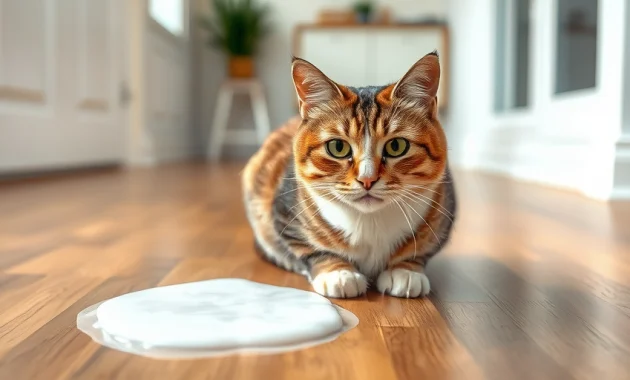
Every cat owner knows the sound. It starts somewhere in another room — a rhythmic, low retching that builds in urgency and gets you moving across the house faster than almost anything else will. You arrive expecting the usual: a pile of partially digested kibble, or the distinctive cylindrical wad of compacted fur that means hairball. These are things you've cleaned up before. You have a system.
What you find instead is a pool of clear, slightly bubbly liquid topped with a thick layer of white foam. No food. No fur. Just this clinical-looking, almost chemical froth that doesn't resemble anything you'd normally associate with a cat having an upset stomach.
And your brain, reasonably, asks: is this serious?
The honest answer is: it depends, and the difference matters. White foamy vomit in cats exists on a spectrum that runs from entirely benign — the empty-stomach reflex of a perfectly healthy cat who simply went too long between meals — all the way to genuinely urgent clinical symptoms that warrant same-day veterinary attention. The frothy appearance alone doesn't tell you where on that spectrum your specific cat's episode sits. What tells you that is the combination of how often it's happening, what else the cat is doing and how they're acting, whether there are other symptoms present, and how quickly the situation is changing.
This guide walks through all of it. What the foam actually is and why it forms. The three primary causes of foamy vomiting and how they differ from each other. A clear first-aid protocol for mild cases. The specific warning signs that tell you this is no longer a home management situation. Long-term prevention strategies that actually work. And what to expect when you do end up at the veterinary clinic.
By the end, you'll know exactly what you're looking at, what to do about it, and — critically — when to stop managing at home and start driving to the vet.
What White Foamy Vomit Actually Is
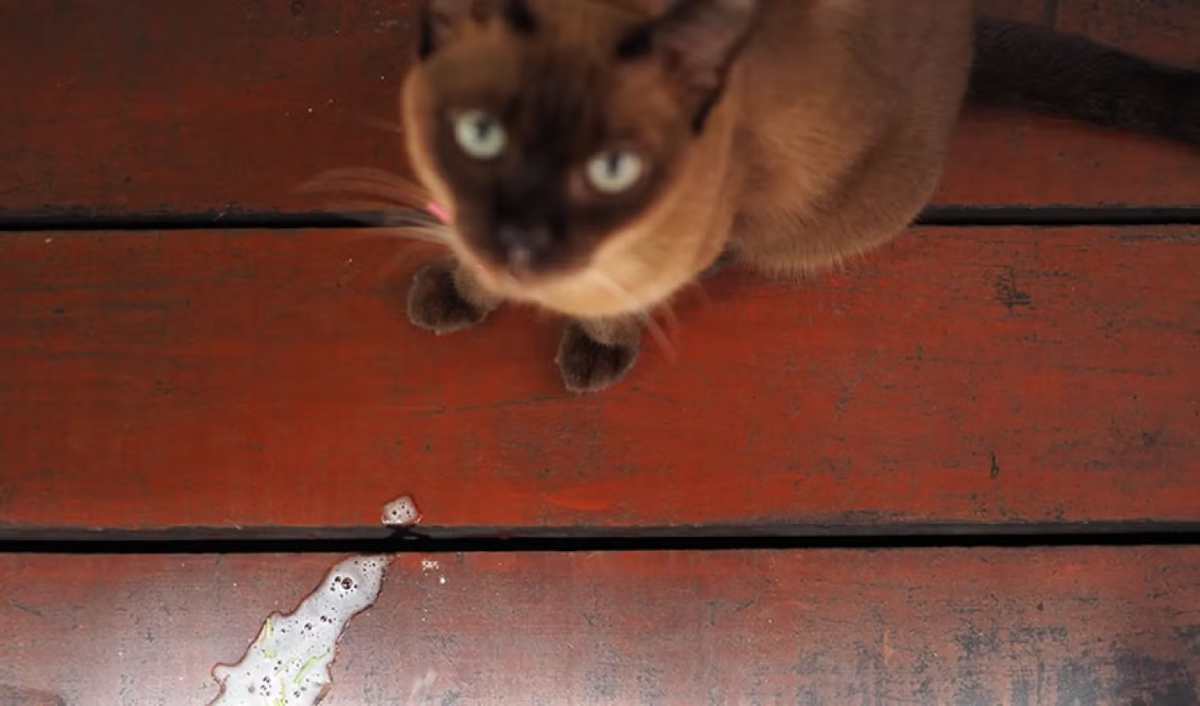
Breaking Down the Substance Itself
Before we can think intelligently about causes and responses, we need to understand what this fluid actually is and why it has that characteristic foamy appearance rather than looking like the liquid it essentially is.
The substance a cat vomits when they produce white foam is primarily a combination of gastric mucus — the protective gel-like secretion that normally coats the stomach lining — gastric acid and digestive juices, and swallowed air that gets incorporated into the liquid during the violent muscular contractions of the vomiting reflex. These components are all normally present in the stomach in varying amounts. What makes them produce foam rather than simply expelling as liquid is the physics of the retching mechanism itself: the powerful, rapid contractions of the stomach and diaphragm during vomiting essentially whip the liquid and gas together, creating an aerated, bubbly froth in the same way that whisking liquid creates foam.
The white coloration comes primarily from the mucus component. Gastric mucus is naturally pale and slightly opaque, and when it's aerated into foam, it appears white or off-white rather than clear. A slight yellowish tint indicates bile is present alongside the mucus — bile is the substance produced by the liver and stored in the gallbladder that aids in fat digestion, and its presence in vomit becomes more significant the more prominent and brighter yellow it is (which we'll discuss in the warning signs section).
How It Differs From a Hairball
This distinction is worth establishing clearly because owners frequently describe hairball vomiting as "foam," and the management of the two situations is different enough that conflating them causes confusion.
A true hairball — the technical term is trichobezoar — is a physically compacted mass of swallowed fur that has accumulated and condensed in the stomach over time. When a cat vomits a hairball, there is always a solid component: the cylindrical, dense, tube-shaped mass of matted fur that's recognizable as the thing being expelled. There may be liquid or foam alongside it, but the hairball itself is structurally solid.
White foamy vomit contains no solid component at all. It is entirely liquid and gas. If you're looking at a pool of white froth with no solid material in or alongside it, you're not looking at a hairball — you're looking at stomach contents without food or fur, which is a meaningfully different clinical picture. That said, as we'll discuss shortly, hairball-related irritation can cause foamy vomiting in its own right, even when no solid hairball is ultimately produced, because the presence of a loose fur mass in the stomach can irritate the gastric lining in a way that triggers vomiting of gastric fluid before the hairball itself is expelled.
The "Empty Stomach" Quality
One of the most important things to understand about white foamy vomit is what its appearance implies about the stomach's contents at the time of vomiting: essentially nothing. A cat produces foamy white vomit when they vomit on an empty or nearly empty stomach. If there were significant food contents present, the vomit would contain visible food material — it would look like a food vomit with foam mixed in, or simply like a regular food vomit. Pure white foam, without food material, indicates the stomach contained little more than gastric secretions and air at the moment of vomiting.
This tells you something immediately useful: the cat either hasn't eaten recently, or vomited any food they did eat before this episode, or the stomach contents that precipitated this episode were gastric secretions rather than ingested material. That context — specifically the meal timing relative to the vomiting episode — is one of the first things worth noting when you're trying to understand what caused it.
The Three Primary Causes
Cause One: The Empty Stomach and Bilious Vomiting Syndrome
The most common cause of foamy vomiting in otherwise healthy cats is deceptively simple: the cat went too long without eating, the stomach continued producing gastric acid in preparation for a meal that hadn't arrived, and the accumulated acid and mucus caused enough irritation that the cat vomited the stomach's fluid contents.
To understand why this happens, you need to think about how a cat's digestive system is designed to work. Cats are natural frequent feeders — in a wild context, a successful hunt produces a meal consumed immediately, followed by rest, followed eventually by another hunt and another meal. This pattern of multiple smaller meals distributed across the day is what the digestive system calibrates to. The stomach produces gastric acid in anticipation of incoming food, and when food arrives regularly and frequently, that acid encounters and begins digesting food within a short time of being produced.
A domestic cat fed on a twice-daily schedule — common in most households, since it's convenient for humans — is being asked to go eight to twelve hours between meals. For many cats, this works fine without digestive consequences. But for some, the extended gap allows gastric acid to accumulate to levels that directly irritate the stomach lining before any food arrives to buffer it. The accumulated acid produces discomfort, nausea, and often vomiting of the gastric fluid — the pale yellow or white foamy liquid that is essentially stomach acid, mucus, and sometimes small amounts of bile being ejected because the stomach finds their presence intolerable.
The characteristic pattern of this cause is distinctive: the cat vomits foam or pale yellow liquid consistently in the later portion of the gap between meals — frequently in the early morning hours before the first meal is served, or in the late evening before the final meal of the day. If your cat reliably vomits foam or watery yellow liquid approximately the same time every day, and that time consistently falls in the period just before they're scheduled to eat, empty-stomach bilious vomiting is the most likely explanation.
The veterinary term for this recurring pattern in otherwise healthy cats is Bilious Vomiting Syndrome, and while it sounds alarming, it's one of the more benign causes of recurring vomiting in cats — the fundamental problem is the feeding schedule rather than any intrinsic disease process. The management, which we'll cover in the prevention section, centers on restructuring when and how often the cat eats.
Cause Two: Hairball-Related Gastric Irritation
The relationship between hairballs and white foamy vomiting is somewhat more complicated than the simple connection most owners assume, and understanding it properly helps explain why a cat can vomit foam repeatedly around a hairball episode without actually producing the hairball itself.
Cats spend a remarkable proportion of their waking hours grooming. Their tongues are covered in tiny, backward-facing hook-shaped projections called papillae that function essentially as a built-in comb, collecting loose and dead fur from the coat with every lick. Because these hooks face backward, any fur the papillae collect gets pushed toward the throat and swallowed — the cat has no mechanism for expelling it from the mouth the way a human would. Every grooming session adds a small amount of fur to the stomach.
Under normal digestive circumstances, most of this fur passes through the stomach and intestines without incident, eventually appearing in the stool. But when enough fur accumulates in the stomach faster than it's being moved through, it begins to clump and consolidate into the tangled mass that will eventually become a hairball. This mass, while it's forming and before it reaches the density and size that triggers a full expulsion reflex, sits in the stomach and intermittently makes contact with the gastric lining. The stomach, experiencing physical irritation from the presence of this foreign material, responds with the same mechanism it uses to respond to any gastric irritation: nausea and the vomiting reflex.
But the hairball mass at this early stage may not be dense or large enough to be expelled directly — the reflex produces the characteristic retching and heaving, but what comes up is gastric fluid rather than the hairball itself. The cat vomits white or slightly yellow foam. The underlying hairball stays in the stomach. The irritation cycle continues over the following hours or days until the hairball either passes through into the intestines or accumulates enough mass to trigger a full expulsion.
This is why hairball-prone cats — particularly long-haired breeds, heavy groomers, or cats during heavy seasonal shedding — can experience repeated episodes of foamy vomiting over several days without producing an obvious hairball, followed eventually by either passing the hairball or producing a solid vomit that includes the compacted fur mass. The foam episodes were all genuine manifestations of the hairball irritation cycle, even though the hairball wasn't directly visible in any of them.
The key management implication of this cause is that reducing fur ingestion through regular brushing is a more direct intervention than any medication or dietary supplement — it addresses the problem at its source by reducing how much fur enters the stomach in the first place, rather than trying to manage the gastric consequences after the fact.
Cause Three: Gastritis — When the Stomach Lining Is Actually Damaged
The first two causes of foamy vomiting — bilious vomiting from an extended meal gap and hairball-related irritation — are fundamentally mechanical or schedule-based problems that don't involve actual tissue damage to the stomach lining. Gastritis is different, and it's important to understand that distinction clearly because gastritis can range from a self-limiting episode that resolves in twenty-four hours to a condition requiring significant veterinary intervention.
Gastritis means inflammation of the gastric mucosa — the protective mucosal layer that lines the stomach's interior and shields the underlying stomach wall from the acidic, enzyme-rich gastric environment. When this protective lining is breached or significantly disrupted, the stomach wall itself is exposed to the chemical assault of its own contents, producing intense localized inflammation, pain, and a vomiting reflex that's more persistent, more severe, and more resistant to simple fasting than the benign causes above.
Acute gastritis from dietary indiscretion is the most common form. Cats are curious animals with predatory instincts, and they investigate their environment with their mouths to an extent that regularly leads them to ingest things they shouldn't. Eating too quickly, consuming spoiled food or garbage, eating grass or plant material that causes gastric irritation, ingesting small insects, or sampling any number of household materials that aren't intended for consumption can all trigger acute gastric inflammation.
In mild cases of acute dietary indiscretion, the cat vomits to expel the irritant, the stomach has a brief inflammatory response, and with appropriate fasting and rest the inflammation resolves within twenty-four hours or so. In more significant cases — ingestion of something genuinely toxic, a larger amount of irritating material, or a cat with already sensitive gastric mucosa — the inflammation persists longer, produces more significant clinical signs including lethargy, complete appetite loss, and repeated vomiting, and may require veterinary treatment to resolve.
Chronic gastritis is a sustained, long-term inflammation that doesn't arise from any single ingestion event but represents ongoing damage to the gastric lining from causes including food allergies or sensitivities, Helicobacter bacterial infection of the stomach, and as part of the broader inflammatory bowel disease spectrum. Chronic gastritis produces recurrent vomiting that includes foamy episodes, alongside other signs of ongoing GI disease — weight loss, intermittent diarrhea, reduced appetite, and a generally unwell condition that persists across weeks and months rather than resolving spontaneously.
Ingestion of genuine toxins is the acute gastritis scenario that warrants the most urgent response. Certain plants — lilies in particular, which cause rapid and severe kidney failure in cats even in small amounts — antifreeze, certain medications (human NSAIDs, acetaminophen, and others), and various household chemicals can all produce acute gastritis as part of a broader toxic response. In these cases, the foamy vomiting is a symptom of systemic poisoning, not simply local gastric irritation, and the urgency of veterinary care is entirely different from the urgency for a cat who ate grass and has an upset stomach.
First Aid at Home — When and How
Establishing Whether Home Management Is Appropriate
The decision framework for home management versus immediate veterinary care should be established before you're in the middle of the situation, because making this assessment when you're already anxious and a cat is vomiting is harder than thinking through it in advance.
Home management is appropriate when: the cat has vomited foamy liquid once or at most twice, is alert and responsive, is moving normally without visible distress, shows no signs of severe lethargy or weakness, has no blood visible in the vomit, the vomit is white or very pale rather than bright yellow or green, and you have no reason to suspect toxic ingestion or foreign body ingestion. These are the circumstances under which a structured home management approach gives the stomach time to settle and the cat an opportunity to recover without intervention.
If any of the following are present, skip home management and proceed directly to veterinary assessment: the cat has vomited more than twice in twenty-four hours; vomiting is accompanied by diarrhea; the cat shows extreme weakness or lethargy or is unable to walk normally; there is blood in the vomit (either bright red or dark brown granular material); the vomit is bright yellow or green; the cat has completely stopped eating or drinking for more than twenty-four hours; you suspect poisoning or foreign body ingestion; or the cat has a known health condition that complicates their GI health. None of these situations are appropriate for the wait-and-see approach.
Phase One: Managing the Environment and Your Own Response
This sounds like background noise compared to the more concrete steps that follow, but it genuinely matters. Cats are highly attuned to the emotional and physiological states of the people they live with. Elevated cortisol and adrenaline in the household — the biochemical signature of a panicked owner moving quickly and talking in stressed tones — registers in a cat who is already experiencing GI distress and can directly worsen their situation by elevating their own stress hormones, which further destabilize gastric motility.
Take a breath. Move calmly. Speak in your normal tone. Remove the cat from any loud, busy, or highly stimulating area of the home to a quiet room where they can rest without being disturbed. Provide a comfortable place to lie down. Keep other pets and young children away. The physical calm of a quiet, low-stimulus environment genuinely supports the gastric rest that follows.
Phase Two: Fasting — Giving the Stomach a Break
When the stomach is actively inflamed and vomiting, continuing to introduce food into that environment extends and worsens the problem. More food means more gastric acid production, more material to produce more foam, and more stimulation of the vomiting reflex. A brief fast gives the inflammatory response a chance to subside.
For a cat who has vomited foamy liquid in the context of suspected dietary indiscretion, bilious vomiting, or hairball irritation, withholding food for twelve to twenty-four hours is appropriate and safe in an adult, otherwise healthy cat. Kittens and elderly cats should not be fasted without explicit veterinary guidance, as their ability to tolerate reduced caloric intake is more limited. For any cat with a history of hepatic lipidosis (fatty liver disease), even brief fasting requires veterinary consultation.
During the fasting period, monitor the cat closely. Is the vomiting stopping? Is the cat becoming more alert rather than less? Is their behavior normalizing? These are positive signs. Is the vomiting continuing despite the fasting? Is the cat becoming more lethargic? Are new symptoms appearing? These are signs that the situation is progressing and veterinary assessment is needed.
Phase Three: Controlled Reintroduction of Water
Hydration management during an episode of vomiting requires a counterintuitive approach that many owners get wrong with good intentions: offering a full bowl of water to a dehydrated, recently vomiting cat often produces another vomiting episode because the cat drinks eagerly and the volume of fluid entering the stomach triggers the vomiting reflex all over again.
The correct approach, once several hours have passed without further vomiting, is offering water in very small amounts — a tablespoon at a time, or a few ice cubes the cat can lick — and waiting to confirm the cat holds that small amount down before offering more. This cautious, gradual approach allows the stomach to accept fluid without the sudden distension that triggers another vomiting episode, rebuilding hydration incrementally rather than all at once.
Ice cubes have a practical advantage in this context: they provide water at a rate the cat can control by licking rather than gulping, they're inherently portioned in small amounts, and many cats who have lost interest in their water bowl will still investigate and lick ice cubes.
Once the cat has successfully held down small amounts of water for several hours without vomiting, you can begin introducing a small amount of bland, easily digestible food. Boiled unseasoned chicken breast or a small amount of a specialized prescription gastrointestinal diet (if you have one from a previous episode) are appropriate first foods. Start with a tablespoon-sized portion, wait two hours, and if it's held down comfortably, offer another small amount before returning to normal feeding size gradually over the following twenty-four hours.
Phase Four: Environmental Investigation
While the cat rests and fasts, use the time to conduct a systematic sweep of the spaces the cat has access to. What you're looking for is evidence of what might have caused the vomiting episode: plants with chewed leaves or missing sections, displaced or opened garbage, torn or shredded non-food materials (plastic bags, fabric, carpet), missing toy components (feather wand attachments, small toy parts), any medications or supplements left accessible, household chemicals that might have been investigated.
You're doing two things simultaneously: trying to identify whether this episode was caused by ingestion of something specific, and removing anything that might cause a repeat. If you find evidence of plant ingestion, identify the plant immediately (Google Lens works well for this if you don't know what it is) and determine whether it's a species known to be toxic to cats — lilies, in particular, are a medical emergency even with minimal ingestion. If you find evidence of foreign material ingestion, escalate to veterinary assessment regardless of how the cat is currently behaving, since foreign body complications can develop over a longer timeframe than a toxic ingestion.
Warning Signs That Change Everything
The Line Between Monitoring and Acting
The warning signs that indicate a vomiting cat needs immediate veterinary care rather than home management are specific enough to list clearly, and learning them is worth the effort before you're in a situation where you need to recall them quickly.
Vomiting more than twice in twenty-four hours. The stomach needs rest to recover from whatever has irritated it. A cat who continues vomiting repeatedly despite an enforced fast isn't recovering — they're escalating, and the dehydration risk from repeated fluid loss becomes significant quickly.
Concurrent diarrhea. When the body is eliminating fluid rapidly from both ends of the gastrointestinal tract simultaneously, the hydration and electrolyte situation deteriorates much faster than with vomiting alone. Diarrhea alongside vomiting significantly elevates the urgency.
Blood in the vomit. Bright red blood indicates active bleeding in the stomach or upper gastrointestinal tract, likely from damaged mucosal tissue. Dark brown granular material that resembles coffee grounds indicates digested blood — blood that has been in contact with gastric acid long enough to undergo chemical change, suggesting a bleeding point higher in the GI tract. Both are urgent signs.
Bright yellow or green vomit. A pale yellowish tint to the foam is common and relatively benign — it indicates bile is present, which happens with an empty stomach. Bright, vivid yellow or green coloration is different in quality and quantity, indicating significant bile in the vomit that points toward liver, gallbladder, or intestinal obstruction concerns rather than simple empty-stomach bilious vomiting.
Extreme lethargy, weakness, or inability to stand. A cat in a state of severe systemic distress — shock, significant dehydration, acute organ failure from toxin exposure — will show progressive weakness and inability to move normally. This is an emergency presentation regardless of what else is happening.
Complete refusal to eat or drink for more than twenty-four hours. Beyond the dehydration risk, extended fasting in cats carries the specific risk of hepatic lipidosis — a condition discussed in more detail in the constipation guide in this series — where fat mobilization to provide energy for a fasting cat overwhelms the liver's processing capacity and causes acute liver failure. This condition is unique in its severity to cats among domestic animals and can develop rapidly in overweight or previously ill cats. Twenty-four hours of complete food and water refusal is the threshold beyond which veterinary assessment is necessary even in the absence of other alarming signs.
Any suspicion of toxic ingestion. This category deserves particular emphasis because the window for effective intervention with many feline toxins is narrow. The most critical are lilies (any species of the genus Lilium or Hemerocallis — true lilies and daylilies), which cause irreversible kidney failure in cats within twenty-four to seventy-two hours of even small exposures, and where early veterinary intervention can prevent fatal outcome but late intervention cannot. If you have any reason to believe a toxic plant, medication, or chemical has been ingested, the appropriate response is immediate veterinary contact, not observation.
What the Veterinary Visit Looks Like
The Diagnostic Approach
If you're bringing a cat in for evaluation of foamy vomiting, the veterinarian's goal is to answer two questions: how sick is this cat right now, and what is causing this. These are addressed roughly in parallel through a structured assessment.
Physical examination focuses first on the immediate clinical status. Hydration is assessed through skin turgor — the tissue over the shoulders is gently pinched and released, and the speed with which it returns to normal position indicates hydration status; a dehydrated cat's skin "tents" and returns slowly. Mucous membrane color (the gums) provides information about perfusion and oxygenation. Temperature, heart rate, and respiratory rate establish whether the cat is in any degree of physiological distress. Abdominal palpation checks for pain responses, masses, abnormal distension, and the presence of material that might indicate obstruction.
Bloodwork — a complete blood count and a chemistry panel — provides systemic information that physical examination alone can't access: kidney and liver function, evidence of infection or significant inflammation, electrolyte balance, and markers of specific organ disease. For a vomiting cat, this is frequently the most informative first investigation because it can simultaneously screen for liver disease, kidney disease, systemic infection, and the metabolic consequences of dehydration.
Abdominal imaging — radiographs and/or ultrasound — looks for structural explanations. Radiographs identify foreign body material that's radiodense (metal, bone, some plastics), obvious gas patterns that indicate obstruction, and organ sizes and positions. Ultrasound provides much more detailed assessment of soft tissue structures — the stomach wall thickness, intestinal layering, the pancreas, lymph node size, liver and kidney texture — and is particularly useful for identifying the thickened intestinal walls characteristic of IBD, masses, and soft-tissue foreign bodies that wouldn't show on radiographs.
Treatment Options
The treatment a veterinarian provides depends entirely on what diagnosis the examination and testing reveals, but several interventions are commonly deployed for vomiting cats regardless of specific underlying cause.
Intravenous or subcutaneous fluid therapy addresses the dehydration that accompanies significant vomiting and provides the vehicle for delivering medications while supporting organ function. For a cat who is moderately to severely dehydrated, this is often the most immediately impactful intervention — reversing the dehydration state improves every other aspect of physiological function.
Anti-emetic medications — drugs specifically designed to suppress the vomiting reflex — provide direct symptom relief and allow the digestive tract to rest without the continued disruption of ongoing vomiting. They're administered by injection for fastest onset in the clinical setting and then prescribed as oral medications for continued management at home. Several effective anti-emetic options exist for cats, including maropitant and ondansetron, which work through different mechanisms and may be chosen based on the suspected underlying cause.
Gastric protectants — medications that reduce acid production or provide direct coating and protection to the inflamed gastric mucosa — are used when the examination or history suggests significant gastric irritation or damage. These address the underlying gastric environment rather than just the vomiting symptom.
Specific treatments for specific causes follow from the diagnosis: antibiotics for confirmed bacterial infection, steroids for IBD management, surgical intervention for obstructing foreign bodies or masses, antidotes or specific supportive treatment for confirmed toxin exposures.
Long-Term Prevention
Restructuring Meal Timing for Empty-Stomach Vomiters
For cats whose foamy vomiting is caused by bilious vomiting syndrome — the empty-stomach, pre-meal pattern — the solution is fundamentally about changing when and how frequently food arrives rather than what that food is.
Breaking the daily food allowance into smaller, more frequent portions reduces the maximum duration of any gap between meals, which reduces the opportunity for gastric acid to accumulate to irritating levels. Three meals a day instead of two is a meaningful improvement for many cats. Four or even five small meals across the day, if your schedule permits, is more effective still.
For households where schedules make this impractical, automatic pet feeders that can be programmed to dispense precise small portions at specific times across a twenty-four-hour period are a genuine solution. Modern automatic feeders can be scheduled for multiple dispensing times including overnight and very early morning — covering the periods when bilious vomiting most commonly occurs — and they provide consistency that doesn't depend on human availability.
For cats who eat too quickly and then vomit from swallowing excessive air, slow-feeder bowls with ridges, mazes, or obstacles that physically prevent rapid eating are effective at slowing the eating pace and reducing the gulping-air problem.
Reducing Hairball Burden Through Regular Grooming
For hairball-related foamy vomiting, the highest-impact intervention is reducing the amount of fur that enters the stomach by removing it from the coat before the cat swallows it during grooming. Regular brushing — two to three times weekly for shorthaired cats, daily for longhaired breeds — captures loose dead fur directly and reduces the stomach's exposure to it proportionally.
During heavy seasonal shedding periods — typically spring and sometimes fall — brushing frequency should increase to match the increased shedding, since the volume of fur available to be ingested during grooming increases significantly. A deshedding tool or undercoat rake during heavy shedding is more effective than a standard brush at reaching and removing the undercoat that's loosening during these periods.
Hairball-formula cat foods, which use fiber blends specifically chosen to facilitate the movement of swallowed fur through the digestive tract rather than allowing it to accumulate in the stomach, are a useful complement to regular grooming for cats who continue to have hairball issues despite a consistent brushing routine.
Dietary Optimization for Sensitive Stomachs
For cats with a history of recurrent foamy vomiting related to dietary sensitivity or gastritis, transitioning to a food formulated specifically for sensitive digestion or gastrointestinal health addresses the problem at the dietary level.
These formulations differ from standard adult maintenance foods in their digestibility, their protein source selection, and often in their inclusion of prebiotic fibers and other ingredients that support gut microbiome health and reinforce the integrity of the gastric and intestinal mucosal lining. The prebiotics and inulin fiber present in premium GI-sensitive formulas work by providing substrate for beneficial gut bacteria and creating a more stable, protective mucus layer in the digestive tract.
Any dietary transition should proceed gradually — over seven to ten days, mixing increasing proportions of the new food into the old — to avoid triggering the very digestive upset you're trying to prevent by changing the food abruptly.
Conclusion: Foam Is Information, Not Just a Mess
White foamy vomit is one of those symptoms that looks more alarming than it usually is, and occasionally looks less alarming than it actually is. That variability is the reason understanding it properly matters.
Most episodes of foamy vomiting in cats resolve without intervention, or with simple home management — a brief fast, controlled rehydration, and a return to small meals once the stomach has settled. The cat is uncomfortable for a day and then fine. The underlying cause is an extended meal gap, a hairball in progress, or a minor dietary indiscretion that the digestive system handles with a single protest and then moves on from.
But embedded within that large category of benign, self-limiting episodes is a smaller category of situations that are genuinely urgent — toxic ingestion, significant obstruction, severe gastritis, systemic disease — and the foamy vomiting looks similar in both cases in its early stages. The distinguishing factor isn't the appearance of the vomit itself. It's the combination of frequency, accompanying symptoms, behavioral changes, and contextual information about what the cat may have been exposed to.
Know the warning signs clearly enough to recognize them without having to think about it. Be honest about how many times the cat has vomited, how they're behaving, and whether there's any possibility of toxic exposure. Manage appropriately at home when the picture genuinely warrants home management. And skip the home management phase entirely when even one of the serious warning signs is present.
Your cat cannot tell you when they've crossed from manageable stomach upset into something that needs professional attention. Your job is to read the full picture clearly enough to know on their behalf.
FAQ
1. Why is my cat throwing up white foam?
White foamy vomit usually consists of stomach mucus, gastric acid, digestive fluids, and swallowed air. It commonly occurs when a cat vomits on an empty stomach, but it may also indicate hairball irritation, gastritis, digestive disease, toxin ingestion, or other medical conditions depending on the accompanying symptoms.
2. What is white foam made of?
White foam is primarily composed of:
- Gastric mucus
- Stomach acid
- Digestive juices
- Swallowed air incorporated during vomiting
The foamy appearance is created when stomach contractions mix liquid and air during the vomiting process.
3. Is white foamy vomit the same as a hairball?
No.
A true hairball contains a solid mass of compacted fur (trichobezoar). White foamy vomit contains no solid material and consists only of stomach fluids and air.
However, a developing hairball may irritate the stomach and cause repeated foamy vomiting before the actual hairball is expelled.
4. Why does an empty stomach cause white foam vomiting?
When a cat goes many hours without eating, stomach acid continues to accumulate.
Without food to buffer the acid, the stomach lining becomes irritated, triggering nausea and vomiting. The result is usually white or pale yellow foam because the stomach contains little besides digestive fluids.
5. What is Bilious Vomiting Syndrome?
Bilious Vomiting Syndrome is a condition in which healthy cats repeatedly vomit white or pale yellow foam after long periods without food.
It commonly happens:
- Early in the morning
- Late at night
- Just before scheduled meals
The condition is usually managed by feeding smaller, more frequent meals throughout the day.
6. Can hairballs cause white foamy vomiting?
Yes.
Hair accumulating inside the stomach can irritate the stomach lining before a hairball is actually expelled.
During this stage, cats may vomit white foam several times before eventually producing a hairball or passing it naturally through the digestive tract.
7. What is gastritis in cats?
Gastritis is inflammation of the stomach lining.
Unlike simple empty-stomach vomiting, gastritis involves actual damage or irritation of the stomach's protective lining, making vomiting more persistent and often more severe.
8. What causes gastritis?
The article identifies several possible causes:
- Eating spoiled food
- Dietary indiscretion
- Eating irritating plants
- Swallowing foreign materials
- Food allergies
- Helicobacter bacterial infection
- Inflammatory bowel disease (IBD)
- Toxic substances
9. Can toxins make a cat vomit white foam?
Yes.
White foamy vomiting may be one of the first signs of poisoning.
Dangerous toxins mentioned include:
- Lilies
- Antifreeze
- Human medications
- Household chemicals
Suspected toxin exposure requires immediate veterinary care.
10. When is white foamy vomiting considered an emergency?
Seek veterinary attention immediately if your cat experiences:
- More than two vomiting episodes within 24 hours
- Vomiting combined with diarrhea
- Blood in the vomit
- Bright yellow or green vomit
- Severe weakness
- Difficulty standing
- Refusal to eat or drink for more than 24 hours
- Suspected poisoning
- Possible foreign body ingestion
11. Can I care for my cat at home after one episode of white foamy vomiting?
Home care may be appropriate only if:
- The vomiting occurred once or twice
- Your cat remains alert
- There is no blood
- Your cat is walking normally
- No toxins or foreign objects are suspected
If symptoms worsen, veterinary care is necessary.
12. Should I stop feeding my cat after vomiting?
For healthy adult cats with mild stomach irritation, the article recommends temporarily withholding food for approximately 12–24 hours to allow the stomach to rest.
Kittens, senior cats, and cats with certain medical conditions should only be fasted under veterinary guidance.
13. How should I give water after my cat vomits?
Offer only small amounts of water initially.
Instead of allowing large drinks immediately:
- Offer a tablespoon of water at a time.
- Ice cubes may encourage slow hydration.
- Increase water gradually if no additional vomiting occurs.
14. What food should I give after vomiting stops?
Once vomiting has stopped for several hours, introduce small portions of easily digestible food, such as:
- Boiled unseasoned chicken
- Prescription gastrointestinal diets recommended by a veterinarian
Gradually return to the normal feeding schedule.
15. Should I inspect my home after my cat vomits?
Yes.
The article recommends checking for:
- Chewed houseplants
- Open trash
- Missing toys
- Household chemicals
- Human medications
- Plastic or fabric pieces
Finding evidence of toxin or foreign body ingestion changes the urgency of treatment.
16. What will the veterinarian do?
The veterinarian may perform:
- Complete physical examination
- Hydration assessment
- Blood tests
- Abdominal X-rays
- Ultrasound imaging
These tests help identify digestive disease, toxins, foreign objects, organ disease, or inflammation.
17. How is white foamy vomiting treated?
Treatment depends on the cause and may include:
- Fluid therapy
- Anti-vomiting medications
- Gastric protectants
- Antibiotics (when indicated)
- Steroids for inflammatory bowel disease
- Surgery for intestinal obstruction
- Toxin-specific treatment
18. How can I prevent empty-stomach vomiting?
Preventive strategies include:
- Feeding smaller meals more frequently
- Using an automatic feeder
- Reducing long fasting periods
- Using slow-feeder bowls for cats that eat too quickly
19. How can I prevent hairball-related vomiting?
The article recommends:
- Brushing short-haired cats several times weekly
- Brushing long-haired cats daily
- Increasing grooming during shedding seasons
- Feeding hairball-control diets when appropriate
20. Can diet help prevent recurring vomiting?
Yes.
Cats with sensitive stomachs may benefit from gastrointestinal-support diets containing:
- Highly digestible ingredients
- Carefully selected proteins
- Prebiotic fibers
- Ingredients that support gut health
Diet changes should always be introduced gradually over 7–10 days.
21. When should I never wait at home?
Do not delay veterinary treatment if your cat:
- Continues vomiting repeatedly
- Becomes extremely lethargic
- Shows blood in vomit
- Vomits bright green or yellow fluid
- Refuses food or water
- May have eaten a toxic substance
- May have swallowed a foreign object
22. What is the main takeaway from this guide?
White foamy vomiting is not a disease itself—it is a symptom.
Many cases result from temporary digestive irritation and resolve with appropriate home care, but repeated vomiting, severe symptoms, or suspected poisoning require immediate veterinary evaluation.