Keeping Your Cat Indoors vs. Letting Them Outside: A Comprehensive Guide to Feline Lifespan, Safety, and Enrichment
1 week ago
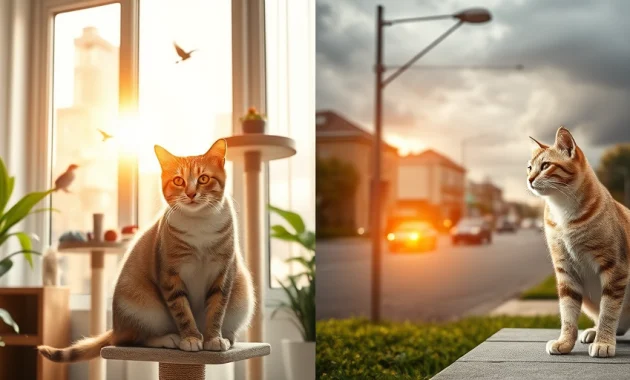
Deciding whether to keep your cat indoors or allow them to roam outside is one of the most critical decisions you will make as a pet parent.
Many cat owners feel conflicted. On one hand, we want our feline companions to experience the joy of nature—feeling the grass under their paws, basking in natural sunlight, and hunting insects. On the other hand, the outdoors is fraught with danger, from heavy traffic and neighborhood predators to infectious diseases and toxic substances.
According to veterinary professionals and animal welfare organizations worldwide, indoor cats enjoy vastly superior health outcomes and significantly longer lifespans. However, keeping a cat inside requires intentional effort to prevent boredom and lethargy.
This ultimate guide explores the life expectancy gap between indoor and outdoor cats, evaluates the pros and cons of both lifestyles, outlines safe ways to give indoor cats outdoor access, and shares practical enrichment strategies to keep your indoor cat happy and active.
The Lifespan Gap: Evaluating the Statistical Reality
The contrast between indoor and outdoor cat lifespans highlights the impact of environmental hazards on feline mortality.
Feline Average Lifespan Comparison:
┌─────────────────────────────────────────────────────────────┐
│                 Indoor-Only Cats                            │
│  ██████████████████████████████████████████ 13 - 17+ Years  │
└─────────────────────────────────────────────────────────────┘
┌─────────────────────────────────────────────────────────────┐
│                 Free-Roaming / Outdoor Cats                 │
│  ████ 2 - 5 Years                                           │
└─────────────────────────────────────────────────────────────┘
1. Life Expectancy Metrics Breakdown
-
Indoor-Only Cats: Live an average of 13 to 17 years, with many well-cared-for felines reaching their late teens or early twenties.
-
Outdoor / Free-Roaming Cats: Live an average of 2 to 5 years. While individual rural or semi-feral cats may survive longer under ideal conditions, environmental risks drastically lower the overall statistical survival rate.
2. Early Illness Detection in Indoor Environments
Beyond avoiding physical threats, indoor cats benefit from closer human monitoring. In an indoor setting, pet parents notice subtle changes in behavior, appetite, litter box habits, and grooming routines almost immediately.
Because felines naturally hide illness and pain—an evolutionary instinct to avoid appearing vulnerable to predators—early detection of conditions like kidney disease, diabetes, or urinary tract infections significantly improves treatment outcomes.
Detailed Risk Assessment: Indoor vs. Outdoor Lifestyles
Every environment carries trade-offs. Weighing these benefits and hazards helps you make an informed decision for your pet.
Environmental Risk & Benefit Matrix:
├── Indoor Benefits   ➔ Traffic Immunity, Disease Protection, Long Lifespan
├── Indoor Drawbacks  ➔ Risk of Boredom, Obesity, Separation Stress
├── Outdoor Benefits  ➔ Natural Exercise, Sensory Stimulation, Sunbathing
└── Outdoor Hazards   ➔ Vehicles, Predators, Poisons, Parasites, Fatal Illnesses
1. The Outdoor Life: Risks and Benefits
The Benefits:
-
Unrestricted Exercise: Roaming provides natural opportunities for running, jumping, and climbing.
-
Sensory Stimulation: Fresh air, changing smells, rustling foliage, and prey sightings offer constant mental engagement.
The Hazards:
-
Vehicular Accidents: Striking by automobiles is a leading cause of sudden death for outdoor cats, particularly at night.
-
Predators and Animal Conflicts: Coyotes, foxes, large birds of prey, loose dogs, and territorial fights with other neighborhood cats cause severe trauma, bite wounds, and abscesses.
-
Infectious Diseases: Unvaccinated or free-roaming cats risk contracting severe viral infections like Feline Leukemia Virus (FeLV) and Feline Immunodeficiency Virus (FIV) through fight wounds and shared fluids.
-
Toxicity & Parasites: Exposure to rodent poisons (rodenticides), antifreeze leaks, toxic garden plants (such as true lilies), fleas, ticks, and intestinal worms.
-
Getting Lost or Trapped: Outdoor cats can easily be locked inside sheds, stolen, or taken in by well-meaning neighbors assuming they are strays.
2. The Absolute Non-Negotiable: Declawed Cats
🚨 CRITICAL SAFETY MANDATE: Declawed cats must NEVER be allowed to roam outdoors.
Declawing involves the surgical amputation of the last bone of each toe. Without claws, a cat loses its primary means of defense against dogs or rival cats and cannot climb trees to escape predators. If you adopt a cat that was previously declawed, keep them exclusively indoors or within a secure enclosure.
Hybrid Solutions: Safe Controlled Outdoor Access
You do not have to choose between keeping your cat entirely sequestered or letting them roam free. Controlled outdoor environments offer natural sunlight and fresh air without exposure to major hazards.
Safe Outdoor Exposure Spectrum:
┌─────────────────────────────────────────────────────────────┐
│                 Full Structural Enclosure                   │
│           (Catios attached via window or cat door)          │
└──────────────────────────────┬──────────────────────────────┘
                               │
                               ▼
┌─────────────────────────────────────────────────────────────┐
│                 Perimeter Enclosure / Netting               │
│               (Cat-Proof Yard Mesh & Angled Fencing)        │
└──────────────────────────────┬──────────────────────────────┘
                               │
                               ▼
┌─────────────────────────────────────────────────────────────┐
│                 Supervised Leash & Harness                  │
│             (H-Style / Vest Harness Walking Sessions)       │
└─────────────────────────────────────────────────────────────┘
1. Catios and Outdoor Enclosures
A "catio" (cat patio) is a fully enclosed, screened outdoor patio or playpen attached to your house.
-
Direct Window Access: Installing a cat flap or window insert allows your cat to come and go into the catio at will.
-
Internal Features: Include vertical perches, scratching posts, non-toxic plants (like cat grass or spider plants), and sheltered shade spots.
2. Harness and Leash Training
Many cats can learn to walk comfortably on a harness and leash.
-
Use an H-Style or Vest Harness: Never attach a leash to a standard neck collar, as cats can easily slide out or sustain neck injuries if pulled.
-
Gradual Desensitization: Introduce the harness indoors first using positive reinforcement and treat rewards before stepping outside into a quiet, fenced yard.
3. Identification Protocols
If your cat ever steps outside—even in a catio or on a leash—ensure they carry dual identification:
-
Breakaway Collar with ID Tags: Designed to snap open if caught on a branch or fence to prevent strangulation.
-
Microchip: Registered with updated contact details at a national pet registry.
Enriching the Indoor Environment: Preventing Boredom and Obesity
Keeping a cat indoors requires creating a stimulating home environment that meets their natural instincts to climb, hunt, scratch, and survey their territory.
Indoor Environmental Enrichment Matrix:
├── Vertical Territory  ➔ Ceiling-High Cat Trees & Window Perches
├── Foraging Instincts  ➔ Puzzle Feeders & Hide-and-Seek Treat Toys
├── Scratching & Scent  ➔ Heavy Sisal Posts & Cardboard Loungers
└── Active Engagement   ➔ Daily Interactive Wand Play & Cat Exercise Wheels
Step-by-Step Indoor Enrichment Strategy
Conclusion: Balancing Health, Safety, and Quality of Life
While the outdoors offers natural sights and scents, its hazards cut cat lifespans drastically short. By keeping your feline companion indoors and providing rich environmental stimulation—or offering secure outdoor access via catios and leash walks—you offer them the best of both worlds: a long, safe life filled with comfort, health, and play.
Quick Reference: Indoor vs. Outdoor Decision Matrix
| Environmental Metric | Indoor-Only Life | Free-Roaming Outdoor Life | Controlled Access (Catio / Leash) |
| Average Lifespan | 13 – 17+ Years | 2 – 5 Years | 13 – 17+ Years |
| Traffic / Predator Hazard | ZERO | EXTREMELY HIGH | ZERO to LOW |
| Disease / Parasite Exposure | Minimal | Extremely High | Low (with preventative meds) |
| Physical Exercise Level | Requires owner effort | Naturally High | Moderate to High |
| Mental Enrichment | Requires toys & climbing trees | High (natural environment) | High (safe natural experience) |
FAQ
1. Is it healthier for cats to live indoors or outdoors?
For the vast majority of cats, an indoor lifestyle is significantly healthier and safer. Indoor cats are protected from traffic accidents, predators, contagious diseases, parasites, toxic chemicals, and harsh weather. Studies consistently show that indoor cats often live 13–17 years or more, while free-roaming outdoor cats typically average only 2–5 years due to environmental hazards.
2. Why do outdoor cats have shorter lifespans?
Outdoor cats face numerous daily risks that indoor cats rarely encounter, including:
- Motor vehicle accidents
- Attacks from dogs, coyotes, foxes, and other predators
- Territorial fights with other cats
- Feline Leukemia Virus (FeLV) and Feline Immunodeficiency Virus (FIV)
- Fleas, ticks, intestinal parasites, and heartworms
- Poisonous plants and toxic chemicals such as antifreeze and rodenticides
- Becoming lost, stolen, or trapped
Even healthy, experienced outdoor cats cannot completely avoid these dangers.
3. Are indoor cats happier than outdoor cats?
Yes—provided their environment meets their physical and mental needs.
Indoor cats can live extremely happy lives when they have:
- Multiple climbing structures
- Interactive toys
- Daily play sessions
- Puzzle feeders
- Window perches
- Scratching posts
- Opportunities to observe birds and wildlife safely
Without enrichment, however, indoor cats may become bored, overweight, or stressed.
4. Can indoor cats become depressed or bored?
Yes. Cats are intelligent predators that require regular stimulation.
Signs of boredom include:
- Sleeping excessively
- Overeating
- Weight gain
- Excessive grooming
- Destructive scratching
- Constant meowing
- Chasing or attacking household pets
- Reduced interest in play
Providing daily enrichment greatly reduces these problems.
5. Is it safe to let my indoor cat outside occasionally?
Only under controlled conditions.
Safe options include:
- Fully enclosed catios
- Secure outdoor enclosures
- Cat-proof fenced gardens
- Harness and leash walks under supervision
Allowing a cat to roam freely is much riskier than controlled outdoor access.
6. What is a catio?
A catio (cat patio) is a secure outdoor enclosure that allows cats to enjoy:
- Fresh air
- Natural sunlight
- Bird watching
- Outdoor scents
- Climbing opportunities
without exposure to traffic, predators, or disease.
Many catios connect directly to windows or cat doors so cats can enter and exit independently.
7. Can every cat learn to walk on a harness?
Many cats can, although success varies depending on personality and age.
For best results:
- Start training indoors.
- Use positive reinforcement.
- Introduce the harness gradually.
- Keep early sessions short.
- Never force the cat outside.
A properly fitted vest or H-style harness provides the greatest security.
8. Why should declawed cats never go outside?
Declawed cats have permanently lost their primary defense mechanism.
Without claws they cannot:
- Defend themselves
- Climb trees quickly
- Escape predators
- Fight off aggressive animals
Even supervised outdoor access should only occur in completely secure environments.
9. Do indoor cats still need vaccinations?
Yes.
Indoor cats should continue receiving veterinarian-recommended vaccinations because:
- Diseases can be brought indoors on clothing or shoes.
- Mosquitoes and insects may carry illnesses.
- Indoor cats may unexpectedly escape.
- Boarding or emergency veterinary visits increase exposure risks.
Your veterinarian can recommend the appropriate vaccination schedule.
10. What diseases are outdoor cats most likely to catch?
Outdoor cats face increased risk of:
- Feline Leukemia Virus (FeLV)
- Feline Immunodeficiency Virus (FIV)
- Rabies
- Upper respiratory infections
- Ringworm
- Fleas
- Ticks
- Roundworms
- Hookworms
- Tapeworms
Routine veterinary care reduces—but does not eliminate—these risks.
11. How much exercise does an indoor cat need?
Most healthy adult cats benefit from:
- Two or three interactive play sessions daily
- Approximately 15–20 minutes per session
Games that mimic hunting—such as feather wands, toy mice, and puzzle feeders—provide the best physical and mental exercise.
12. What toys keep indoor cats mentally stimulated?
Excellent enrichment options include:
- Feather wand toys
- Interactive laser toys (always finish with a physical toy)
- Puzzle feeders
- Treat-dispensing balls
- Electronic moving toys
- Cat tunnels
- Cardboard boxes
- Climbing trees
- Window hammocks
- Scratching posts
Rotating toys every few days also keeps playtime interesting.
13. Can indoor cats become overweight?
Yes.
Indoor cats typically burn fewer calories than outdoor cats, making obesity one of the most common health concerns.
Prevent weight gain by:
- Measuring food portions
- Avoiding free feeding
- Using puzzle feeders
- Encouraging daily play
- Scheduling regular veterinary checkups
14. Should my cat wear a collar indoors?
A lightweight breakaway collar with identification tags is recommended.
Breakaway collars are designed to release if they become caught, reducing the risk of strangulation.
If your cat spends any time outdoors—even inside a catio—a microchip should also be implanted and registered.
15. Can indoor cats still enjoy nature?
Absolutely.
You can safely bring nature indoors by providing:
- Window perches
- Bird feeders outside windows
- Cat-safe grasses
- Indoor cat gardens
- Natural sunlight
- Catios
- Screened patios
- Supervised outdoor walks
These activities satisfy natural curiosity without exposing cats to unnecessary danger.
16. What should I do if my indoor cat accidentally escapes?
Stay calm and act quickly.
Recommended steps include:
- Search nearby hiding places immediately.
- Shake a treat container or call softly.
- Leave familiar bedding or litter outside.
- Notify neighbors.
- Check local shelters and veterinary clinics.
- Update your microchip registry if necessary.
- Post clear photos on community pet groups.
Many indoor cats remain close to home and hide quietly until the area becomes calm.
17. Is supervised outdoor time safer than free roaming?
Yes.
Controlled outdoor experiences provide many of the benefits of nature while dramatically reducing risks associated with:
- Traffic
- Predators
- Infectious diseases
- Toxic substances
- Becoming lost
For most households, supervised outdoor access offers the ideal balance between safety and enrichment.
18. What is the best lifestyle for most pet cats?
Most veterinarians and animal welfare organizations recommend an indoor-only lifestyle supplemented with environmental enrichment and controlled outdoor experiences.
This approach provides:
- The longest life expectancy
- Reduced disease risk
- Better injury prevention
- Stronger human-animal bonds
- Excellent opportunities for exercise and mental stimulation