
The Silent Dialogue: A Scientific Deep-Dive into How Cats Interpret Human Language
3 months ago
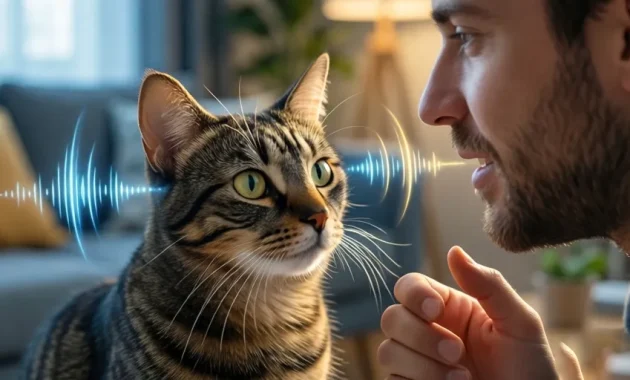
Every cat owner has experienced "The Stare." You call your cat’s name from across the room. Their ear twitches. Their tail thumps once. They look directly at you—and then they go back to licking their paw.
In the world of canine companionship, this would be considered a failure of training. In the world of cats, it is a sophisticated cognitive choice. For decades, the myth persisted that cats were simply "untrainable" or "not as smart as dogs." However, as we move through 2026, a surge in feline cognitive research has debunked these notions. Cats are not just hearing noise; they are performing a complex analysis of phonemes, vocal frequencies, and social intent.
To truly answer the question, "Do cats understand words?", we must step away from our human-centric definition of language and dive into the biological and evolutionary machinery of the feline mind.
The Biological Hardware: The Superior Feline Ear
Before a cat can understand a word, they must process the sound. The feline ear is a masterpiece of biological engineering.
Frequency and Range
Humans hear within a range of roughly 20 Hz to 20,000 Hz. Cats, however, possess a range of 48 Hz to 64,000 Hz. This allows them to hear the ultrasonic squeaks of rodents that are completely silent to us. Because of this, our voices—especially deep, guttural tones—can often sound "muddy" or overwhelming to them.
The Pinnae: 32 Muscles of Precision
A cat’s outer ear (the pinnae) is controlled by 32 independent muscles. They can rotate their ears 180 degrees to pinpoint the exact source of a sound. When you speak, your cat isn't just hearing you; they are "mapping" you in a 3D acoustic space. If they don't turn their head, their ears have already done the work of acknowledging your presence.
The Science of Name Recognition: The 2026 Breakthrough
One of the most cited studies in recent years, popularized by researchers in Tokyo and expanded upon by feline behaviorists globally, proves that cats can discriminate their own names from a list of similar-sounding nouns.
The Habituation-Dishabituation Method
Researchers played recordings of four nouns with the same rhythm and length as the cat’s name. By the fourth noun, the cats "habituated"—they stopped paying attention. But when the fifth word was the cat’s actual name, the subjects showed "dishabituation," manifested by ear movement, head rotation, and pupil dilation.
Phonemic Discrimination
This suggests that cats can differentiate based on phonemic content. They recognize the specific combination of vowels and consonants that make up "Luna" versus "Tuna." However, the study also confirmed what owners already knew: recognizing a name does not equal a desire to obey. Cats acknowledged their name, but rarely did they get up to move toward the speaker.

Cat-Directed Speech: Why "Baby Talk" Actually Works
Have you ever noticed that you talk to your cat in a higher, more melodic voice than you use for your coworkers? This is called Cat-Directed Speech (CDS), and science says your cat prefers it.
High Pitch and Exaggerated Vowels
Cats respond more strongly to higher frequencies. To a cat, a deep male voice can sometimes sound like a growl (a threat), whereas a higher-pitched "baby talk" mimics the frequency of a kitten’s "mew."
The Emotional Mirror
Recent studies using fMRI scans on cats show that the emotional centers of their brains light up more significantly when they hear CDS from their owners compared to a stranger. They are not just hearing words; they are "feeling" the safety and affection in your tone.
The "Vocabulary" of a Domestic Cat
How many words can a cat actually learn? While a Border Collie might learn 1,000+ nouns, a cat’s functional vocabulary usually sits between 20 and 50 words.
Associative Learning vs. Semantic Understanding
It is crucial to distinguish between understanding a definition and associative learning. A cat doesn't know that "Dinner" means "a meal eaten in the evening." Instead, they know that the sound "Din-ner" is statistically likely to be followed by the opening of a can.
The "Action" Vocabulary
Common words cats successfully "understand" include:
-
Names: Their own and often the names of other pets in the house.
-
Food Cues: "Treat," "Dinner," "Hungry," "Fish."
-
Boundaries: "No," "Off," "Down" (though these are often ignored if the reward for staying is higher).
-
Social Invitations: "Come," "Bed," "Cuddle."

The Evolutionary Gap: Why Cats Don't "Obey"
The reason cats are often labeled as "less smart" than dogs is due to a misunderstanding of their evolutionary history.
Self-Domestication
Dogs were bred for thousands of years to work for us. Cats, however, "domesticated themselves" about 10,000 years ago in the Near East. They moved into human settlements to hunt the mice attracted to grain stores. They were not "hired" to follow commands; they were independent contractors.
The Cost-Benefit Analysis
Because cats are solitary hunters by nature, they do not have the "pack mentality" that makes dogs eager to please a leader. When you call a cat, the cat asks: "Is the benefit of responding (a treat/petting) greater than the cost of stopping my current nap?" If the answer is no, the cat remains still. This isn't stupidity; it’s efficiency.
Non-Verbal Syntax: The Silent Half of the Conversation
To a cat, your words are only part of the message. They are experts at reading "Micro-Expressions" and body language.
The Slow Blink (The Feline "I Love You")
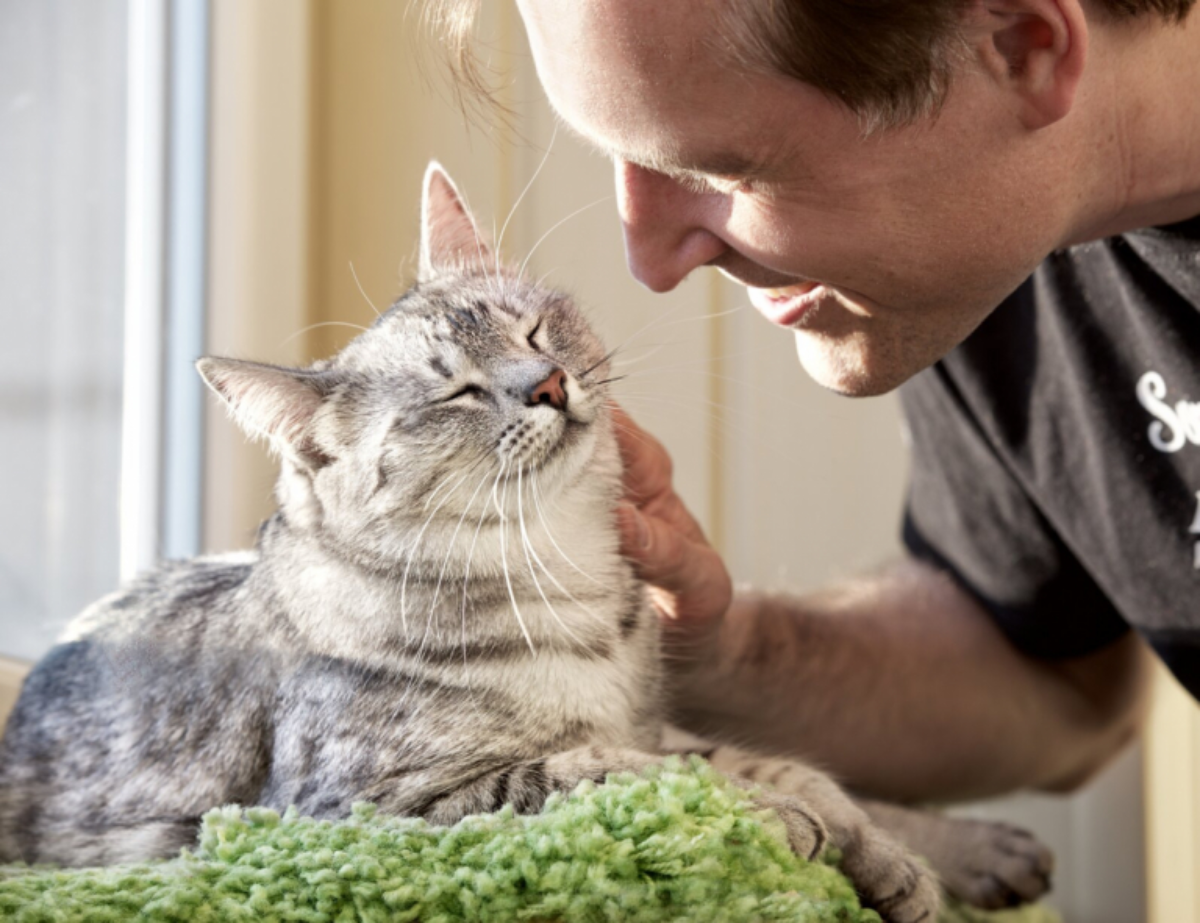
In the feline world, staring is a threat. If you want to communicate "I am safe and I love you," you must perform the slow blink. When you say "I love you" while blinking slowly, the cat receives a reinforced message that your words alone could never convey.
The Tail Language
-
Vertical Tail: A sign of a friendly greeting. If you say "Hello" and the tail goes up, the "conversation" is successful.
-
Flicking/Thumping Tail: This indicates irritation. If you are talking to your cat and see this, they are telling you they have had enough social interaction.
Training the Feline Mind: Bridging the Language Barrier
If you want to increase your cat's "vocabulary," you have to think like a scientist.
The Rule of Consistency
Cats cannot handle synonyms. If you want them to get off the counter, choose one word. If one person says "Off," another says "No," and another says "Get down," the cat hears four different sounds and learns nothing.
Positive Reinforcement and Timing
A cat’s brain links a word to an action only if they happen within 3 seconds of each other. If you give a treat 30 seconds after calling their name, the neural connection is lost.
Case Studies: The "Talking" Cats of Social Media
In recent years, "FluentPet" buttons have taken the internet by storm. Cats like BilliSpeak use soundboards to "talk" to their owners.
Can Cats Construct Sentences?
While some cats seem to use buttons to say things like "Mad-Scrath-Now," behaviorists are cautious. This is likely a sophisticated form of chaining associations rather than true syntax. However, it proves that cats are capable of learning that specific buttons (and thus, specific words) trigger specific human reactions.
Senior Cats and Cognitive Decline
As cats age, they may seem to "forget" their names or words. This is often Feline Cognitive Dysfunction (FCD).
Symptoms to Watch For
-
Staring into space.
-
Yelling at night.
-
Failing to respond to familiar cues. Providing "brain games" and consistent verbal interaction can help slow this decline, keeping the "linguistic" part of their brain active.
The Physics of the Meow
Interestingly, adult cats rarely meow at other cats. Meowing is a "human-directed" language they developed to manipulate us. Kittens meow to get their mother's attention, and domestic cats simply extended this behavior to their human "parents." By meowing, your cat is effectively using your own logic against you—they have learned that sounds result in actions.
Conclusion: A Relationship Built on Sounds
Do cats understand words? The answer is a resounding yes, but with a feline twist. They don't understand the dictionary definition; they understand the social contract behind the sound.
Talking to your cat isn't "crazy." It is a vital part of building a bond with a creature that, despite being a fierce predator, has chosen to live in your home. Every time you speak to your cat, you are reinforcing a 10,000-year-old bridge between two vastly different species.
FAQ: Do Cats Understand Human Words?
Do cats actually understand human language?
Cats do not understand language the same way humans do, but they can recognize specific words, tones, and patterns through associative learning and repeated interaction.
Can cats recognize their own names?
Yes. Research shows that cats can distinguish their names from other similar-sounding words, even if they choose not to respond.
Why do cats ignore their owners sometimes?
Cats often perform a “cost-benefit analysis.” Unlike dogs, they are independent animals and may ignore commands if there is no clear reward or motivation.
How many words can a cat learn?
Most domestic cats can recognize around 20–50 commonly repeated words, especially words linked to food, routines, affection, or rewards.
What words do cats understand most easily?
Cats commonly recognize:
- their names,
- food-related words like “treat” or “dinner,”
- simple commands like “no” or “come,”
- and emotional vocal patterns.
Do cats prefer baby talk?
Yes. Studies suggest cats respond more positively to “cat-directed speech,” which includes:
- higher pitch,
- exaggerated vowels,
- and softer emotional tones.
Why do cats respond better to certain voices?
Cats are highly sensitive to sound frequencies. Higher-pitched voices often feel safer and more familiar, while deeper tones may sound threatening.
Can cats understand emotions in human voices?
Yes. Cats can detect emotional cues from vocal tone, body language, and facial expressions, especially from people they trust.
What does a slow blink mean in cat communication?
A slow blink is considered a sign of trust and affection. Many feline behaviorists describe it as the cat equivalent of saying “I feel safe with you.”
Why do cats meow at humans but not other cats?
Adult cats mainly use meowing as a human-directed communication tool. In nature, adult cats rely more on scent, posture, and body language with each other.
Can cats be trained to understand commands?
Yes. With consistency, timing, and positive reinforcement, cats can learn associations between words and actions.
Why is consistency important when training cats?
Cats rely heavily on repetition. Using different words for the same action (“off,” “down,” “stop”) can confuse them and slow learning.
Do cats understand sentences?
Cats likely do not understand full grammar or sentence structure, but they can recognize familiar sound patterns and contextual cues.
What are FluentPet talking buttons for cats?
FluentPet buttons allow pets to associate recorded words with actions or outcomes, helping some cats communicate needs through learned button pressing.
Can senior cats forget words or names?
Yes. Older cats may develop cognitive decline, known as Feline Cognitive Dysfunction (FCD), which can affect memory, recognition, and responsiveness.