The Pathophysiology and Clinical Imperatives of Feline Gonadectomy: A Comprehensive Review of Spaying and Neutering
2 months ago
In small animal general practice and shelter medicine, few surgical interventions carry as much statistical weight or public health significance as feline gonadectomy—the surgical removal of the reproductive organs. Colloquially broken down into spaying (female) and neutering/castration (male), these elective procedures serve as the primary defensive line against the global crisis of feline overpopulation.
Because domestic cats (Felis catus) are highly prolific breeders capable of producing multiple litters annually, unmanaged reproduction rapidly overburdens animal rescue ecosystems and compromises local wildlife populations.
                  FELINE REPRODUCTIVE CAPACITY PROFILE
  ┌────────────────────────────────────────────────────────────────────────┐
  │ MATURATION HORIZON ──► Sexual maturity reached as early as 4 months.   │
  ├────────────────────────────────────────────────────────────────────────┤
  │ LIFETIME POTENTIAL  ──► An intact female can yield 100 to 200 kittens. │
  └────────────────────────────────────────────────────────────────────────┘
Beyond population control, gonadectomy is a cornerstone of preventative veterinary medicine. Removing the source of sex hormones eliminates or drastically reduces the risks of various life-threatening reproductive pathologies and severe behavioral issues.
This human-authored clinical review details the anatomical mechanics of feline spaying and neutering, analyzes optimal surgical timing, evaluates the preventative health and behavioral benefits, and addresses common client misconceptions and postoperative care guidelines.
Anatomical Definitions and Surgical Mechanics
Feline gonadectomies are aseptic abdominal or scrotal surgeries performed under full, balanced general anesthesia. Depending on the patient's sex, the surgical entry points and tissue handling differ significantly.
                        GONADECTOMY PROCEDURAL SPLIT
                                     │
         ┌───────────────────────────┴───────────────────────────┐
         ▼                                                       ▼
   [ Ovariohysterectomy / Ovariectomy ]                   [ Orchiectomy / Castration ]
   • Female surgical protocol.                            • Male surgical protocol.
   • Requires midline or flank celiotomy.                 • Scrotal incisions left open to drain.
   • Removes ovaries ± uterine horns.                      • Severs and ligates spermatic cords.
1. Female Surgical Architecture (Spaying)
The female sterilization procedure is typically approached via a ventral midline celiotomy (surgical incision into the abdominal cavity) or, in some European regions, a lateral flank approach. Vets perform one of two procedures:
-
Ovariohysterectomy (OVH): The traditional standard involving the complete surgical removal of both the ovaries and the uterine horns down to the uterine body.
-
Ovariectomy (OVE): The surgical removal of the ovaries alone, leaving the uterus intact. Clinical data shows that OVE offers identical long-term health benefits with reduced surgical time and tissue trauma, provided the uterus is healthy at the time of surgery.
The surgeon ligates the ovarian pedicles and the uterine body using absorbable suture material or specialized thermal-coagulation devices to prevent internal bleeding. The abdominal wall and subcutaneous layers are then closed in distinct tissue tiers, followed by skin sutures or intradermal patterns that do not require external removal.
2. Male Surgical Architecture (Neutering/Castration)
The male orchiectomy is a less invasive, extra-abdominal procedure. The vet makes two small incisions directly into the scrotum over each testicle. The testicles are exteriorized, and the spermatic cords and associated blood vessels are securely ligated—either using absorbable suture material or an autogenous knot tied with the cord itself.
Crucially, the small scrotal incisions are left open to heal by second intention. This open approach prevents fluid build-up (seromas or hematomas) and reduces postoperative discomfort, meaning male cats rarely require external stitches.
Chronological Synchronization Optimal Surgical Timing
Determining the ideal age for feline gonadectomy has historically been a point of minor debate among veterinary practitioners. However, modern clinical consensus has unified around an earlier window than previously practiced.
                    SURGICAL TIMING INTERVENTION WINDOWS
  [ Early-Age Window: 4 Months ]   ──► Highly recommended for outdoor-access kittens.
                                       Completely prevents accidental juvenile pregnancy.
  [ Standard Window: 6 Months ]    ──► Acceptable timeline for strictly indoor-only environments
                                       with zero risk of cross-sex exposure.
1. The 4-to-6 Month Horizon
The current standard recommendation endorsed by major veterinary organizations, including the International Society of Feline Medicine (ISFM), is to perform gonadectomies between 4 and 6 months of age. Because female kittens can reach sexual maturity and experience their first heat cycle as early as 4 months, early intervention is critical for any cat with outdoor access to eliminate the risk of juvenile pregnancy.
2. Myth Dismantling: The "One-Litter" Misconception
A lingering client myth suggests that female cats benefit from being allowed to experience one heat cycle or nurse one litter of kittens prior to sterilization.
Clinical Reality: There are absolutely zero documented physiological, psychological, or health benefits to allowing a cat to have a litter before spaying. Conversely, delaying the procedure exposes the kitten to unnecessary pregnancy risks and significantly increases the lifetime incidence of mammary tumors.
Preventative Health and Behavioral Pathologies
Leaving a domestic cat intact exposes them to a continuous cycle of hormonal surges that can trigger dangerous medical conditions and severe behavioral issues.
                  THE INTENSE ESTROUS CYCLE LOOP
  [ Breeding Season ] ──► Continuous Seasonally Polyestrus Cycles (In Heat)
                          │
                          ▼
  [ If Unmated ]     ──► Temporary Lull ──► Automatic Return to Active Heat
                          │
                          ▼
  [ Chronic State ]  ──► Persistent structural stress on uterine walls and behavior
1. Female Preventative Health & Behavior
Female cats are seasonally polyestrus, meaning they go into heat repeatedly during the breeding season. If mating does not occur, the heat cycle pauses briefly before cycling back into action, keeping the cat in a near-constant state of hormonal stress. This state triggers severe behavioral and medical risks:
-
Pyometra: A life-threatening, progesterone-induced bacterial infection of the uterus. The uterus fills with pus, creating a systemic toxic crisis that requires emergency surgical removal.
-
Mammary Neoplasia: Intact female cats face a drastically higher risk of developing malignant breast cancer. Spaying a cat before her first heat cycle reduces this risk by over 90%.
-
Escape Behavior & Pathogen Exposure: Females in heat become extremely restless, vocalize loudly, and try to escape outdoors to find a mate. This behavior puts them at high risk for car accidents, fight injuries, and contracting viruses like Feline Immunodeficiency Virus (FIV) and Feline Leukemia Virus (FeLV).
2. Male Preventative Health & Behavior
Intact male cats (tomcats) are heavily driven by testosterone, which fuels territorial instincts and behaviors that are highly challenging to manage in a domestic home:
                 TOMCAT TESTOSTERONE-DRIVEN BEHAVIORS
  ┌────────────────────────────────────────────────────────────────────────┐
  │ URINE SPRAYING   ──► Pungent, musky scent-marking inside the home.     │
  ├────────────────────────────────────────────────────────────────────────┤
  │ ROAMING & FIGHTS ──► Escaping to track females; aggressive fighting     │
  │                      that leads to deep bite abscesses and FIV spread. │
  └────────────────────────────────────────────────────────────────────────┘
-
Urine Spraying: Intact males use their urine to mark territory. Tomcat urine has an incredibly intense, pungent, and long-lasting "musky" odor that is very difficult to remove from home furniture and carpets.
-
Roaming and Aggression: Driven to track females in heat, intact males will roam over large distances, cross dangerous roads, and fight aggressively with other tomcats. These territorial battles frequently result in severe bite abscesses and the rapid spread of FIV and FeLV through saliva-to-blood contact.
Clinical Risks, Cost Analysis, and Metabolic Transitions
While spaying and neutering are routine procedures, they remain major surgeries that require careful planning and proper postoperative monitoring.
Step-by-Step Postoperative Care Protocol
The post-surgical recovery phase spans roughly 7 to 10 days. While cats often seem completely back to their normal, energetic selves within 24 to 48 hours, strict adherence to recovery protocols is vital to ensure proper tissue healing and prevent surgical failures.
Post-Surgical Recovery Timeline
  [ Day 1: Discharge ] ──► Home confinement, isolated warm space, and small meal introduction.
                                  │
                                  ▼
  [ Days 2-5: Isolation ] ──► Strict restriction of jumping, climbing, and running.
                                  │
                                  ▼
  [ Days 7-10: Checkup ]  ──► Final veterinary surgical site inspection and clearance.
-
Isolation and Confinement: Place the cat in a quiet, warm, draft-free room away from children and other household pets. Avoid leaving them in areas with high furniture to prevent jumping or climbing, which can stress and pull apart fresh internal stitches.
-
Surgical Site Monitoring: Inspect the incision line twice daily. A healthy healing site should look clean and dry. A small amount of firm swelling under the skin is normal as the deep sutures dissolve, but contact your vet immediately if you notice active dripping, fresh bleeding, continuous oozing, or if the wound pulls apart.
-
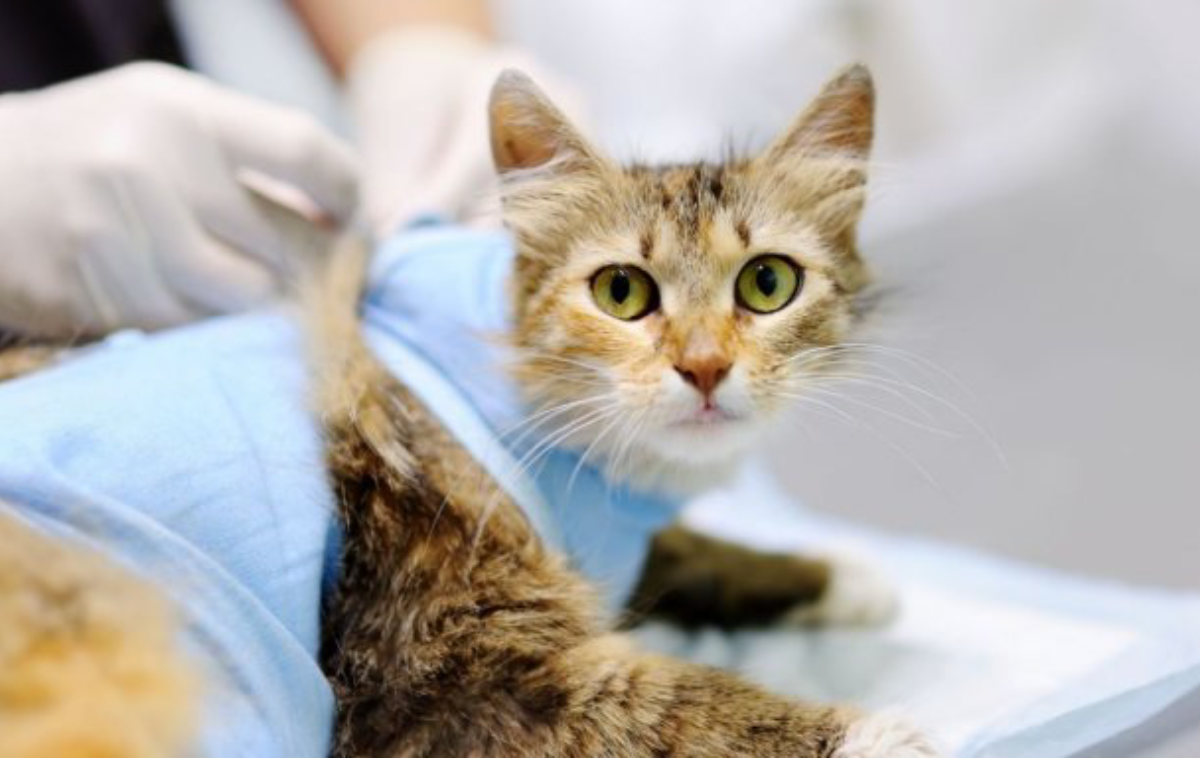
Preventing Self-Trauma: Keep a protective Elizabethan collar (E-collar/cone) or a specialized recovery suit on the cat for the full duration recommended by your vet. Cats have backward-facing barbs on their tongues that can easily shred surgical glue, pull out stitches, and introduce harmful mouth bacteria into the wound within seconds.
-
Litter Box Management: For the first few days following a female spay, consider replacing standard clay litter with recycled paper pellet options. This swap prevents dusty particles or heavy clay grains from sticking to the fresh abdominal incision.
Conclusion: Prioritizing Lifetime Wellness Over Hormonal Drivers
Spaying and neutering are crucial components of responsible pet ownership and essential practices for modern feline medicine. These procedures provide a highly reliable method for regional population control, while completely shielding your cat from severe, painful medical conditions like pyometra, mammary tumors, and bite abscesses.
By eliminating intense territorial and mating drives, gonadectomy helps your cat transition smoothly into a calm, relaxed lifestyle. This straightforward preventative step removes stressful hormonal behaviors, paving the way for a long, healthy, and peaceful life as a companion animal within the home.
FAQ
1. What is the difference between spaying and neutering?
Spaying is the surgical removal of a female cat's reproductive organs, while neutering (castration) is the removal of a male cat's testicles.
2. At what age should a kitten be spayed or neutered?
Most veterinarians recommend spaying or neutering between 4 and 6 months of age, before sexual maturity occurs.
3. Is it safe to spay or neuter a kitten at 4 months old?
Yes. Early-age sterilization is widely supported by veterinary organizations and is considered safe for healthy kittens.
4. Should a female cat have one litter before being spayed?
No. There are no proven health or behavioral benefits to allowing a cat to have a litter before spaying.
5. Does neutering stop male cats from spraying?
Neutering significantly reduces urine spraying behavior, especially when performed before the habit becomes established.
6. Will my cat become overweight after being spayed or neutered?
Not necessarily. Weight gain is primarily caused by excess calorie intake and insufficient exercise, not the surgery itself.
7. Does spaying eliminate the risk of pyometra?
Yes. Spaying removes the reproductive organs, completely preventing pyometra, a potentially life-threatening uterine infection.
8. Does neutering reduce aggression in male cats?
In many cases, yes. Neutering often reduces territorial aggression, roaming, and fighting behaviors linked to testosterone.
9. How long does recovery take after spaying or neutering?
Most cats recover within 7–10 days, although many appear back to normal within 24–48 hours.
10. Do cats need to wear a cone after surgery?
Yes. An Elizabethan collar or recovery suit helps prevent licking, chewing, or damaging the surgical site.
11. Can an indoor cat skip spaying or neutering?
Veterinarians still recommend sterilization because it helps prevent reproductive diseases and hormone-driven behaviors, even in indoor cats.
12. What are the biggest health benefits of spaying a female cat?
Spaying greatly reduces the risk of mammary cancer, completely prevents pyometra, and eliminates heat cycles.
13. What are the biggest health benefits of neutering a male cat?
Neutering reduces roaming, fighting injuries, disease transmission risks, and unwanted reproductive behaviors.
14. Is the procedure painful for cats?
Cats receive anesthesia and pain management medications. Most experience only mild discomfort during recovery.
15. Why is spaying and neutering important for population control?
Cats reproduce rapidly. Spaying and neutering help prevent unwanted litters and reduce overcrowding in shelters and rescue organizations.