Why Your Cat Walks Away From a Half-Eaten Bowl — And What Science Says About It
1 month ago
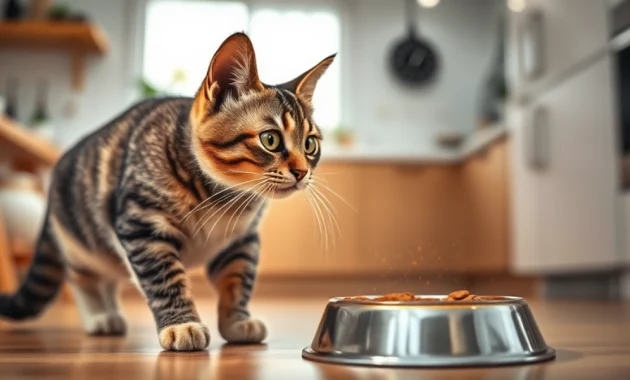
Every cat owner knows the scene. You've just opened a fresh can, or filled the bowl with kibble, and your cat comes trotting over with what looks like genuine enthusiasm — ears forward, tail up, maybe a little vocalization to let you know the service is, frankly, overdue. They sniff. They take a few bites. They chew. And then, somewhere around the three-minute mark, they stop, straighten up, and walk away like the bowl doesn't exist. Not slowly, not reluctantly just done, apparently, with the whole enterprise.
You stand there looking at a bowl that's maybe a third empty, mentally calculating how much of that food you're going to end up throwing away, and you arrive, as most of us do, at the conclusion that cats are simply strange. Finicky. Incomprehensible in that specific feline way that's somehow both endearing and profoundly annoying when you're trying to make sure a living creature actually eats enough to thrive.
Here's the thing: a team of researchers in Japan decided to take this observation seriously rather than chalking it up to the general inscrutability of cats, and what they found completely changes the way we should understand what's actually happening in that moment. The cat isn't full. The cat almost certainly doesn't dislike the food. And the cat isn't, as generations of frustrated owners have suspected, simply being dramatic for the sake of it.
The real explanation lives in evolutionary biology and sensory neuroscience specifically, in the extraordinary sensitivity of the feline nose and a phenomenon called olfactory habituation. And once you understand it, a lot of things about your cat's eating behavior that have probably puzzled you for years will suddenly make a great deal more sense.
The Study That Changed the Conversation
Iwate University and the Question Worth Asking
The research that's quietly reshaping how we think about feline eating behavior came out of Iwate University in Japan, led by animal behavior scientist Masao Miyazaki. His team published their findings in the journal Physiology & Behavior, and the core question they set out to answer was deceptively simple: when a cat stops eating mid-meal, is it actually because they're full?
It seems like a question with an obvious answer. Of course, you might say if the cat stops eating, the cat is presumably no longer hungry. That's how eating works. But Miyazaki and his team were skeptical, because the observation that prompted the study in the first place didn't quite fit that explanation. Cats weren't eating until satisfied and then stopping they were stopping abruptly, often with food still clearly available and appealing, and then frequently returning to eat more a few minutes later. That specific pattern the mid-meal pause and return is hard to explain purely through satiety.
The Experimental Design
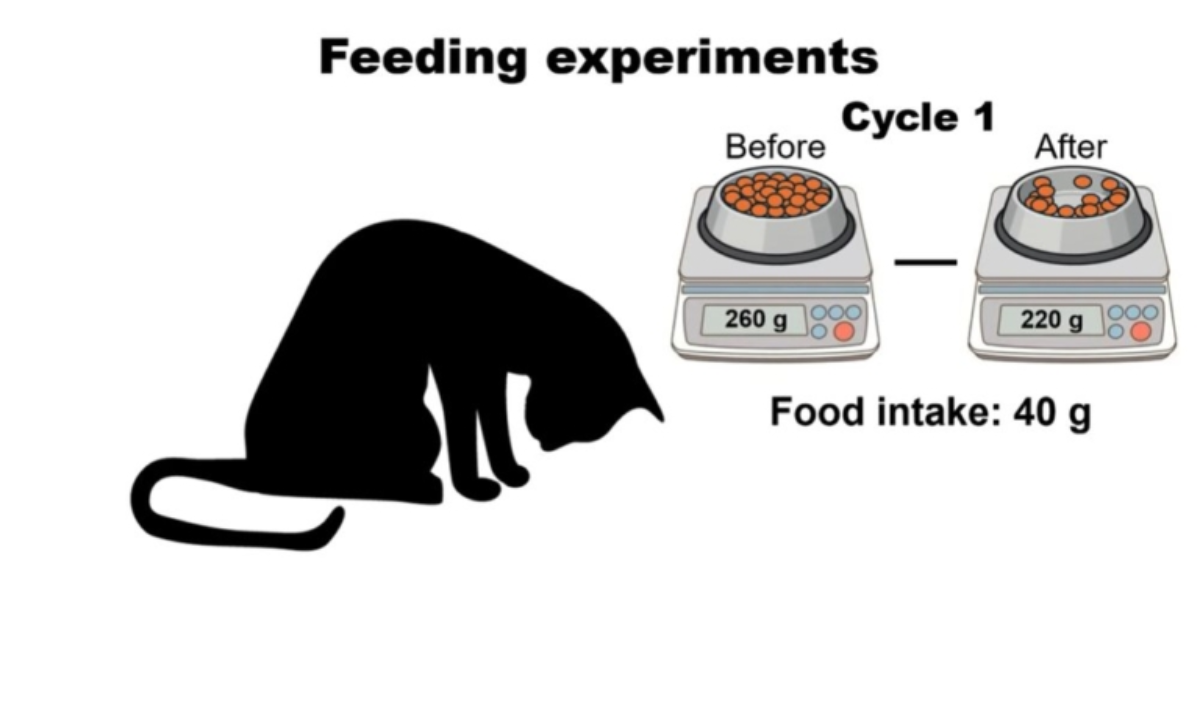
To test the satiety hypothesis rigorously, the researchers started by removing it as a variable. They worked with twelve domestic, non-neutered cats and had each cat fast for sixteen hours before the feeding trial long enough that genuine hunger would be essentially guaranteed going into the test. No cat was going to approach this meal with anything but a genuine biological appetite.
Each cat was then offered a modest 20-gram portion of dry food under controlled conditions, and the researchers tracked what happened.
What they expected to see and what most people would expect to see, given the sixteen-hour fast was a hungry animal eating with focus and clearing the bowl. What they actually observed was something quite different: a typical cat ate roughly one-third of the offered food during the first ten minutes and then stopped. Not all cats stopped at exactly the same point, but the pattern was consistent enough to be meaningful. These animals were genuinely hungry. The food was available and palatable. And they stopped eating anyway, long before their caloric needs could plausibly have been met.
This was the finding that made the study interesting: if these cats weren't stopping because they were full — and at one-third of even a modest portion, after sixteen hours without food, they weren't then something else entirely was driving the decision to stop.
The Answer: Olfactory Habituation
The explanation Miyazaki's team landed on was olfactory habituation — the phenomenon by which a sensory system, after sustained and continuous exposure to the same stimulus, gradually reduces its response to that stimulus. In simpler terms: the nose gets used to a smell, and once it's used to it, that smell stops generating the same response it did when it was new.
For cats, this turns out to matter enormously at mealtime, for reasons rooted in the fundamental biology of how feline appetite actually works.
Understanding the Feline Appetite System
The Nose as the Real Appetite Engine
To appreciate why olfactory habituation has such a dramatic effect on feline eating behavior, you first need to understand the role the nose plays in feline appetite — which is a much larger and more central role than most owners realize.
Cats are, in formal sensory terms, relatively poor tasters. Their taste receptor system is limited compared to ours — they can detect amino acids (which map roughly to what we'd call savory or meaty), some bitterness, and certain fatty acids, but they lack functioning sweet taste receptors entirely (a mutation that occurred through evolutionary history and has stuck, presumably because sweetness offered no meaningful survival advantage to an obligate carnivore evaluating prey). The taste experience available to a cat eating a meal is narrower and simpler than what we experience eating our own food.
What cats have instead, in breathtaking abundance, is olfactory power. As covered in depth in earlier guides in this series, domestic cats possess around 65 million olfactory receptors — roughly four to five times the concentration of our own. Scent isn't a supplementary channel of information for a cat evaluating food. It is the primary channel. Before a cat takes a single bite, the nose has already formed most of its evaluation: is this food? Is it fresh? Is it nutritionally dense? Is it familiar? Is it safe?
And here's the key implication: if the nose is what triggers and sustains the "let's eat" signal, then anything that disrupts or dampens the nose's engagement with that signal will directly and immediately affect eating behavior — regardless of how genuinely hungry the cat actually is.
The Perfume Analogy
Miyazaki's team uses an analogy to explain olfactory habituation that makes the phenomenon immediately intuitive: wearing perfume.
Think about the first moment you spray a new fragrance, or walk into a room that's been freshly scented with something strong. The smell is vivid, immediate, commanding. It registers clearly and perhaps pleasantly. But stay in that room for another twenty or thirty minutes, and something changes — or rather, seems to change. The scent that was so obvious when you first entered now seems to have faded significantly. Not because less fragrant molecules are in the air — the concentration is essentially the same — but because your olfactory system has habituated to that particular stimulus. It's identified it, categorized it, registered it as "present and constant," and quietly stopped raising the alarm about it. Your nose hasn't gotten worse; it has simply decided that this particular smell no longer requires active attention.
For a cat standing over a food bowl, the same process unfolds on a much faster timescale. In the first thirty seconds to a couple of minutes of eating, the food's aroma is fresh and novel — it's actively triggering the cat's olfactory system, sending the "this is food, this is worth eating" signal to the brain with vigor. But as the cat remains positioned over the same bowl, continuously inhaling the same scent profile, the olfactory system habituates. The smell doesn't disappear, but it stops actively registering as a compelling, motivating stimulus. And because that olfactory signal is, functionally, the main engine driving the cat's eating motivation, once it dims, the cat stops eating.
Not because they're full. Not because the food is bad. Not because anything has changed about the food, the cat's hunger, or the situation in any objective sense. Because the nose has simply moved on.
The Clever Experiment That Proved It
Designing Around the Theory
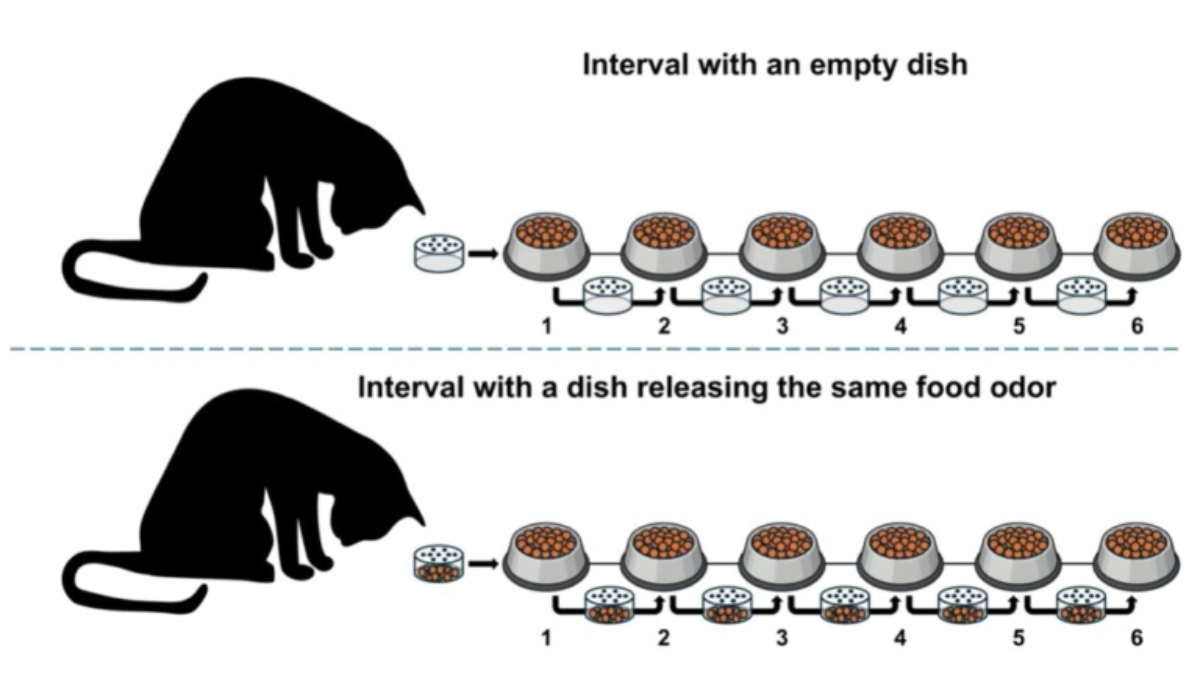
If olfactory habituation is really what's happening, then the prediction follows clearly: you should be able to reignite a cat's eating motivation not by changing the food itself, but by introducing a new olfactory stimulus — a different smell — to reset the nose's engagement. The cat's brain, re-encountering something novel after the previous stimulus had faded into background, should respond with renewed interest.
This is exactly what Miyazaki's team tested, using an elegantly designed two-compartment feeding bowl. The setup involved a top section where the cat's actual food was placed for eating, and a sealed lower compartment positioned beneath it, accessible to the cat's nose (they could smell whatever was placed there) but completely inaccessible physically (they couldn't eat it or paw it away). This two-layer design allowed the researchers to manipulate what the cats smelled independently of what the cats were actually eating — a clean separation of olfactory stimulus from actual food consumption.
What They Found
The results were striking enough to be worth examining in some detail, because they're more nuanced than simply "new smell makes cat eat more."
Result one: Variety drove increased consumption. When the researchers offered a sequence of six different food choices across the experimental period, the cats gradually ate more overall. This isn't entirely surprising — rotating scents provided ongoing olfactory novelty and prevented the sustained habituation that causes mid-meal stopping. More novel stimuli, more eating.
Result two: The "reset button" worked even without changing the actual food. This is the finding that really demonstrates the mechanism cleanly. In trials where the food in the top, accessible bowl remained exactly the same throughout the session, but the researchers introduced a new food scent into the sealed lower compartment mid-meal, the cats' motivation to eat their regular food was meaningfully restored. The food hadn't changed. The cat's hunger level hadn't changed. The only thing that changed was a new smell wafting upward from below — and that was enough to re-engage the olfactory system and send the cat back to the bowl.
Result three: Novelty trumped preference. Perhaps the most counterintuitive finding of all: cats increased their food intake in response to a novel scent even when the scent in the lower compartment belonged to a food that wasn't their particular favorite. The exciting thing about the stimulus was its newness, not its intrinsic palatability. This is a really important detail, because it suggests that what cats respond to most powerfully isn't necessarily "I smell something I love" — it's "I smell something different," and that difference itself provides the motivational stimulus.
Why This Matters Far Beyond Dinnertime Frustration
The Prescription Diet Problem
For the millions of households where a cat eats a standard commercial diet and occasionally leaves food behind, olfactory habituation is an interesting explanation for a mildly annoying behavior pattern. But for a specific and significant subset of cat owners, this research illuminates something genuinely urgent and distressing.
Many cats with chronic medical conditions are prescribed therapeutic or prescription diets — highly specific formulations designed to manage kidney disease, urinary tract conditions, diabetes, hyperthyroidism, food allergies, or other health issues. These diets are carefully formulated, medically necessary, and in many cases, non-negotiable. The cat needs to eat this specific food, consistently, over months or years. There is no rotating in something more interesting. There is no swapping to a novel recipe when the cat seems to be losing interest. The prescription diet is the diet.
And here's where olfactory habituation becomes a real clinical problem: cats on these unchanging, medically necessary diets are, by definition, experiencing exactly the sustained, repeated exposure to an identical scent profile that drives the most severe and persistent habituation. They're being asked to eat the same smell, every single meal, indefinitely. And the research tells us clearly that this is the precise condition under which a cat's nose is most likely to disengage.
This explains something that veterinarians and owners of chronically ill cats have observed anecdotally for years but perhaps never had a clear biological framework for: aging or ill cats who initially accepted their prescription diet well, but who gradually, over weeks or months, begin to show diminishing interest in it, eating less per meal, skipping meals, eventually sometimes refusing it altogether. The frustrating, heartbreaking paradox of a sick animal who desperately needs nutrition refusing the food their body depends on is, at least in part, a story about olfactory habituation rather than purely about appetite loss from illness.
The Implications for Nutritional Support
Understanding the mechanism doesn't automatically solve the problem in these cases — the therapeutic diet still needs to be the primary source of nutrition — but it does point toward strategies that can help maintain eating motivation without compromising the diet's medical function. The goal shifts from "change the food" to "change the smell," and those are very different things to attempt.
What You Can Actually Do About It
The Trap to Avoid: Constantly Switching Diets
The obvious, instinctive response to this research is: rotate the food regularly. If novelty drives eating motivation, and the same smell drives habituation, then keeping a rotating roster of different recipes and flavors should solve the problem. Right?
Miyazaki himself is clear and emphatic here: no, and don't. Frequently switching your cat's actual diet — the food itself, the recipe, the protein source — is a reliable path to two separate problems. The first is digestive: a cat's gut microbiome adapts over time to the specific composition of their regular diet, and frequent switches disrupt that balance, often producing diarrhea, vomiting, and genuine gastrointestinal distress that makes the cat feel worse rather than better. The second problem is behavioral: cats who are constantly offered different foods tend to develop increasingly high novelty thresholds — they come to expect variety, and when it's not present (because life happens and you can't always keep a rotating pantry fully stocked, or because a medical condition requires a fixed diet), they become genuinely more resistant to eating something familiar and consistent.
The research-informed approach is the opposite of constantly switching foods. The target is to maintain a stable, nutritionally consistent, appropriate diet while strategically introducing olfactory novelty — a new smell — without changing the actual composition of what the cat eats. Stimulate the nose with something new; let the digestive system continue receiving something consistent.
Strategy One: The Two-Layer Bowl Method
The most direct translation of the Japanese research into practical home use is the approach the study itself demonstrated: a feeding setup that separates what the cat smells from what the cat eats.
A two-compartment or two-layer feeding dish — sometimes called a double-decker feeder, available commercially in various designs or improvised with nested bowls of appropriate sizes — allows you to place the cat's regular food in the accessible eating area while positioning something aromatic in an inaccessible-but-sniffable lower section. A small piece of highly aromatic alternative food, a small amount of a different recipe, a sprinkle of dried treat material — anything with a distinct, appealing scent that the cat can detect but cannot actually consume and that won't create hygiene problems in a closed compartment.
The cat, approaching the bowl, encounters not just the by-now-familiar smell of their regular food but the interesting new smell coming up from below. Their olfactory system, meeting something novel, re-engages. The "let's eat" signal is refreshed. And crucially, the food the cat actually eats is the same consistent, appropriate diet it was before.
For cats on prescription diets specifically, this approach offers a way to restore olfactory motivation without touching the medical diet itself — the lower compartment introduces novelty to the nose; the upper bowl delivers the nutrition the body needs.
Strategy Two: Safe Aroma Toppers
A second approach requires no special equipment at all, and it addresses the same mechanism from a different angle: instead of introducing a separate new smell alongside the regular food, you introduce a light, safe aromatic element directly to the food's surface that transforms the initial smell profile the cat encounters without meaningfully altering the food's nutritional composition.
A few options work well for this:
A light splash of low-sodium fish or chicken broth warmed slightly before adding it (temperature matters for aroma release, as covered in earlier guides in this series) adds a distinct, powerful smell that hits the nose before the food's familiar baseline scent takes over. The volume involved is small enough that the caloric and nutritional impact is negligible, but the olfactory impact is significant.
A small sprinkle of bonito flakes (dried, shaved tuna) is particularly effective for many cats because the aroma is intensely, specifically different from whatever their regular food smells like, triggering genuine olfactory interest before the habituation to the regular food's scent can set in.
A pinch of cat-safe freeze-dried meat powder — available from a number of pet specialty brands — works on the same principle: a highly aromatic, highly palatable surface addition that the cat's nose encounters first, prompting the reset of olfactory engagement before the familiar underlying scent has time to fade into background noise.
In all cases, the principle is the same: you're not changing the food your cat eats in any meaningful quantity. You're changing the first thing their nose encounters when they approach the bowl, which is, as the research shows, a large part of what determines whether they keep eating.
Strategy Three: Managing the Timing and Location
A few simpler environmental adjustments are also worth considering alongside the above strategies.
Serving wet or canned food at an appropriate temperature — not straight from the refrigerator, which suppresses aromatic volatility and reduces scent intensity — ensures the food arrives at the bowl with its full aromatic potential rather than the muted profile it has when cold. This is relevant to olfactory habituation in that you want the food to make its strongest possible first impression; a cold, aroma-suppressed bowl doesn't give the nose much to engage with in the first place.
Removing and refreshing the bowl between meals rather than leaving the same food sitting out for hours eliminates the background exposure that contributes to habituation even when the cat isn't actively eating. If the same scent has been present in the cat's environment for six hours already when they approach the bowl, some degree of habituation has occurred before they even lower their head to eat.
Feeding in small, more frequent portions rather than one or two large meals means each presentation is, in a sense, fresher — the cat hasn't been sitting with the same scent profile for as long, and the novelty factor of each meal remains slightly higher than it would in a single extended feeding session.
Rethinking What Picky Eating Actually Means
The Diagnostic Reframe
One of the most valuable things this research offers cat owners isn't a specific behavioral intervention — it's a shift in how we interpret and respond to the behaviors we observe. When we understand olfactory habituation, the whole interpretive frame around "picky eating" in cats changes in ways that make us better caregivers.
Consider the matrix the researchers themselves put forward, contrasting what we typically assume is happening with what the science says is actually happening:
When we see a cat walk away from a half-eaten bowl, we typically think: the cat is full, or the cat doesn't like the food, or the cat is just being difficult in that infuriatingly feline way. The research tells us what's actually happening at the biological level: the cat is still hungry, the cat probably still likes the food, and the cat isn't making a deliberate choice — their olfactory system has simply habituated to the stimulus and stopped sending the eating-motivation signal.
When we see a cat who ate the same food enthusiastically for months and is now suddenly, inexplicably losing interest in it, we typically think: the cat is bored of the recipe and wants something new. The research says: the cat's nose has experienced such sustained, repeated exposure to that specific scent profile that habituation has become severe and persistent, and the threshold for olfactory re-engagement has risen. The fix isn't a new recipe — it's a new smell, applied judiciously to the existing recipe.
When we see a sick cat refusing their prescription diet, we typically think — understandably, worryingly — that the cat is too unwell to want to eat, that appetite has simply failed along with other bodily functions. And that may be partly true, because genuine illness does reduce appetite through separate mechanisms. But the research adds an additional explanation: a cat eating the same prescription diet for months has been subjected to exactly the conditions most likely to drive severe olfactory habituation, and the refusal may have at least a significant olfactory component that could be addressed through the kinds of strategies described above, potentially restoring meaningful eating motivation even in a genuinely ill animal.
The Bigger Picture — What This Tells Us About Cats
A Window Into Evolutionary Priorities
The olfactory habituation phenomenon isn't a flaw or a quirk. It's a feature, and it helps to understand why evolution would have produced it.
Consider what a wild small felid's hunting life actually looks like. A successful hunt doesn't produce the same prey type, in the same condition, every single time. A cat hunting to survive eats mice, birds, small reptiles, insects, and whatever else is catchable — and each of these prey types has its own distinctive scent profile. The variety isn't a luxury; it's the baseline condition of an opportunistic predator's food supply.
In that context, an olfactory system that maintains high sensitivity to novelty and somewhat reduces its response to familiar, repeated stimuli makes excellent adaptive sense. It keeps the cat highly alert and motivated toward anything new — a new prey type, a newly available food source — while preventing the cat from becoming so fixated on the familiar that it misses other opportunities.
The domesticated cat, living in a household where the food is the same recipe from the same bag or can served twice a day in the same bowl in the same spot, has had its evolutionary sensory system placed into conditions that bear essentially no resemblance to what that system was shaped by. The olfactory habituation that made sense in a varied, unpredictable wild diet becomes a mealtime management challenge in the fixed, repetitive indoor feeding environment. The cat's nose is doing exactly what it evolved to do; it's just that the environment in which it's doing it has changed dramatically.
Empathy as the Foundation of Better Care
There's a quiet, important shift in how this research asks us to feel about our cats' eating behavior, beyond the practical strategies it suggests. For years — in households, in internet forums, in the casual dismissal of veterinarians who perhaps should have looked more carefully — the mid-meal halt has been interpreted as difficult behavior, as cats being cats, as a form of arbitrary finickiness that says more about cats' general inscrutability than about anything that could be understood and addressed.
The Iwate University research asks us to replace that interpretation with something much more generous: empathy based on understanding. Your cat isn't walking away from the bowl to frustrate you. Their nose is doing exactly what it evolved to do, and in the absence of naturally varying prey, it's stopping them from eating a nutritionally adequate meal even when their body genuinely needs it. That's not drama. That's biology, playing out in an environment it wasn't quite designed for.
When you approach the problem that way — not as a behavioral problem to be overcome but as a sensory reality to be accommodated — the solutions become clearer, more patient, and more effective. You're not outsmarting a finicky cat; you're working with the biology of an extraordinary sensory system to create conditions where that system can do its actual job: find food, confirm it's real and good, and keep the animal eating.
Conclusion: The Nose Is Running the Show
The headline finding of Miyazaki's research is simple enough to state in a single sentence: for cats, the nose is the primary gatekeeper of eating motivation, and olfactory habituation to a repeated stimulus is what stops them mid-meal — not fullness, not preference, not finickiness.
But the implications of that simple finding ripple outward in ways worth taking seriously. They reframe "picky eating" as a sensory phenomenon rather than a behavioral one. They explain the heartbreaking pattern of ill cats refusing the prescription diets their bodies depend on. They suggest practical, evidence-based strategies that work with feline biology rather than against it. And they invite us to approach our cats' apparent irrationality around food with something other than frustration — with curiosity, and with the kind of genuine understanding that makes us better at caring for the animals we've chosen to share our lives with.
The next time your cat walks away from a half-full bowl and you feel the familiar flicker of exasperation, try replacing it with a different thought: their nose has simply adjusted to the scent, and the eating-motivation signal has temporarily gone quiet. It's not personal. It's not theatrical. It's one of the most sophisticated sensory systems on the planet doing exactly what millions of years of evolution shaped it to do.
Your job, as the caregiver, is simply to give it something new to notice.
FAQ
1. Why does my cat stop eating even when there is still food in the bowl?
Recent behavioral research suggests that many cats stop eating because of olfactory habituation, not because they are full. After smelling the same food continuously for several minutes, their highly sensitive nose becomes accustomed to the aroma, reducing their motivation to continue eating even if they are still hungry.
2. What is olfactory habituation in cats?
Olfactory habituation is a natural sensory process where a cat's brain gradually becomes less responsive to a smell after prolonged exposure. Since cats rely heavily on scent to stimulate appetite, the food becomes less appealing even though its taste and nutritional value remain unchanged.
3. Are cats really picky eaters?
Not necessarily. Many cats are labeled as picky when they are actually responding to changes in scent perception rather than rejecting the food itself. Their behavior is often driven by biology rather than preference.
4. Why do cats depend more on smell than taste?
Cats possess approximately 65 million olfactory receptors, making their sense of smell far more powerful than that of humans. They also have fewer taste receptors and cannot taste sweetness, so aroma plays the biggest role in determining whether they continue eating.
5. Does this explain why my cat returns to the bowl later?
Yes. After taking a break, the cat's olfactory system partially resets, allowing the food's scent to become interesting again. This often encourages them to return and finish their meal.
6. Why is this research important for cats on prescription diets?
Cats with kidney disease, urinary problems, diabetes, or food allergies often must eat the same prescription diet every day. Constant exposure to the same aroma may increase olfactory habituation, making them less interested in eating despite needing the specialized food.
7. Should I frequently switch my cat's food flavors?
No. Frequently changing foods can upset your cat's digestive system and encourage even pickier eating habits. Instead, maintain a consistent diet while introducing safe aromatic variety.
8. What is the two-layer feeding bowl method?
A two-layer feeding bowl separates what the cat smells from what it actually eats. The upper compartment contains the regular food, while the lower compartment holds a different aromatic food that the cat can smell but cannot consume. This can help renew eating motivation without changing the primary diet.
9. Can food toppers help stimulate appetite?
Yes. Small amounts of safe aroma enhancers such as:
- Low-sodium chicken broth
- Low-sodium fish broth
- Bonito flakes
- Freeze-dried meat powder
can increase the food's aroma and encourage cats to continue eating.
10. Should wet food be served cold?
No. Cold food releases fewer aromatic compounds. Allow refrigerated wet food to reach room temperature or warm it slightly to enhance its smell and improve palatability.
11. Is it okay to leave food in the bowl all day?
Leaving food exposed for long periods allows the scent to become part of the background environment, potentially increasing olfactory habituation. Fresh meals served at scheduled times are generally more appealing.
12. Would smaller meals help?
Yes. Offering smaller, more frequent meals keeps each serving fresher and more aromatic, reducing prolonged exposure to the same scent.
13. Why do cats lose interest in food they loved before?
Repeated exposure to the exact same aroma can reduce the brain's response over time. This does not necessarily mean the cat dislikes the food—it may simply need a fresh olfactory stimulus.
14. Is this behavior normal in healthy cats?
Yes. Walking away from a partially finished meal is common and often reflects normal feline sensory biology rather than illness.
15. When should I be concerned about my cat not eating?
If your cat refuses food entirely for more than 24 hours, loses weight rapidly, vomits repeatedly, appears lethargic, or has other signs of illness, consult your veterinarian immediately. Complete appetite loss is very different from taking short breaks during meals.