The Clinical Guide to Feline Emesis: Pathophysiology, Differential Diagnoses, and Therapeutic Interventions
1 week ago
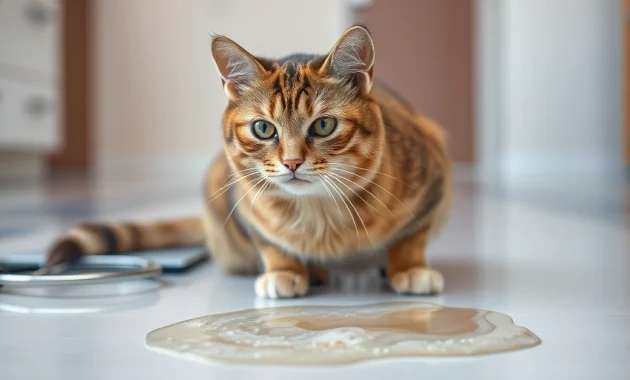
Feline emesis is one of the most frequent clinical presentations in veterinary medicine. While often dismissed by owners as an inevitable byproduct of grooming or dietary choices, vomiting is a complex physiological reflex.
This guide provides a comprehensive analysis of the neurobiology of feline emesis, the specific pathophysiology behind clear, foamy vomit, a detailed framework for differential diagnosis, and evidence-based management strategies for the veterinary practitioner and advanced caregiver.
The Neurobiology and Mechanics of Feline Vomiting
Vomiting is not a localized gastric event; it is a highly coordinated neuromuscular reflex controlled by the central nervous system.
[Peripheral Afferents / Humoral Toxins]
                 │
                 ▼
     [Chemoreceptor Trigger Zone] ──► [Emetic Center (Medulla)]
                 ▲
                 │
     [Vestibular / Higher Centers]
                 │
                 ▼
     [Coordinated Somatic Ejection]
The Central Control Mechanisms
The emetic reflex is governed by two main structures within the brainstem:
-
The Emetic Center: Located in the reticular formation of the medulla oblongata, this center receives and processes all emetic stimuli. Once a threshold is reached, it triggers the motor efferent pathways that execute the physical act of vomiting.
-
The Chemoreceptor Trigger Zone (CRTZ): Situated in the area postrema at the caudal end of the fourth ventricle, the CRTZ lies outside the blood-brain barrier. This unique positioning allows it to sample the systemic circulation directly, detecting blood-borne uremic toxins, metabolic wastes, drugs, and electrolyte imbalances.
Afferent Signaling Pathways
The emetic center processes signals from four primary anatomical pathways:
-
Visceral Afferents (Peripheral Pathway): Mechanoreceptors and chemoreceptors in the gastrointestinal tract, peritoneum, liver, and kidneys detect inflammation, distension, or irritation. These signals travel to the central nervous system via the vagus and sympathetic nerves.
-
Humoral Pathway: Circulating compounds trigger the CRTZ, which then signals the emetic center.
-
Vestibular Pathway: Mediated by the inner ear via the vestibulocochlear nerve ($CN\ VIII$), this pathway processes motion sickness or vestibular disease, using histaminergic ($H_1$) and muscarinic ($M_1$) receptors.
-
Cerebral/Higher Centers: Stress, anxiety, or trauma can trigger the emetic center through higher cortical inputs.
The Three Phases of Emesis
-
Nausea: A subjective state marked by behavioral changes: hypersalivation, frequent swallowing, lip-licking, restlessness, and hiding. This stage is driven by autonomic nervous system activity.
-
Retching: Coordinated, involuntary contractions of the abdominal muscles and diaphragm occur while the glottis remains closed. This builds up negative intrathoracic pressure while dropping intraabdominal pressure, pulling gastric contents into the esophagus.
-
Expulsion: The lower esophageal sphincter relaxes, the glottis closes to prevent aspiration, the hyoid apparatus moves forward to open the upper esophageal sphincter, and a sudden contraction of the abdominal wall ejects the gastric contents.
Pathophysiology of Clear, Foamy Vomit (Gastric Hyperacidity)
When a cat expels a clear, foamy liquid free of partially digested food or bile pigments, it indicates that the upper gastrointestinal tract—specifically the gastric lumen—is devoid of solid ingesta.
Long Inter-meal Interval ──► Unbuffered HCl Accumulation ──► Mucosal Inflammation ──► Antiperistaltic Salivary Foam Ejection
Chemical Composition
Clear, foamy vomitus consists of:
-
Gastric Secretions: Water, electrolytes, and hydrochlorid acid ($HCl$) secreted by parietal cells.
-
Pepsinogen/Pepsin: Proteolytic enzymes secreted by chief cells.
-
Mucus: A slippery glycoprotein matrix produced by surface mucous cells designed to protect the stomach lining.
-
Entrained Air (Foam): When these fluids encounter rapid antiperistaltic contractions and mix with swallowed saliva, the protein components trap air, forming a stable, frothy foam.
The Mechanism of Gastric Hyperacidity
The feline stomach continuously produces hydrochloric acid to maintain a highly acidic basal pH ($1.0 - 2.0$), optimizing protein digestion and killing pathogens.
When a cat goes too long without food, there is no food matrix to buffer this acid. The unbuffered acid can overwhelm the stomach's protective mucus-bicarbonate barrier, leading to chemical irritation of the gastric mucosa (gastritis). This localized irritation fires visceral vagal afferents, triggering the emetic center to expel the accumulated acidic fluids and foam.
Comprehensive Differential Diagnosis Matrix
To properly diagnose clear, foamy emesis, clinicians must distinguish between primary gastrointestinal disease and secondary extra-gastrointestinal or metabolic disorders.
Diagnostic Categorization
| Etiological Classification | Primary Pathology | Clinical Mechanism | Co-morbid Clinical Signs |
| Primary Gastric / Idiopathic | Gastric Hyperacidity | Long fasting intervals cause chemical irritation from unbuffered $HCl$. | Intermittent emesis; predictable morning occurrences; immediate post-vomit return to normal behavior. |
| Primary Gastric / Mechanical | Trichobezoars (Hairballs) | Accumulation of ingested hair forms an un-digestible mass that irritates the stomach lining. | Chronic dry hacking, intermittent anorexia, occasional passage of hair-laden stool. |
| Gastrointestinal / Inflammatory | Inflammatory Bowel Disease (IBD) | Cellular infiltration (lymphocytes/plasmacytes) alters gut motility and damages mucosal structures. | Weight loss, chronic diarrhea, unkempt coat, thickened intestinal loops on palpation. |
| Metabolic / Renal | Chronic Kidney Disease (CKD) | Decreased nephron function causes uremic toxins to accumulate, directly triggering the CRTZ. | Polydipsia, polyuria, halitosis (uremic breath), weight loss, pale mucous membranes. |
| Metabolic / Endocrine | Diabetes Mellitus | Lack of insulin function causes systemic dehydration, cellular starvation, and osmotic shifts. | Polyphagia, profound polydipsia, polyuria, plantigrade stance (diabetic neuropathy). |
| Systemic / Infectious | Endoparasitism (Toxocara cati) | Worms cause physical irritation and release larvae/toxins within the gastric and duodenal lumen. | Distended abdomen ("potbellied"), poor growth rate, occasional visible parasites in feces or vomitus. |
Diagnostic Workup Protocols in Veterinary Practice
When emesis shifts from an occasional event to a chronic or frequent issue (more than twice within a 24-hour window), a systematic diagnostic workup is essential.
[Clinical Presentation] ──► [Minimum Database: CBC/Chem/T4/UA] ──► [Abdominal Imaging: Rads/US] ──► [Endoscopy / Biopsy]
Phase 1: The Minimum Database
-
Complete Blood Count (CBC): Evaluates for anemia (suggesting GI bleeding or chronic disease), leukocytosis with a left shift (indicating systemic infection or severe inflammation), and hemoconcentration (reflecting dehydration).
-
Serum Biochemistry Profile:
-
Blood Urea Nitrogen (BUN) & Creatinine: Essential for diagnosing or ruling out primary renal failure.
-
Alanine Aminotransferase (ALT) & Alkaline Phosphatase (ALKP): Evaluates for hepatic disease or hepatic lipidosis.
-
Glucose: Elevated levels indicate Diabetes Mellitus or significant stress-induced hyperglycemia.
-
-
Total T4: Screen for hyperthyroidism in cats over seven years old, as elevated thyroid hormones speed up gastrointestinal motility and directly induce emesis.
-
Urinalysis (UA): Evaluates Urine Specific Gravity (USG). Fixed isosthenuria ($1.008 - 1.012$) combined with azotemia confirms renal failure. Glucosuria and ketonuria indicate unstable Diabetes Mellitus.
Phase 2: Diagnostic Imaging
-
Abdominal Radiography: Excellent for identifying radiopaque foreign objects, severe constipation, or signs of intestinal obstruction.
-
Abdominal Ultrasonography: The preferred method for assessing soft-tissue structures. It measures the thickness of the gastric and intestinal walls, identifies loss of normal tissue layers (suggestive of alimentary lymphoma), evaluates the pancreas for signs of acute inflammation, and detects radiolucent foreign bodies.
Evidence-Based Home Care and Dietary Management
For hemodynamically stable patients with mild, infrequent gastric hyperacidity, strategic home modifications can resolve clinical signs without intensive medical intervention.
1. Feeding Frequency Optimization
To counteract the empty stomach phenomenon, break the cat's total daily caloric intake into multiple small meals spread across a 24-hour period. Using automated, micro-ration feeders can ensure consistent food delivery, particularly late at night and in the early morning hours, preventing long fasting intervals and minimizing acid accumulation.
2. Transitioning to Highly Digestible Diets
Switching the patient to a prescription gastrointestinal diet can significantly reduce stomach strain. These formulas typically feature:
-
Hydrolyzed or Highly Bioavailable Proteins: Reduces the digestive workload on the stomach and minimizes the risk of food allergen cross-linking.
-
Low Fat Content: High-fat meals slow down gastric emptying, keeping acid in the stomach longer. Low-fat diets move through the stomach faster, reducing the risk of acid reflux.
3. Hydration Engineering
Do not allow a vomiting cat to gulp large amounts of water at once; sudden stretching of the stomach wall can trigger immediate vomiting. Instead, offer small, controlled amounts of fresh water or balanced electrolyte solutions using a syringe or ice cubes. This helps maintain hydration without over-distending the sensitive stomach lining.
Pharmacological Interventions and Clinical Stabilization
When conservative management fails or the patient presents with persistent emesis, targeted medication is necessary to break the vomiting cycle and protect the gastrointestinal tract.
                                  [Pharmacological Targets]
                                              │
         ┌────────────────────────────────────┴────────────────────────────────────┐
         ▼                                                                         ▼
[Antiemetic Protocols]                                                   [Gastroprotectants]
├── Maropitant (NK1 Receptor Antagonist)                                 ├── Omeprazole (Proton Pump Inhibitor)
└── Ondansetron (5-HT3 Receptor Antagonist)                               └── Sucralfate (Mucosal Cytoprotective)
Antiemetic Protocols
-
Maropitant Citrate ($NK_1$ Receptor Antagonist): Maropitant blocks substance P from binding to neurokinin-1 ($NK_1$) receptors in both the emetic center and the CRTZ. It provides highly effective, broad-spectrum control over both central and peripheral emetic pathways. Administered at $1\text{ mg/kg}$ IV or SQ every 24 hours.
-
Ondansetron ($5-HT_3$ Receptor Antagonist): Ondansetron blocks serotonin receptors on sensory vagal nerves in the gut and within the CRTZ. It is highly effective for severe vomiting driven by peripheral inflammation, such as pancreatitis or gastroenteritis. Administered at $0.5 - 1.0\text{ mg/kg}$ IV or PO every 8 to 12 hours.
Gastroprotectants and Acid Reducers
-
Omeprazole (Proton Pump Inhibitor): Omeprazole binds irreversibly to the hydrogen-potassium ATPase pump ($\text{H}^+/\text{K}^+$ ATPase) within parietal cells. By shutting down the final step of acid production, it reduces gastric acidity far more effectively than traditional $H_2$ blockers like famotidine. Administered at $1\text{ mg/kg}$ PO or IV every 12 to 24 hours.
-
Sucralfate (Mucosal Cytoprotective Agent): In an acidic environment, sucralfate dissociates into sucrose sulfate and aluminum hydroxide. The sucrose sulfate binds to positively charged proteins exposed within damaged or ulcerated tissue, forming a physical barrier that shields the raw mucosa from further acid and pepsin damage. Administered at $0.25 - 0.5\text{ g}$ PO as a slurry every 8 hours, separated from food and other oral medications by at least two hours.
Fluid Resuscitation Dynamics
Persistent vomiting quickly depletes water and essential electrolytes, leading to dehydration, hypokalemia, and metabolic alkalosis from the loss of gastric hydrochloric acid.
-
Subcutaneous (SQ) Fluids: Appropriate for mild dehydration ($<5\%$) in stable patients without active vomiting. Balanced crystalloids (such as Lactated Ringer's Solution) can be absorbed safely over several hours.
-
Intravenous (IV) Fluid Therapy: Mandatory for patients with significant dehydration ($>6\%$), systemic shock, or persistent vomiting. Intravenous access allows for precise fluid delivery and immediate correction of electrolyte imbalances, helping restore normal blood volume and organ perfusion.
FAQ
1. Why is my cat vomiting clear or foamy liquid instead of food?
Clear or foamy vomit usually means the stomach is relatively empty and the material being expelled is mostly gastric fluid, mucus, saliva, and trapped air rather than undigested food. This often happens when a cat goes too long without eating, allowing stomach acid to accumulate and irritate the stomach lining. The irritation can trigger vomiting even though there is little or no food in the stomach. However, clear or foamy vomit can also be associated with hairballs, inflammatory bowel disease, kidney disease, parasites, pancreatitis, or other systemic illnesses, especially if it happens repeatedly.
2. Is clear foamy vomiting always caused by an empty stomach?
No. An empty stomach and gastric hyperacidity are common reasons, but they are not the only causes. Recurrent clear vomiting can also be linked to hairballs, inflammatory bowel disease, chronic kidney disease, diabetes mellitus, intestinal parasites, food intolerance, pancreatitis, toxin exposure, or gastrointestinal obstruction. If vomiting is frequent, persistent, or accompanied by lethargy, diarrhea, weight loss, dehydration, loss of appetite, or blood, a veterinary workup is necessary.
3. What exactly is in clear, foamy cat vomit?
Clear, foamy vomit is typically made up of:
- Gastric secretions, including water, electrolytes, and hydrochloric acid
- Digestive enzymes such as pepsin or pepsinogen
- Mucus from the stomach lining
- Saliva and trapped air that create the frothy or foamy appearance
The lack of food particles suggests the stomach was either empty or nearly empty at the time of vomiting.
4. Why does an empty stomach make some cats vomit?
Cats produce stomach acid continuously. When a cat goes too long without food, there is no food in the stomach to buffer that acid. The unbuffered acid can irritate the stomach lining and trigger inflammation, nausea, and vomiting. This is why some cats vomit clear foam early in the morning, late at night, or after long gaps between meals. In these cases, feeding smaller meals more frequently often helps reduce episodes.
5. What is the difference between vomiting and regurgitation in cats?
Vomiting is an active, coordinated reflex involving nausea, retching, abdominal contractions, and forceful expulsion of stomach contents. Cats may show warning signs like lip licking, swallowing, drooling, restlessness, or hiding before vomiting.
Regurgitation is more passive and usually happens without nausea or abdominal heaving. It often involves undigested food or liquid coming back up from the esophagus shortly after eating. Distinguishing between the two matters because they point to different underlying problems.
6. What are the common warning signs that a cat is about to vomit?
Cats often show several pre-vomiting signs, including:
- Lip licking
- Repeated swallowing
- Excessive drooling
- Restlessness
- Hiding or appearing uncomfortable
- Hunched posture
- Audible retching or abdominal contractions
These signs suggest nausea and activation of the vomiting reflex.
7. Can hairballs cause clear or foamy vomiting?
Yes. Hairballs, or trichobezoars, can irritate the stomach and trigger vomiting even if a hairball is not fully expelled. Some cats repeatedly retch or vomit foam because hair accumulates in the stomach and causes ongoing irritation. Long-haired cats, heavy groomers, and cats with underlying gastrointestinal motility issues may be more prone to this problem.
8. What medical conditions can cause a cat to vomit clear foam?
Several disorders can cause this sign, including:
- Gastric hyperacidity from long fasting intervals
- Hairballs
- Inflammatory bowel disease
- Chronic kidney disease
- Diabetes mellitus
- Intestinal parasites
- Pancreatitis
- Food intolerance or food allergy
- Liver disease
- Gastrointestinal obstruction or foreign body
- Some infections and toxin exposures
A single mild episode may not be serious, but repeated vomiting requires closer evaluation.
9. How can kidney disease make a cat vomit?
In chronic kidney disease, the kidneys lose their ability to efficiently remove waste products from the bloodstream. As metabolic toxins build up, they can directly stimulate the chemoreceptor trigger zone in the brain, which helps initiate vomiting. Kidney disease can also cause nausea, dehydration, appetite loss, weight loss, increased thirst, increased urination, and bad breath with a chemical or uremic odor.
10. Can diabetes cause vomiting in cats?
Yes. Diabetes can contribute to vomiting through dehydration, electrolyte disturbances, poor metabolic control, delayed gastric emptying, or diabetic ketoacidosis in severe cases. If vomiting is accompanied by increased thirst, frequent urination, weight loss, increased appetite, weakness, or lethargy, diabetes should be considered as part of the differential diagnosis.
11. How serious is repeated clear vomiting in cats?
It can range from mild to very serious depending on the cause. An occasional episode in an otherwise normal cat may be related to an empty stomach or minor stomach irritation. However, vomiting more than twice in 24 hours, vomiting that continues for more than a day, or vomiting accompanied by lethargy, refusal to eat, diarrhea, dehydration, abdominal pain, blood, or weight loss should be treated as a medical concern.
12. When should I take my cat to the vet for vomiting?
Veterinary evaluation is recommended if:
- Vomiting happens more than twice in 24 hours
- Vomiting continues beyond a day
- Your cat cannot keep food or water down
- The vomit contains blood or coffee-ground material
- Your cat becomes lethargic, weak, or hides constantly
- There is diarrhea, fever, or abdominal pain
- Your cat stops eating
- There is weight loss, increased thirst, or increased urination
- Your cat is a kitten, senior, diabetic, kidney patient, or otherwise medically fragile
13. What tests do veterinarians use to diagnose the cause of vomiting?
A veterinary workup may include:
- Physical examination and abdominal palpation
- Complete blood count to look for infection, inflammation, anemia, or dehydration
- Serum biochemistry to assess kidney values, liver enzymes, glucose, electrolytes, and protein balance
- Urinalysis to evaluate hydration, kidney function, glucose, and ketones
- Total T4 in older cats to screen for hyperthyroidism
- Fecal testing for parasites
- Abdominal radiographs to look for obstruction, constipation, or foreign bodies
- Abdominal ultrasound to evaluate the stomach, intestines, pancreas, liver, kidneys, and intestinal wall thickness
- Endoscopy or biopsy in chronic or complex cases
14. What is the “minimum database” for a vomiting cat?
In veterinary medicine, the minimum database usually refers to baseline diagnostic testing such as:
- Complete blood count
- Serum biochemistry profile
- Urinalysis
- Sometimes total T4 in older cats
This basic panel helps identify common metabolic and systemic causes of vomiting, such as kidney disease, diabetes, liver disease, inflammation, dehydration, or endocrine disorders.
15. Can parasites cause a cat to vomit foam?
Yes. Gastrointestinal parasites such as roundworms can irritate the stomach and intestines, cause inflammation, and contribute to vomiting. Kittens are particularly vulnerable. Other signs may include a potbellied appearance, poor growth, diarrhea, visible worms in stool or vomit, or poor coat quality.
16. How can I help a cat that vomits clear foam because of long gaps between meals?
If the cat is otherwise healthy and a veterinarian has ruled out serious illness, helpful strategies may include:
- Feeding smaller meals more frequently
- Using an automatic feeder for overnight or early morning meals
- Avoiding long fasting intervals
- Offering a bland or highly digestible diet if recommended by your veterinarian
- Monitoring whether vomiting happens at predictable times, such as early morning before breakfast
If the vomiting continues despite meal adjustments, further veterinary evaluation is warranted.
17. Should I change my cat’s diet if they keep vomiting?
Possibly, but diet changes should be thoughtful and ideally guided by a veterinarian. In some cases, switching to a highly digestible gastrointestinal diet may help reduce stomach irritation and improve tolerance. Diets with highly bioavailable proteins and moderate or lower fat content may be recommended for cats with recurrent stomach upset. Sudden diet changes can also worsen gastrointestinal signs, so transitions should generally be gradual unless a veterinarian advises otherwise.
18. What kind of diet is often recommended for cats with recurrent vomiting?
Veterinarians may recommend a highly digestible gastrointestinal diet, which may feature:
- Easily digested protein sources or hydrolyzed proteins
- Controlled fat levels to reduce delayed gastric emptying
- Consistent nutrient balance
- A texture and formulation that are gentle on the stomach
The right diet depends on the underlying diagnosis. A cat with kidney disease, food allergy, pancreatitis, or inflammatory bowel disease may need a different nutritional strategy than a cat with simple gastric hyperacidity.
19. Should I let a vomiting cat drink as much water as it wants?
Not always all at once. If a cat is actively nauseated, gulping a large amount of water can stretch the stomach and trigger more vomiting. For mild cases, offering small, frequent amounts of water may be gentler. However, if the cat is repeatedly vomiting, unable to keep water down, or appears dehydrated, veterinary care is important because dehydration can worsen quickly.
20. What are signs of dehydration in a vomiting cat?
Common signs include:
- Lethargy or weakness
- Dry or tacky gums
- Sunken eyes
- Reduced skin elasticity
- Refusal to eat or drink
- Increased heart rate
- Less urination
Dehydration can become serious quickly, especially in kittens, seniors, or cats with ongoing vomiting and diarrhea.
21. Are there medications vets use to stop vomiting in cats?
Yes. Depending on the cause and severity, veterinarians may prescribe anti-nausea and anti-vomiting medications such as maropitant or ondansetron, as well as acid reducers or gastroprotectants like omeprazole or sucralfate. These medications should only be used under veterinary guidance because the correct choice depends on the underlying condition, hydration status, and overall health of the cat.
22. Why shouldn’t I give my cat random human medications for vomiting?
Many human medications are unsafe or toxic to cats, and even seemingly mild drugs can cause serious complications. In addition, suppressing vomiting without identifying the cause can delay treatment for dangerous conditions such as intestinal blockage, kidney failure, toxin ingestion, pancreatitis, or severe infection. Always check with a veterinarian before giving any medication.
23. Can stress or anxiety make a cat vomit?
Stress can contribute to gastrointestinal upset in some cats and may worsen nausea, appetite loss, or vomiting, especially in sensitive individuals. However, stress should not be assumed to be the cause until medical problems have been considered, especially if vomiting is recurrent, severe, or accompanied by other symptoms.
24. What if my cat vomits foam but acts completely normal afterward?
A cat that vomits once and then returns immediately to normal behavior may simply have had mild stomach irritation, a hairball episode, or an empty-stomach acid issue. Still, you should watch for patterns. If the vomiting becomes recurrent, predictable, or more severe, or if new symptoms appear, it should no longer be treated as a harmless isolated event.
25. What is the biggest mistake owners make with vomiting cats?
One of the biggest mistakes is assuming that vomiting is normal simply because cats groom themselves or occasionally bring up hairballs. Repeated vomiting is not normal and should not be dismissed. Another common mistake is waiting too long to seek care when the cat is also not eating, losing weight, acting lethargic, or unable to keep water down.
26. Can clear foamy vomiting be related to inflammatory bowel disease?
Yes. Inflammatory bowel disease can alter intestinal motility, disrupt the digestive lining, and cause chronic nausea or vomiting. Cats with IBD may also have diarrhea, weight loss, poor coat quality, appetite changes, or chronic digestive sensitivity. Diagnosis often requires imaging and sometimes biopsy.
27. What role does ultrasound play in a vomiting workup?
Abdominal ultrasound is extremely useful because it allows the veterinarian to evaluate soft tissues that cannot be fully assessed on standard radiographs. It can help identify intestinal wall thickening, loss of normal layering, enlarged lymph nodes, pancreatic inflammation, masses, fluid abnormalities, and some foreign bodies. It is often one of the most informative tests in chronic vomiting cases.
28. How can I monitor my cat’s vomiting at home before the vet visit?
Keep a simple log that includes:
- Time and frequency of vomiting
- What the vomit looks like: clear, foamy, yellow, food-filled, bloody, hair-filled
- Whether vomiting occurs before meals, after meals, or overnight
- Appetite and water intake
- Stool consistency and frequency
- Energy level and behavior
- Any new foods, treats, plants, medications, or toxin exposures
This information can make the veterinary visit much more productive.
29. Is morning vomiting more suggestive of stomach acid buildup?
It can be. Cats that vomit early in the morning before breakfast or after long overnight fasting periods may be experiencing empty-stomach irritation and acid buildup. That said, morning vomiting is not diagnostic on its own, and recurrent episodes still warrant evaluation if they continue.
30. What is the main takeaway if my cat is vomiting clear foam?
Clear foamy vomit is not a diagnosis. It is a sign that can range from mild empty-stomach irritation to significant gastrointestinal or systemic disease. Occasional isolated vomiting may be manageable with meal-timing adjustments, but frequent vomiting, dehydration, weight loss, appetite changes, or other abnormal signs mean the cat needs veterinary attention and a proper diagnostic workup.