The Complete Guide to Feline Homeopathy: Understanding Alternative and Evidence-Based Care for Cats
3 months ago
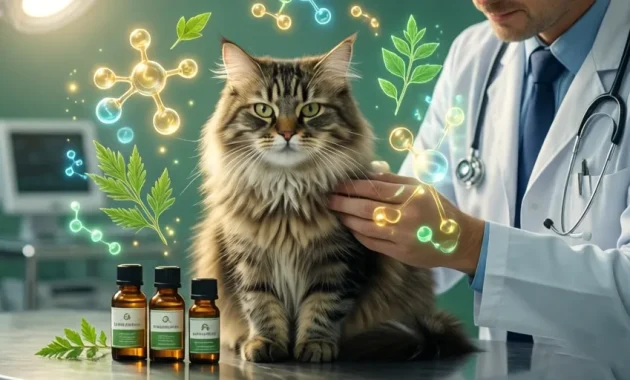
When a beloved cat faces a chronic illness or an acute health crisis, dedicated pet owners frequently seek out every possible avenue of healing. In recent years, holistic approach frameworks ranging from acupuncture and herbal remedies to homeopathy have gained substantial visibility in the pet care landscape.
Homeopathy, a distinct medical philosophy founded over two centuries ago, is increasingly turned to by cat owners looking for gentle, non-invasive options. However, navigating the intersection of traditional holistic practices and modern veterinary science can be incredibly complex. This comprehensive guide details the history, preparation methods, reported applications, and critical scientific perspectives regarding homeopathy for cats, allowing you to make safe, informed choices for your pet's well-being.

The Foundations of Homeopathic Philosophy
To understand how homeopathy is applied to cats, one must first explore its core tenets, which differ fundamentally from conventional, or allopathic, veterinary medicine.
Like Cures Like (Similia Similibus Curentur)
The foundational law of homeopathy asserts that a substance that can cause specific symptoms in a healthy individual can, when prepared properly, stimulate the body to heal those exact same symptoms in an ailing individual. This concept dates back to the ancient Greek physician Hippocrates but was formally codified into a system of medicine in 1796 by the German physician Dr. Samuel Hahnemann.
The Law of Infinitesimals and Potentization
Unlike herbal medicine or conventional pharmaceuticals, which rely on measurable chemical payloads to alter physiological functions, homeopathic remedies undergo a highly specialized manufacturing process called potentization:
-
Mother Tincture: The raw, concentrated extract derived from plants, minerals, or organic matter.
-
Serial Dilution: The source material is diluted systematically in water or alcohol. A 1X (or 1D) potency represents a 1:10 dilution, while a 1C potency denotes a 1:100 dilution.
-
Succussion: Between each stage of dilution, the liquid is vigorously shaken or struck against an elastic surface. Homeopathic theory posits that this mechanical action transfers the "energetic imprint" or vital force of the substance to the water molecule matrix, even when the physical molecules of the original matter are completely diluted out.
Common Potencies and Administration Forms
Homeopathic solutions are manufactured into several formats to make them easier to administer to animals:
-
Globuli: Tiny, round sucrose or lactose pellets infused with the potentized liquid.
-
Powders and Liquids: Alcohol-free liquid drops or lactose-based powders that can be dissolved or placed directly on the mucous membranes.
In veterinary environments, practitioners frequently utilize C30 and C200 potencies. For acute situations, remedies are sometimes administered closely together (e.g., every 30 minutes), whereas chronic conditions are typically managed with a less frequent schedule of one to three times daily.
Reported Clinical Applications in Feline Health
Advocates of veterinary homeopathy note that cats are highly sensitive, responsive subjects. Holistic practitioners often look to specific remedies to support a variety of feline conditions:
Gastrointestinal and Skin Support
-
Nux Vomica: Frequently utilized as a broad-spectrum support remedy for minor digestive upsets, vomiting, or constipation.
-
Sulphur and Rhus Tox: Commonly selected by holistic practitioners to address dermatological issues, such as seasonal skin hypersensitivities, localized itching, or flea allergy dermatitis.
Chronic Condition Management
In survey data tracking holistic veterinary practices, several chronic feline disorders are frequently managed alongside conventional care:
| Ailment Category | Frequently Mentioned Remedial Elements |
| Gingivitis & Oral Health | Belladonna, Mercurius solubilis, Echinacea |
| Allergy & Respiratory Support | Allium cepa, Natrum muriaticum |
| Kidney & Bladder Discomfort | Cantharis, Berberis vulgaris, Solidago |
| Pancreatic Inflammation | Pulsatilla, Phosphorus, Iris versicolor |
Balancing Perspectives: The Science and the Controversy
While millions of pet owners worldwide utilize homeopathy, it remains one of the most intensely debated topics in veterinary science. Understanding both sides of this conversation is essential for responsible pet ownership.
The Veterinary and Scientific Consensus
The overwhelming consensus within the global scientific and conventional veterinary medical communities is that highly diluted homeopathic remedies lack a plausible mechanism of action based on known laws of physics and chemistry.
-
The Avogadro Limit: When a solution is diluted past 12C or 24X, mathematically speaking, not a single molecule of the original active substance remains. For this reason, conventional institutions classify these remedies as chemically inert.
-
The Clinical Trial Data: Large-scale, peer-reviewed clinical reviews consistently conclude that the therapeutic effects observed from homeopathy do not reliably outperformance placebos in rigorous, double-blind testing.
The Holistic Argument and the "Caregiver Placebo"
Proponents of homeopathy point to positive outcomes in animal patients as proof of efficacy, arguing that animals cannot experience a psychological placebo effect because they do not know what medicine they are receiving.
However, veterinary scientists explain these positive outcomes through a phenomenon known as the Caregiver Placebo Effect. When an owner implements a new treatment, their own anxiety decreases, their handling of the cat becomes gentler, and they may unconsciously perceive minor fluctuations in the cat's condition as a major clinical improvement. Additionally, many acute conditions in cats are self-limiting and resolve naturally due to the animal's inherent immune system function.
Ensuring Safety: The Vital Rule of Integrative Care
The single most critical safety consideration when exploring homeopathy for cats is avoiding the delay of necessary conventional medical treatment.
The Non-Toxic Advantage
Because true homeopathic remedies are ultra-diluted, they do not cause conventional side effects, organ toxicity, or adverse drug interactions. They will not damage the feline gut microbiome in the way heavy antibiotics might, making them safe from an overdose standpoint.
The Danger of Misdiagnosis
While the remedies themselves are physically harmless, relying solely on alternative therapies for severe, life-threatening feline conditions can lead to catastrophic outcomes. Conditions such as urethral blockages (common in male cats), severe pancreatitis, advanced chronic kidney disease (CKD), and systemic bacterial infections require immediate, evidence-based medical interventions—including intravenous fluids, prescription pharmaceuticals, or emergency surgery.
Crucial Strategy: Homeopathy should only ever be used as a complementary or integrative therapy alongside standard veterinary medicine, never as a complete replacement for critical clinical diagnostics and treatments.
7. Finding a Qualified Professional
If you wish to explore holistic avenues for your cat, it is vital to seek out a legally authorized professional who understands feline physiology.
-
North America (US & Canada): Regulatory bodies determine that veterinary homeopathy is a branch of veterinary medicine. Consequently, only licensed Doctors of Veterinary Medicine (DVMs) can legally practice veterinary homeopathy, ensuring your practitioner has the comprehensive medical training required to evaluate when conventional intervention is mandatory.
-
Europe and Other Regions: Regulations vary. In some countries, certified holistic practitioners operate alongside traditional clinics. Regardless of location, always verify that your practitioner coordinates directly with your primary care veterinarian.
Conclusion: An Informed Path Forward
The journey to maintaining your cat's health involves balancing compassion, careful environmental management, and medical wisdom. While homeopathy offers an approachable, affordable, and completely non-toxic avenue for owners interested in holistic care, it must always be deployed responsibly within an integrative medical framework. By keeping your licensed veterinarian at the center of your cat's diagnostic team, you can safely explore alternative comfort measures while ensuring your pet receives the proven care they need to live a long, vibrant life.
FAQ About Homeopathy for Cats
1. What is homeopathy for cats?
Homeopathy is a holistic treatment system that uses highly diluted natural substances intended to support the body’s self-healing response.
2. Is homeopathy safe for cats?
True homeopathic remedies are generally considered physically safe because they are ultra-diluted and typically non-toxic.
3. Can homeopathy replace veterinary treatment?
No. Homeopathy should never replace professional veterinary diagnosis or emergency medical care for serious illnesses.
4. Do veterinarians recommend homeopathy for cats?
Some integrative and holistic veterinarians may include homeopathy as a complementary therapy, while most conventional veterinarians rely primarily on evidence-based medicine.
5. What conditions do people commonly use homeopathy for in cats?
Owners may explore homeopathy for digestive upset, skin irritation, stress, allergies, urinary discomfort, or chronic inflammatory conditions alongside veterinary care.
6. What is the principle of “Like Cures Like”?
This homeopathic principle suggests that substances causing symptoms in healthy individuals may help support healing in similar symptomatic conditions when highly diluted.
7. What are homeopathic potencies like 30C or 200C?
Potencies refer to the dilution level and preparation process used in homeopathy. Higher numbers represent greater dilution.
8. What is potentization in homeopathy?
Potentization is the process of repeated dilution and vigorous shaking, known as succussion, used to prepare homeopathic remedies.
9. Are homeopathic remedies natural?
Most remedies originate from natural plant, mineral, or animal-based substances before undergoing extreme dilution.
10. Can cats overdose on homeopathic remedies?
True homeopathic remedies are generally considered non-toxic due to their high dilution levels, but improper products or contaminated preparations may still pose risks.
11. Does science support homeopathy for cats?
The mainstream scientific consensus states that homeopathy has not consistently demonstrated effectiveness beyond placebo effects in controlled studies.
12. Why do some pet owners report positive results with homeopathy?
Possible explanations include natural healing, supportive care improvements, caregiver perception changes, or placebo-related observation bias.
13. What is the “Caregiver Placebo Effect”?
This refers to situations where owners perceive improvement in their pets after treatment due to emotional expectations or closer observation.
14. Can homeopathy help with feline anxiety or stress?
Some holistic practitioners use remedies for stress-related behaviors, though behavioral modification and environmental enrichment remain essential.
15. Are homeopathic remedies safe with prescription medications?
Generally yes, because homeopathic remedies are chemically ultra-diluted and do not typically interact with conventional drugs.
16. What is Arnica used for in cats?
In holistic practice, Arnica montana is commonly associated with bruising, soreness, or minor trauma support.
17. What homeopathic remedies are used for feline digestive upset?
Nux Vomica is often referenced by holistic practitioners for mild digestive discomfort or vomiting support.
18. Can homeopathy cure kidney disease in cats?
No. Chronic kidney disease requires professional veterinary management including diagnostics, hydration support, prescription diets, and medical monitoring.
19. Is homeopathy useful for skin allergies in cats?
Some owners explore remedies such as Sulphur or Rhus tox for itching or allergy-related skin issues, but underlying causes still require veterinary evaluation.
20. Are there risks in delaying conventional treatment?
Yes. Delaying evidence-based treatment for emergencies like urinary blockage, severe infection, or pancreatitis can become life-threatening.
21. How are homeopathic remedies given to cats?
They are usually administered as pellets, powders, or liquid drops placed directly into the mouth or mixed carefully with water.
22. Can kittens receive homeopathic remedies?
Any treatment for kittens should only be guided by a licensed veterinarian due to their fragile immune systems and rapid health changes.
23. How do I find a qualified veterinary homeopath?
Look for a licensed veterinarian with formal training in integrative or holistic veterinary medicine.
24. Does pet insurance cover homeopathy?
Some premium or holistic-focused pet insurance plans may partially cover alternative therapies, depending on the provider.
25. Should I tell my veterinarian if I use homeopathy?
Yes. Always inform your veterinarian about every supplement, remedy, or therapy your cat receives to ensure coordinated and safe care.