Through Feline Eyes: The Biological Reality of How Cats See the World
2 months ago
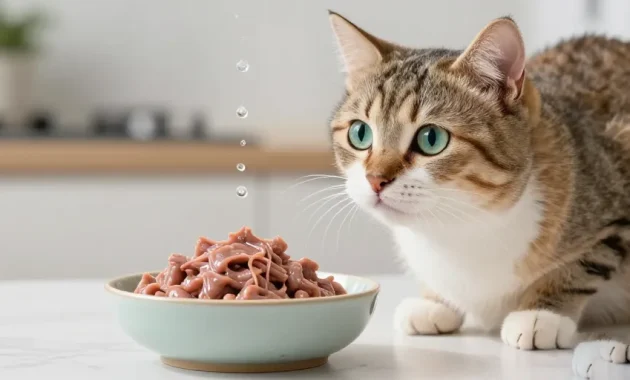
Have you ever wondered why your cat can spot a tiny spider crawling across a dark ceiling from across the room, yet completely misses a piece of kibble dropped directly next to their front paws?
To humans, this looks like a comical glitch in an otherwise apex predator. To a veterinarian or evolutionary biologist, however, it makes perfect sense. The feline visual system is not a flawed version of our own; it is a highly specialized, hyper-focused tool engineered for a very specific lifestyle: crepuscular hunting.
Understanding how a cat perceives the world requires breaking down their unique ocular anatomy, examining the trade-offs of their sensory evolution, and discovering how they combine sight, sound, smell, and touch into a single, cohesive mental map.
Ocular Anatomy: Photoreceptors, Pupils, and Membranes
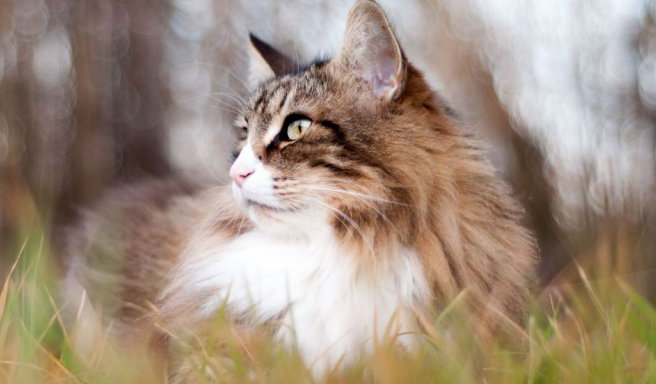
To understand what a cat sees, we must first look at the mechanical differences in the construction of their eyes compared to humans. The feline eye is optimized for light collection, motion detection, and rapid depth perception.
       [ CONCENTRIC RETINAL PHOTORECEPTOR BALANCE ]
─────────────────────────────────────────────────────────────
Human Retina: █░░░░░░░░░░░░░░░ High Cones (Detail/Vibrant Color)
Feline Retina: ███████████████ High Rods (Motion/Low-Light Tracking)
The Rod vs. Cone Ratio
The back of the vertebrate eye contains a lining called the retina, which houses two primary types of photoreceptor cells:
-
Cones: Responsible for color detection, sharp central vision, and processing fine details in bright light.
-
Rods: Responsible for detecting movement, peripheral tracking, and vision in low-light environments.
Humans possess an abundance of cones concentrated in the central macula, allowing us to see sharp details and vibrant colors. Cats, by contrast, possess an overwhelming abundance of rods and a significantly lower density of cones. This biological trade-off means that while a cat cannot read fine print or enjoy a rich color palette, their ability to track rapid movement—even a fraction of a millimeter of displacement—is vastly superior to ours.
Elliptical Slit Pupils
Unlike human pupils, which remain circular as they constrict, feline pupils are vertical, elliptical slits. Controlled by two shutter-like muscles, these slits allow for highly precise control over the amount of light entering the eye.
In bright sunlight, a cat's pupils can constrict to thin, vertical slits, protecting the sensitive, rod-heavy retina from glare while maintaining sharp horizontal depth perception. In the dark, these slits dilate into wide, circular windows, expanding to change the pupil's surface area up to 135-fold (compared to a mere 15-fold change in human pupils). This mechanism maximizes every stray photon of ambient light available.
The Nictitating Membrane (The Third Eyelid)
Cats possess a biological feature completely absent in humans: a third eyelid, formally known as the nictitating membrane. Located at the inner corner of the eye, this translucent membrane sweeps horizontally across the cornea when the cat blinks or lowers its head. It acts as an automatic windshield wiper, clearing away dust, debris, and pollen while keeping the eye moist. For a predator tracking prey through tall grass or dense underbrush, this membrane protects the cornea from scratches without requiring the cat to completely close its eyes and lose sight of its target.
Temporal Dynamics and Visual Performance
The physical structure of the feline eye leads to specific trade-offs in how they experience distance, lighting, and movement.
                  [ VISUAL FIELD & OPTICAL RANGES ]
                                  │
         +────────────────────────┴────────────────────────+
         │                                                 │
   [ Field of Vision ]                              [ Focal Range ]
   - Human: 180 Degrees                             - Sharpest Point: 20 Feet
   - Feline: 200 Degrees                            - < 1 Foot: Blind Spot / Blur
The 20-Foot Focal Ceiling
Human vision is built for long-distance observation; a person with 20/20 vision can clearly resolve objects hundreds of feet away. Cats are functionally nearsighted. Their optical systems are calibrated for a sharp focal point exactly 20 feet (6 meters) away.
Beyond 20 feet, objects lose definition and become soft, blurry shapes. This matches their hunting strategy: cats do not spot prey from miles away like eagles; they stalk, crawl silently, and launch a short-range attack from a close distance.
The Close-Up Blind Spot
Because a cat's large, spherical lenses are optimized to gather light rather than fine-tune focus up close, their eyes struggle to focus on anything closer than one foot (30 cm). When an object or a treat is placed directly underneath a cat’s nose, it falls completely out of focus, becoming a blurry silhouette. The cat is effectively blind to objects right in front of its face, which explains why they often sniff around frantically for a treat that sits right next to their paws.
Panoramic Peripheral Awareness
While humans have a visual field of roughly 180 degrees, a cat’s forward-facing eyes are set slightly wider apart, expanding their total field of vision to 200 degrees. This wider panoramic view increases their peripheral awareness, allowing them to spot sudden movements on the far edges of their surroundings without turning their heads.
Light, Shadow, and the Mechanics of Night Vision
The idea that cats can see in absolute, pitch-black darkness is a myth; if there are zero photons of light, a cat cannot see any better than a human. However, in dim, low-light conditions, a cat's visual mechanics are remarkably efficient. A cat requires only one-sixth of the ambient light level that a human needs to navigate safely and hunt effectively.
                  [ THE PHOTIC AMPLIFICATION LOOP ]
                                  │
  Incoming Light ──► Retina (Rods) ──► Tapetum Lucidum (Reflection) ──► Retinal Re-entry
This low-light performance is driven by a specialized anatomical layer called the tapetum lucidum. Located directly behind the retina, this structure acts like a retroreflective mirror.
When light enters a cat's eye and passes through the retina, any photons that fail to hit a rod receptor strike the tapetum lucidum. The layer bounces the light directly back through the retina a second time, giving the photoreceptors another opportunity to absorb the light energy. This photic amplification loop is what causes a cat’s eyes to glow with an eerie, iridescent green or gold color when caught in a camera flash or a car's headlights.
Chromatic Limitations: The Feline Color Palette
For decades, popular culture assumed cats lived in a completely monochrome, black-and-white world. Modern veterinary ophthalmology has disproven this, revealing that cats do see in color, though their experience of the spectrum is muted compared to ours.
Color perception is determined by the types of cone photopigments present in the retina. Humans are trichromats, possessing three distinct types of cones that respond to red, green, and blue light wavelengths. Cats also possess three types of cones, but their overall quantity is remarkably low, and their spectral sensitivity is distributed differently.
                           [ COLOR SPECTRUM COMPARISON ]
───────────────────────────────────────────────────────────────────────────────────────────
Human:  [ Red ]    [ Orange ]    [ Yellow ]    [ Green ]    [ Blue ]    [ Violet ]
Feline: [ Gray ]   [ Gray ]      [ Muted Yellow ]           [ Muted Blue / Violet ]
A cat’s color vision is very similar to a human with red-green color blindness (deuteranopia).
-
What They See clearly: Shorter wavelengths of light, meaning they easily perceive shades of blue, violet, and muted yellows.
-
What They Miss: Longer wavelengths, such as vibrant reds, bright oranges, and deep pinks. To a cat, a bright red apple or a neon pink toy mouse appears as a dull shade of gray, black, or dark green.
Furthermore, cats do not perceive color saturation or richness. The vibrant, neon world we see appears to a cat as a soft pastel landscape. Because they hunt primarily at dawn and dusk, vibrant color recognition offers little evolutionary advantage; tracking a gray mouse moving against a background of dark green grass in the twilight requires contrast and motion detection, not color accuracy.
Beyond Sight: The Multi-Sensory Mental Map
Because a cat's vision has built-in limitations—including poor long-distance focus, a close-up blind spot, and a muted color palette—they do not rely on sight as their primary way of interpreting the world. Instead, cats combine their visual input with three other highly developed senses to construct a real-time, multi-dimensional map of their environment.
       [ THE QUAD-AXIS FELINE PERCEPTION ENGINE ]
                           │
    ┌───────────────┬──────┴──────┬───────────────┐
    │               │             │               │
[ Vision ]     [ Whiskers ]    [ Scent ]     [ Hearing ]
 200° Field     Tactile Air    200 Million   High-Pitch
 Motion-First   Currents       Receptors     Acoustic Tracking
Whiskers: The Tactile Guidance System
A cat’s whiskers (vibrissae) are not simply long hairs; they are sophisticated tactile radar arrays. Deeply embedded within follicles packed with nerve endings, whiskers are incredibly sensitive to the slightest changes in air currents.
-
Navigating the Close-Up Blind Spot: When a cat approaches an object closer than one foot, they project their whiskers forward. These whiskers detect the structural outlines, textures, and distances of nearby objects, completely compensating for the close-up blurriness of their vision.
-
Environmental Navigation: Whiskers allow a cat to judge whether their body can fit through a tight opening in pitch darkness, acting as a physical guidance system that complements their low-light vision.
Scent: A Nose with 200 Million Receptors
While a human nose contains roughly 5 million scent receptors, a cat’s nasal cavity houses over 200 million. This makes their sense of smell at least 40 times more powerful than ours.
When a cat looks at a room, they don't just see shapes; they read an intricate layer of scent markers. A cat can tell who has sat on a chair, how long ago they left, and what their emotional state was, using subtle pheromone cues that are completely invisible to human eyes.
Hearing: High-Frequency Acoustic Tracking
A cat’s hearing is finely tuned to catch the high-pitched sounds of small rodents. While humans can hear sounds up to roughly 20 kHz, cats can detect ultrasonic frequencies up to 64 kHz.
Their ears can pivot up to 180 degrees independently, allowing them to pinpoint the exact location of a sound within a few inches from across a room. If a mouse moves in the dark, a cat does not need to see it; their ears guide their gaze with pinpoint accuracy.
Comparative Overview: Human vs. Feline Sensory Systems
To visualize how differently you and your cat perceive the exact same room, compare their core sensory capabilities directly:
| Feature / Capability | Human Perspective | Feline Perspective |
| Visual Field Width | 180 Degrees | 200 Degrees (Superior Peripheral View) |
| Optimal Focal Distance | Highly adaptable; clear for miles | Fixed at 20 Feet; blurred near and far |
| Minimum Focus Range | Roughly 3–4 Inches | Roughly 12 Inches (Close-up Blind Spot) |
| Color Spectrum | Full Trichromatic (Red, Green, Blue) | Dichromatic-Leaning (Blue, Yellow, Gray) |
| Minimum Light Requirement | High (Requires artificial illumination) | Low (1/6th of human threshold via Tapetum) |
| Olfactory Receptors | ~5 Million | ~200 Million |
| Acoustic Ceiling | ~20 kHz | ~64 kHz (Ultrasonic Sensitivity) |
The Evolutionary Balance
When you watch your cat stare intently at a blank wall or sprint wildly across the living room at 3:00 a.m., they are not misbehaving or seeing ghosts. They are interacting with a world of subtle movements, rich scents, high-frequency sounds, and shifted light gradients that human senses simply cannot register.
The cat's view of the world is a beautiful demonstration of evolutionary efficiency: every detail, from the slit of their pupil to the sensitivity of their whiskers, is perfectly balanced to make them the ultimate short-range nocturnal hunter.
FAQ
1. Why is wet food considered healthier for cats than dry food?
Wet food contains significantly more moisture, typically around 70%–80%, which closely resembles the natural water content found in a cat's ancestral prey. This helps support hydration, urinary tract health, kidney function, and overall well-being. Additionally, wet food often contains higher levels of animal protein and fewer carbohydrates than traditional dry kibble.
2. Why do cats need extra moisture in their diet?
Cats evolved from desert-dwelling ancestors and naturally have a low thirst drive. Unlike many animals, cats do not instinctively drink enough water to compensate for a dry diet. Wet food helps provide the hydration they would normally obtain from prey in the wild.
3. How much water does wet cat food contain?
Most high-quality wet cat foods contain approximately 70%–80% moisture, while dry kibble typically contains only 6%–10% moisture.
4. Can wet food help prevent urinary tract problems?
Yes. The high moisture content in wet food helps dilute urine, reduce mineral concentration, encourage frequent urination, and lower the risk of urinary crystals, bladder stones, urinary blockages, and other feline lower urinary tract diseases (FLUTD).
5. Is wet food better for cats with kidney disease?
Many veterinarians recommend wet food for cats with kidney issues because increased hydration can help support kidney function and reduce the workload placed on the kidneys. However, cats with medical conditions should always follow a veterinarian-approved diet.
6. Does wet food help prevent feline diabetes?
Wet food is generally lower in carbohydrates and higher in protein compared to dry kibble. This nutritional profile aligns better with a cat's biological needs and may help reduce the risk of obesity and insulin resistance, which are major contributors to feline diabetes.
7. Is wet food better for weight management?
Yes. Wet food is often lower in calories per serving volume and higher in protein, helping cats feel full longer while supporting lean muscle mass. This can make weight management easier for overweight cats.
8. Why do picky cats often prefer wet food?
Wet food has a stronger aroma, softer texture, and richer flavor profile. Since cats rely heavily on their sense of smell when choosing food, wet food is often more appealing than dry kibble.
9. Is wet food suitable for senior cats?
Absolutely. Senior cats often experience dental problems, missing teeth, reduced appetite, or decreased sense of smell. Wet food is easier to chew and usually more enticing due to its stronger aroma.
10. Can kittens eat wet food?
Yes. Wet food is often an excellent option for kittens because it is easy to chew, highly palatable, and provides additional hydration during growth and development.
11. How long can wet cat food sit out at room temperature?
Wet cat food should not remain at room temperature for more than 1–2 hours. In hot or humid environments, it should be discarded after approximately 1 hour to reduce the risk of bacterial contamination.
12. What happens if wet food is left out too long?
Bacteria such as Salmonella and Listeria can multiply rapidly in moist food left at room temperature. Spoiled food can potentially cause digestive upset or foodborne illness.
13. How should leftover wet food be stored?
Any unused portion should be covered with an airtight lid or transferred to a sealed container and refrigerated immediately after opening.
14. How long can opened wet food stay in the refrigerator?
Opened wet food should generally be used within 24 hours for optimal freshness, flavor, and safety.
15. Can cats eat wet food directly from the refrigerator?
It is not recommended. Cold food may be less appealing and can occasionally trigger digestive discomfort in sensitive cats.
16. How can I warm refrigerated wet food safely?
Allow it to sit at room temperature for 15–20 minutes or mix in a small amount of warm water. Avoid overheating, which may affect texture and nutrients.
17. Is it okay to feed both wet food and dry kibble?
Yes. Many veterinarians recommend a mixed feeding approach that combines the hydration benefits of wet food with the convenience and enrichment opportunities provided by dry kibble.
18. What are the advantages of mixed feeding?
Mixed feeding can provide:
- Better hydration
- Higher protein intake
- Dental stimulation from kibble
- Feeding flexibility
- Increased meal variety
- Mental enrichment through puzzle feeders
19. Does dry kibble clean a cat's teeth?
Dry kibble may provide some mechanical scraping action during chewing, but it should not be considered a replacement for proper dental care, veterinary cleanings, or dental-specific diets.
20. What is the ideal feeding strategy for most cats?
Many experts recommend serving wet food as the primary meal source while offering measured portions of high-quality dry food for supplemental feeding, dental stimulation, and enrichment.