The Fluid Mechanics of Feline Rehab: Principles, Clinical Applications, and Efficacy of Hydrotherapy in Veterinary Medicine
2 months ago
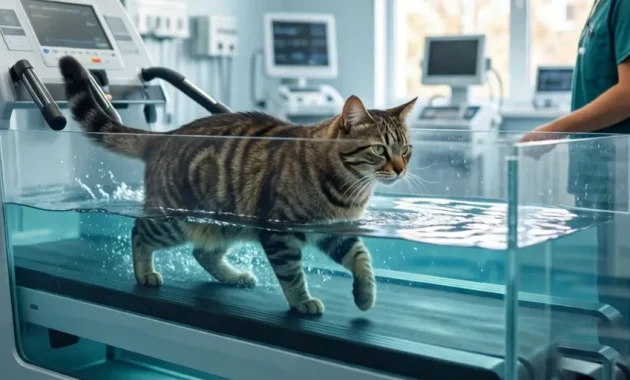
For decades, veterinary physical rehabilitation was viewed primarily through a canine lens. The prevailing belief within the broader veterinary community was that while dogs were ideal candidates for active modalities such as underwater treadmill systems and swimming pools—cats were fundamentally unsuited for aquatic therapy due to a species-wide, evolutionary aversion to water.
However, advanced veterinary diagnostics and specialized rehabilitation protocols have completely dismantled this myth.
Today, feline hydrotherapy has emerged as a cornerstone of advanced veterinary sports medicine and post-operative orthopedic care. When executed by certified canine/feline rehabilitation practitioners (CCRP/CCRP-F) or veterinary physical therapists, the unique fluid dynamics of water provide an unparalleled therapeutic window for treating complex musculoskeletal injuries, chronic degenerative conditions, and severe neurological deficits in feline patients.
The Biomechanics and Physics of Feline Aquatic Therapy
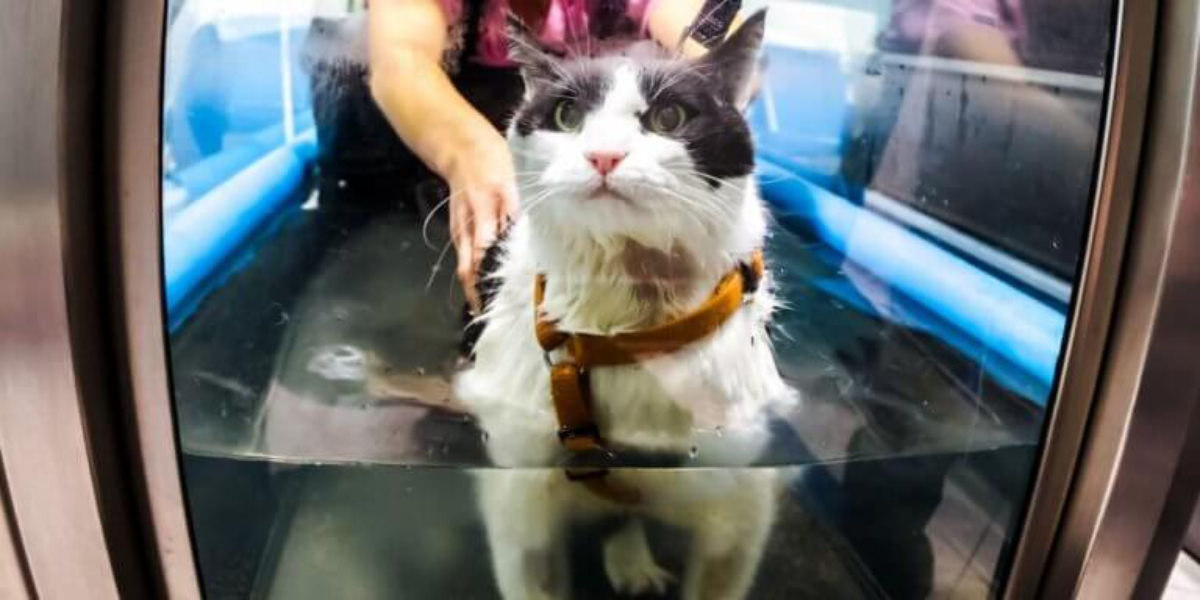
The therapeutic efficacy of hydrotherapy is rooted in the fundamental laws of fluid mechanics. Water is not merely a passive medium; it is a dynamic external force that alters gravity, resistance, and pressure across the patient's entire physiological structure.
                  THE APPLIED FLUID MECHANICS MATRIX

  [ BUOYANCY ]           ──► Reduces gravitational mass; decompresses joints.
  [ HYDROSTATIC PRESSURE]──► Uniform circumferential compression; reduces edema.
  [ VISCOSITY & TENSION] ──► Progressive omnidirectional resistance; sensory feedback.
1. Buoyancy: Decompressing the Feline Skeleton
Buoyancy is governed by Archimedes’ principle, which states that a body immersed in a fluid is buoyed up by a force equal to the weight of the fluid displaced by the body. This upward thrust counteracts gravity, drastically reducing the patient’s effective relative body weight.
In feline rehabilitation, the depth of the water determines the exact degree of skeletal decompression:
-
Water at the level of the greater trochanter (hip): Reduces total weight-bearing loads by roughly $60\%$ to $70\%$.
-
Water at the level of the scapula (shoulder): Reduces weight-bearing forces by up to $90\%$.
This reduction in gravitational mass allows a cat with severe muscle atrophy or advanced joint degeneration to execute active locomotion without loading compromised joint structures, shifting the therapeutic focus from load-bearing survival to pain-free motor pattern rebuilding.
2. Hydrostatic Pressure: Natural Vascular Compression
Pascal’s law dictates that fluid pressure is exerted equally on all surfaces of an immersed body at a given depth, increasing in direct proportion to that depth. This uniform, circumferential pressure provides immediate clinical benefits for postoperative or traumatized feline limbs:
-
It acts as a dynamic compression wrap, pushing interstitial fluid back into vascular and lymphatic pathways to systematically reduce localized edema and joint effusion.
-
The continuous pressure stimulates a steady stream of low-threshold skin mechanoreceptors, effectively down-regulating the transmission of nociceptive (pain) signals along the spinal cord—a phenomenon explained by the Gate Control Theory of pain management.
3. Viscosity, Surface Tension, and Fluid Resistance
Viscosity is the measure of a fluid's internal friction and resistance to gradual deformation by shear or tensile stresses. Because water is significantly more viscous than air, it provides a stable, highly progressive environment for active exercise:
-
Omnidirectional Resistance: Unlike land-based exercises or resistance bands that apply force in a single linear plane, water provides resistance in every direction of movement. If a cat flexes or extends a limb, the fluid pushes back equally, forcing antagonist and agonist muscle groups to fire symmetrically.
-
Surface Tension Cohesion: At the air-water interface, surface tension creates enhanced resistance due to the cohesive bonds between water molecules. For a weak or neurologically compromised feline patient, moving through this top layer provides a unique tactile boundary that stabilizes their balance, preventing the sudden slips and falls common on dry land.
Clinical Indications: When to Prescribe Feline Hydrotherapy
Hydrotherapy is rarely a standalone solution; it is a highly specialized tool integrated into a comprehensive multimodal rehabilitation strategy. Veterinary practitioners prescribe aquatic therapy across five major clinical domains.
                         CLINICAL PRESCRIPTION MATRIX

                     ┌──────────────────────────────────┐
                     │   Hydrotherapy Clinical Targets  │
                     └────────────────┬─────────────────┘
                                      │
         ┌────────────────────────────┼────────────────────────────┐
         ▼                            ▼                            ▼
   [ POST-OP REHAB ]          [ ORTHOPEDIC CARE ]          [ NEUROLOGICAL PATH ]
   • Femoral Head Ostectomy   • Advanced Osteoarthritis    • Intervertebral Disc Disease
   • Cruciate Repair (TPLO)   • Hip/Elbow Dysplasia        • Fibrocartilaginous Embolism
   • Complex Pelvic Fractures • Chronic Muscle Atrophy     • Sciatic Nerve Neuropathy
1. Post-Operative Orthopedic Rehabilitation
Following invasive orthopedic surgery, early, non-concussive motion is vital for proper tissue healing and preventing arthrofibrosis (joint stiffness). Hydrotherapy is highly effective for accelerating recovery following major feline surgeries:
-
Femoral Head Ostectomy (FHO): Commonly performed to treat severe hip fractures or advanced avascular necrosis. Post-FHO cats must rebuild a strong "false joint" out of surrounding muscle tissue. The underwater treadmill forces early hindlimb extension and prevents the cat from holding the leg in a permanent, guarded flexion state.
-
Tibial Plateau Leveling Osteotomy (TPLO) or Lateral Suture: Used to treat cranial cruciate ligament (CCL) ruptures. Aquatic walking maintains muscle mass in the quadriceps and biceps femoris while protecting the healing bone graft or stabilization suture from concussive force.
-
Internal Fixation of Pelvic/Femoral Fractures: As demonstrated in the clinical case of Hershel (a 4-month-old rescue kitten with extensive pelvic trauma), starting systematic hydrotherapy post-surgery allows fragments stabilized by tension bands or plates to experience controlled mechanical stress, which accelerates healthy bone remodeling without risk of implant failure.
2. Chronic Orthopedic and Degenerative Joint Disease (DJD)
Feline osteoarthritis is one of the most underdiagnosed chronic pain conditions in veterinary medicine. Studies indicate that up to $90\%$ of cats over twelve years old suffer from degenerative joint disease.
On land, an arthritic cat manages pain by reducing their overall activity, which triggers a dangerous downward spiral of muscle atrophy, joint stiffness, weight gain, and worsening pain.
                  THE ARTHRITIC DEGENERATION LOOP

  [ Joint Pain ] ──► Land Inactivity ──► Muscle Atrophy ──► Weight Gain ──► Increased Joint Stress
                                                                                  │
                                                                                  ▼
  [ REHAB CIRCUIT ] ──► Buoyancy ──► Pain-Free Active Gait ──► Muscle Mass Hypertrophy
Hydrotherapy breaks this destructive cycle. By unloading the painful joints via water buoyancy, the cat can comfortably execute a full, smooth range of motion.
The warm water (ideally maintained between $28^\circ\text{C}$ and $32^\circ\text{C}$) expands peripheral blood vessels, increasing blood flow to stiff muscles and soft tissues to improve flexibility, rebuild muscle mass, and naturally slow down the progression of joint disease.
3. Neurological Rehabilitation and Neuromuscular Re-education
Feline patients recovering from spinal trauma, Intervertebral Disc Disease (IVDD), Fibrocartilaginous Embolism (FCE), or localized pelvic nerve damage often present with profound proprioceptive deficits, spinal ataxia, or temporary paralysis (paraparesis).
On land, these cats cannot support their own weight; they collapse, drag their paws, and develop maladaptive compensation patterns. In the underwater treadmill, hydrotherapy transforms their recovery process:
-
The buoyant support holds the cat in a functional, upright standing posture, taking the burden off weak postural muscles.
-
The rhythmic movement of the treadmill belt beneath the water sparks the spinal cord’s Central Pattern Generators (CPGs)—independent neural circuits that control rhythmic walking motions without needing direct signals from a damaged brain or upper brainstem.
-
The unique tactile pressure of the surrounding fluid floods the nervous system with constant sensory feedback, helps re-establish correct paw placement, prevents knuckling, and actively rewires damaged neural pathways through neuroplasticity.
4. Controlled Metabolic Weight Management
Obesity is a major metabolic health crisis for indoor domestic cats, drastically increasing their risk for diabetes mellitus, hepatic lipidosis, and structural joint failure. However, forcing an obese cat to perform high-impact exercises on land can cause severe stress injuries to their joints, tendons, and cardiovascular system.
                  AQUATIC METABOLIC CALORIC BURN

  [ Immersed Gait ] ──► 4x Fluid Resistance vs Air ──► Doubled Muscular Workload
                                                                   │
                                                                   ▼
  [ CLINICAL RESULT ] ──► Accelerated Caloric Deficit Without Concussive Joint Trauma
An underwater treadmill provides the perfect, highly controlled environment for metabolic weight loss programs. Because the fluid resistance forces the cat to work significantly harder with every step compared to walking through air, their muscles burn calories at a highly accelerated rate.
This allowing the patient to achieve a healthy caloric deficit and shed body fat while their joints remain safely protected from concussive impacts by the water’s buoyancy.
Clinical Protocol Design: Logistics, Parameters, and Session Architecture
To achieve consistent therapeutic success, hydrotherapy protocols must be tailored precisely to each patient's specific health status, behavioral tolerance, and physical needs.
Key Operational Metrics for Feline Hydrotherapy
Step-by-Step Session Architecture: The Desensitization Process
Because cats are highly sensitive to sudden environmental shifts, rehabilitation teams must utilize a strict, step-by-step framework to transition the feline patient into the aquatic environment without triggering a defensive flight-or-fight response.
                     FELINE DESENSITIZATION PIPELINE

  [ PHASE 1: DRY CHAMBER ACCLIMATION ] ──► Treat pairing inside the empty treadmill hull.
                     │
                     ▼
  [ PHASE 2: BOTTOM-UP FILLING ]       ──► Warm water slowly enters from the bottom floor.
                     │
                     ▼
  [ PHASE 3: LOW-SPEED LOCOMOTION ]   ──► Belt engages at a slow pace; active tracking.
                     │
                     ▼
  [ PHASE 4: POST-GLIDE THERMAL ]     ──► Warm air dry, grooming wrap, metabolic recovery.
1. Dry Chamber Acclimation
The cat is fitted with a specialized, form-fitting aquatic harness or life vest equipped with a secure top handle. The clinician places the cat inside the completely dry chamber of the underwater treadmill with both doors sealed.
During this initial phase, the water pump is turned off. The therapist feeds the cat high-reward treats (such as liquid Churu puree) directly through the glass panel, pairing the enclosed space with a positive, low-stress experience.
2. Bottom-Up Hydro-Filling
Rather than placing a cat directly into a pre-filled tub of water—which can trigger instant panic—the water is slowly pumped into the chamber from the bottom floor.
The water enters at a low, quiet flow rate, giving the cat time to feel the warmth rising around their paws and legs.
Throughout this process, the clinician maintains continuous physical contact, providing calming reassurance and rewarding the cat with treats to keep them focused and relaxed.
3. Active Belt Engagement and Speed Tuning
Once the water reaches the targeted therapeutic height (typically matching the height of the shoulder or hip joint), the treadmill belt is turned on at a very low speed, usually around $0.1 - $0.3 miles per hour ($0.16 - $0.48\text{ km/h}$).
                  TREADMILL BELT INCLINE & POSITIONING

  [ Forward Walking Position ] ──► Promotes balanced, multi-limb symmetry and coordination.
  [ Reverse Belt Walking ]    ──► Targets unique muscle groups; increases hindlimb extension.
The clinician stands directly inside the tank or reaches in from above to gently support the cat's chest or tail, guiding their stride and ensuring they maintain a balanced, rhythmic forward gait.
The speed is carefully tuned to match the cat's natural stride, preventing them from slipping backward or turning sideways against the glass panels.
4. Post-Treatment Thermal Recovery
Once the active exercise interval is complete, the water is quickly drained out of the chamber into a holding tank. The cat is lifted out and immediately wrapped in pre-warmed, highly absorbent microfiber towels.
The rehabilitation team thoroughly dries the cat's fur using specialized warm-air blowers or thermal wraps to prevent evaporative cooling and shivering.
Once dry, the cat is returned to their owner, completely relaxed, calm, and resting comfortably after their low-impact workout.
Absolute Contraindications, Precautions, and Safety Standards
While hydrotherapy is an exceptionally safe and versatile rehab option, specific medical conditions create absolute or relative contraindications where aquatic exercise could cause serious injury or systemic complications.
Absolute Contraindications: When to Refuse Hydrotherapy
Veterinary rehabilitation facilities must enforce a strict safety screening process. Hydrotherapy should be immediately denied or postponed if a feline patient presents with any of the following clinical signs:
-
Unhealed Surgical Incisions or Open Wounds: Immersing an open wound or unhealed surgical incision in water before the skin layer has completely closed (typically within the first 10 to 14 days post-op) increases the risk of surgical site infections, bacterial contamination, and tissue breakdown.
-
Active Fecal Incontinence or Diarrhea: This presents an immediate biosecurity hazard. Introducing fecal pathogens into a shared aquatic system can spread waterborne bacteria across multiple patients and requires shutting down and disinfecting the entire system.
-
Unstable Cardiovascular or Respiratory Disease: The uniform pressure of hydrostatic compression pushes blood from peripheral vessels toward the central venous system, increasing the total volume of blood returning to the heart. For a cat suffering from advanced hypertrophic cardiomyopathy (HCM), congestive heart failure, or severe asthma, this sudden fluid shift can overwhelm their cardiorespiratory system, leading to acute distress or pulmonary edema.
-
Uncontrolled Hydrophobia and Extreme Stress: If a cat displays extreme panic—such as frantic clawing, biting, open-mouth breathing, or a persistently elevated heart rate that doesn't settle with positive reinforcement—the treatment should be stopped immediately. The surge of adrenaline and stress hormones can easily cause severe muscle strains, trigger panic-induced injuries, or worsen underlying heart conditions.
Systems Hygiene and Infection Control Standards
To maintain a safe, sanitary clinical environment, hydrotherapy equipment must follow strict water testing and cleaning protocols:
                    CLINICAL BIOSECURITY PIPELINE

  [ Continuously ] ──► Automated UV Sterilization & Inline Micron Filtration
  [ Twice Daily ]  ──► Manual Testing of Chlorine / Bromine PPM & pH Equilibrium ($7.2 - 7.6$)
  [ Weekly ]       ──► Total System Flush, Physical Scrubbing, and Deep Disinfection
-
Continuous Filtration: The water storage tanks must utilize a multi-stage filtration system combining fine micron sediment filters, active carbon layers, and a high-intensity ultraviolet (UV) sterilization chamber to instantly neutralize circulating viruses, bacteria, and fungal spores.
-
Chemical Balancing: Clinicians must manually test and log the water's chemical levels twice a day. Chlorine or bromine concentrations must be kept at optimal sanitizing levels, while the pH must be balanced precisely between $7.2$ and $7.6$ to protect the sensitive eyes, ears, and skin of feline patients from irritation.
-
Rigorous Sanitation Schedule: Every week, the underwater treadmill chamber must be completely drained, scrubbed down with veterinary-grade disinfectants, and thoroughly flushed to prevent the formation of stubborn biofilms or cross-contamination between patients.
Conclusion: The Evolutionary Expansion of Feline Medicine
The integration of hydrotherapy into mainstream feline practice represents a significant evolutionary step forward for veterinary medicine. By looking past old stereotypes and embracing the precise laws of fluid mechanics, modern veterinary professionals can now offer an exceptionally effective, compassionate treatment path for cats recovering from complex orthopedic surgeries, managing chronic arthritic pain, or relearning how to walk after spinal trauma.
When applied with proper technique, customized parameters, and a patient, stress-free approach, hydrotherapy allows our feline companions to rebuild their strength, regain their independence, and enjoy a high quality of life for years to come.
FAQ: Feline Hydrotherapy and Aquatic Rehabilitation
1. What is feline hydrotherapy?
Feline hydrotherapy is a specialized form of veterinary rehabilitation that uses water-based exercises, such as underwater treadmill therapy, to help cats recover from injuries, surgeries, neurological conditions, and chronic joint diseases.
2. Is hydrotherapy safe for cats?
Yes. When performed by trained veterinary rehabilitation professionals, hydrotherapy is generally very safe and carefully tailored to each cat's medical condition, mobility level, and stress tolerance.
3. Do cats actually like hydrotherapy?
Not all cats enjoy water naturally, but most rehabilitation centers use gradual desensitization techniques, treats, and positive reinforcement to help cats become comfortable with the process.
4. How does water help injured cats recover?
Water reduces the effects of gravity through buoyancy, decreases stress on joints, improves circulation, reduces swelling, and provides gentle resistance that strengthens muscles without causing impact-related injuries.
5. What conditions can hydrotherapy treat in cats?
Hydrotherapy is commonly used for:
- Osteoarthritis
- Hip and joint problems
- Muscle weakness and atrophy
- Spinal injuries
- Neurological disorders
- Obesity management
- Post-surgical rehabilitation
- Fracture recovery
6. What is an underwater treadmill for cats?
An underwater treadmill is a specialized rehabilitation chamber where a cat walks on a treadmill while partially submerged in warm water. The water supports the body while encouraging controlled movement and muscle strengthening.
7. Can hydrotherapy help cats with arthritis?
Yes. Hydrotherapy is one of the most effective non-invasive therapies for feline arthritis because it allows cats to exercise comfortably while minimizing joint stress and pain.
8. How soon after surgery can a cat start hydrotherapy?
The timing varies depending on the procedure and healing progress. Most veterinarians wait until surgical incisions have healed adequately before introducing aquatic therapy.
9. Does hydrotherapy reduce pain?
Yes. The combination of buoyancy, warm water, and hydrostatic pressure can help reduce pain, inflammation, stiffness, and swelling in many feline patients.
10. How long does a hydrotherapy session last?
Most feline hydrotherapy sessions last between 10 and 30 minutes of active therapy, although the total appointment may be longer due to preparation, drying, and recovery time.
11. Can hydrotherapy help overweight cats lose weight?
Yes. Water resistance increases calorie expenditure while minimizing stress on joints, making hydrotherapy an excellent option for overweight or obese cats.
12. Is hydrotherapy useful for neurological conditions?
Absolutely. Cats recovering from spinal injuries, nerve damage, or neurological disorders can benefit from hydrotherapy because it promotes proper movement patterns and supports neuroplasticity.
13. What temperature is the water during treatment?
Most veterinary rehabilitation centers maintain water temperatures between approximately 28°C and 32°C (82°F to 90°F) to maximize comfort and muscle relaxation.
14. Are there risks associated with feline hydrotherapy?
While generally safe, risks may include stress, fatigue, overexertion, or complications in cats with certain medical conditions. Proper screening and professional supervision are essential.
15. Which cats should not receive hydrotherapy?
Hydrotherapy may not be appropriate for cats with:
- Open wounds
- Unhealed surgical incisions
- Severe heart disease
- Uncontrolled respiratory disease
- Active infections
- Severe water-related anxiety or panic
16. How many hydrotherapy sessions does a cat usually need?
The number varies depending on the condition being treated. Some cats may benefit from only a few sessions, while others require ongoing rehabilitation over several weeks or months.
17. Will hydrotherapy make my cat stronger?
Yes. Water resistance activates multiple muscle groups simultaneously, helping improve strength, balance, coordination, and endurance over time.
18. Do cats swim during hydrotherapy?
Not necessarily. Most feline rehabilitation programs rely on underwater treadmills rather than swimming. Walking in water is often less stressful and easier to control therapeutically.
19. How do rehabilitation specialists keep cats calm during treatment?
Clinicians typically use slow introductions, gentle handling, positive reinforcement, favorite treats, calming voices, and gradual exposure to help reduce anxiety.
20. Is hydrotherapy better than traditional physical therapy?
Hydrotherapy is not necessarily better—it is often used alongside traditional rehabilitation techniques. The best outcomes usually come from a customized treatment plan combining multiple therapeutic approaches.
21. Can senior cats benefit from hydrotherapy?
Yes. Senior cats with arthritis, muscle loss, mobility issues, or age-related weakness often experience significant improvements in comfort, movement, and quality of life through aquatic rehabilitation.
22. How do I know if my cat is a candidate for hydrotherapy?
The best approach is to consult your veterinarian or a certified veterinary rehabilitation specialist. They can assess your cat's health, mobility, and medical history to determine whether hydrotherapy is appropriate.