Feline Dermatology and Hygiene Protocols: Debunking Bathing Myths for Domestic Cats
2 months ago
Every cat owner knows that felines are meticulous self-groomers. A healthy cat can spend up to $30\%$ to $50\%$ of its waking hours licking its fur. This natural behavior spreads natural skin oils, removes loose hair, and keeps their coat clean.
Given this intense self-cleaning routine, a common question arises: Do we actually need to bathe our cats with shampoo?
From a veterinary and behavioral standpoint, forcing a cat into water can be a highly stressful experience. However, there are specific situations where a bath is necessary. This human-crafted guide covers the science behind feline bathing and provides a safe, step-by-step method to wash your cat while keeping stress levels as low as possible.
                  THE FELINE HYGIENE SPECTRUM
┌──────────────────────────────────────┐    ┌──────────────────────────────────────┐
│        Natural Self-Grooming         │    │       Human-Assisted Bathing         │
├──────────────────────────────────────┤    ├──────────────────────────────────────┤
│ • Easily handles daily dust/loose hair│ VS │ • Essential for thick outdoor mud    │
│ • Uses rough tongue to detangle coat │    │ • Required if toxic substances stick │
│ • Keeps skin oils perfectly balanced │    │ • Necessary for senior/arthritic cats│
└──────────────────────────────────────┘    └──────────────────────────────────────┘
The Truth About Cats and Water
The vast majority of domestic cats dislike water. This aversion is deeply rooted in their evolutionary history; ancestral desert wildcats had very little contact with large bodies of water.
When a cat's fur gets completely soaked, it becomes heavy and cold, making them feel less agile and more vulnerable to threats. Because of this, forcing a cat into a bath triggers a severe stress response, causing an increase in cortisol levels and anxiety.
When Is a Bath Actually Necessary?
As a general rule, you should avoid full-body baths unless absolutely necessary. Instead, use a damp cloth to spot-clean small patches of dirt. However, a full bath is required if:
-
Your cat rolls in thick mud, oil, or sticky substances while exploring outdoors.
-
They get a hazardous or toxic chemical on their fur that could be dangerous if swallowed during self-grooming.
-
Your cat is a senior, overweight, or arthritic, making it physically difficult for them to reach and clean their own coat.
Step-by-Step Stress-Free Bathing Guide
If you must bathe your cat, preparation is key. Having the right tools ready and following a calm routine will keep the experience safe and prevent your cat from scratching or biting out of fear.
Essential Equipment Checklist
Before you begin, gather these items near your sink or plastic tub:
-
A large plastic basin, sink, or bathtub lined with a non-slip rubber mat so your cat doesn't slide around.
-
Specialized feline shampoo. Never use human shampoo or dog shampoo, as the pH level is entirely wrong for a cat's delicate skin barrier.
-
One or two dry, absorbent towels.
-
A high-quality pet brush or comb to untangle knots.
-
Clean cotton balls.
               CAT BATHING ARCHITECTURE & SAFETY
┌────────────────────────────────────────────────────────┐
│  [Bathtub / Large Washing Basin]                       │
├────────────────────────────────────────────────────────┤
│  • Water Level: Shallow (Warm water only)             │
│  • Base Layer: Non-Slip Rubber Floor Mat               │
│  • Head Safety: Keep water away from eyes/ears         │
│  • Ear Defense: Insert cotton balls into ear canals    │
└────────────────────────────────────────────────────────┘
The Bathing Protocol
-
Protect the Ears: Gently place a cotton ball into each of your cat's ears. This prevents water from entering the ear canal—which can cause painful ear infections—and muffles the sound of rushing water to help keep them calm.
-
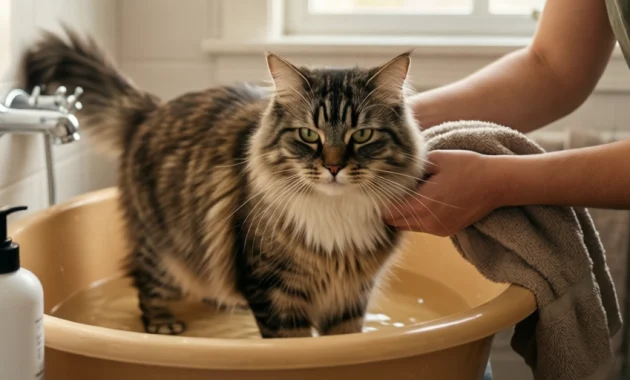
Use Shallow, Warm Water: Fill your basin with a few inches of warm water. Slowly and gently lower your cat into the water. Never use a high-pressure running faucet or showerhead, as the loud noise and sudden pressure will trigger panic.
-
Apply Shampoo Judiciously: Massage a small amount of cat shampoo into the dirty areas of the coat. If you are washing their entire body, keep the soap away from their face and head. Focus your lather on the neck, underbelly, legs, and tail.
-
Rinse Thoroughly: Use a small cup to gently pour warm water over the soapy areas. Use one hand to shield your cat’s eyes and ears from any stray splashes. Make sure to rinse away all soap residue; any leftovers can irritate their skin or be swallowed later during self-grooming.
-
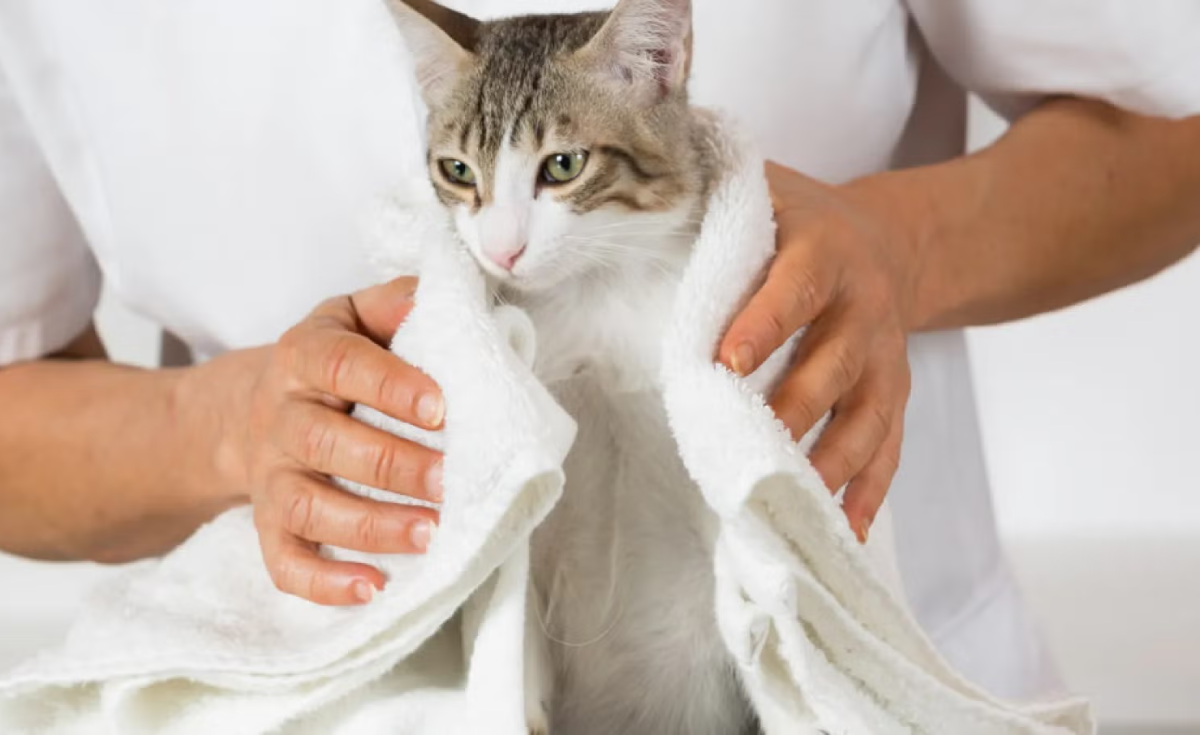
Dry Immediately: Wrap your cat in a dry towel right away to absorb excess water and keep them warm. If your cat tolerates the noise, you can use a hairdryer on the absolute lowest, coolest heat setting. For long-haired breeds, brush through the damp fur gently to prevent painful matting.
Post-Bath Recovery and Nutritional Rewards
Bathing burns a lot of a cat's emotional and physical energy. To turn a stressful bath into a more positive experience over time, you should always reward your cat immediately afterward with praise, playtime, or a high-quality meal.
               THE "BATH-TO-FEED" POSITIVE REWARD LOOP
[ Stressful Bathing Event ] ──► [ Complete Towel Dry ] ──► [ Serve Premium Wet/Dry Food ]
                                                                        │
                                                                        ▼
[ Easier Future Baths ] ◄── [ Cat Associates Bathing with Tasty Reward ] ◄┘
Serving a nutritious meal like Pro Plan Adult right after a bath is an excellent way to rebuild trust and help your cat associate grooming with a positive reward. Formulated for adult cats aged 1 year and older, this premium food line supports overall health with several key benefits:
-
Premium Real Meat Bases: Available in real chicken or real salmon formulas, these recipes provide high-quality proteins that feed the hair follicles, supporting a healthy, shiny coat after a wash.
-
Targeted Kidney Protection: Enriched with a specialized blend of arginine, essential omega-3 fatty acids, and vital antioxidants, this formula is specifically designed to support long-term kidney function in adult cats.
-
Digestive and Immune Boosters: Packed with live, active probiotics, the food helps maintain a balanced gut microbiome, ensuring your cat's immune system stays strong after a stressful event.
To help keep your cat hydrated, you can mix their dry kibble with Pro Plan Wet Adult food pouches, ensuring they get optimal nutrition and moisture.
Feline Grooming & Hygiene Decision Matrix
Use this quick reference matrix to determine whether your cat needs a full bath, a spot clean, or a professional groomer.
Summary: Prioritizing Your Cat's Comfort
While cats are excellent at keeping themselves clean, unexpected accidents can happen. By understanding when a bath is truly necessary and following a calm, careful routine, you can keep your cat clean without causing unnecessary panic. Always wrap up the session with a nutritious meal to show your companion they are safe and cared for.
Frequently Asked Questions (FAQ)
1. How often should I bathe my cat?
Most healthy indoor cats rarely need full baths because they groom themselves effectively every day. In general, a full-body bath is only necessary when your cat becomes heavily soiled, gets exposed to toxic substances, or cannot groom properly due to age, obesity, or illness. Over-bathing can strip away natural skin oils and lead to dry, irritated skin.
2. Can I use human shampoo on my cat?
No. Human shampoos are not safe for cats because feline skin has a very different pH balance than human skin. Using regular shampoo can damage your cat’s skin barrier, causing dryness, itching, and irritation. Always use a shampoo specifically labeled for cats.
3. Is it safe to use dog shampoo on cats?
Not always. Some dog shampoos contain ingredients, essential oils, or flea medications that are toxic to cats. Even if a dog product appears gentle, it may still be dangerous for feline use. Always choose a dedicated cat shampoo recommended for feline skin.
4. Why does my cat panic during baths?
Most cats instinctively dislike water because wet fur feels heavy, cold, and restrictive. Water also reduces their agility, which makes them feel vulnerable and unsafe. Loud running water, slippery surfaces, and unfamiliar handling can intensify fear and stress.
5. Should I trim my cat’s nails before a bath?
Yes. Trimming your cat’s nails before bathing helps reduce the risk of accidental scratches if they panic. Use proper feline nail clippers and avoid cutting too deeply into the quick.
6. Can kittens be bathed safely?
Yes, but only when necessary. Young kittens are highly sensitive to cold temperatures and stress, so baths should be brief, gentle, and performed with warm water. Kittens should be dried immediately afterward to prevent chilling.
7. What should I do if water gets into my cat’s ears?
Dry the outer ear gently with a clean towel or cotton pad. If your cat continues shaking their head, scratching at the ears, or develops a foul odor afterward, contact a veterinarian because trapped moisture can lead to ear infections.
8. Is a hairdryer safe for cats?
A hairdryer can be used only if your cat tolerates the sound and airflow calmly. Always use the lowest heat and airflow settings to avoid overheating or burning the skin. Many cats become frightened by the noise, so towel drying is often safer.
9. Can bathing help with shedding and hairballs?
Yes. Bathing removes loose fur before your cat swallows it during self-grooming. Combined with regular brushing, occasional baths may reduce hairball formation, especially in long-haired breeds.
10. What if my cat gets covered in oil, paint, or chemicals?
Do not allow your cat to lick the substance off. Some chemicals are highly toxic when ingested. Contact your veterinarian immediately for guidance, especially if the substance contains solvents, pesticides, automotive fluids, or cleaning agents.
11. Do hairless cats need more frequent baths?
Yes. Hairless breeds such as the Sphynx produce skin oils that are normally absorbed by fur in coated cats. Without regular cleaning, these oils accumulate on the skin and may cause irritation or infections. Hairless cats often require more frequent gentle bathing.
12. Can I bathe my cat if they are sick?
Avoid bathing a sick, weak, or elderly cat unless instructed by a veterinarian. Bathing can cause additional stress and may worsen dehydration or weakness. In many cases, spot cleaning with a damp cloth is safer.
13. How long does it take for a cat to calm down after a bath?
Most cats recover within a few hours after being dried, warmed, and allowed to rest in a quiet environment. Offering treats, playtime, or a favorite meal can help reduce lingering stress.
14. What is the safest water temperature for bathing?
Use lukewarm water—comfortably warm to the touch, but never hot. Water that is too cold may cause stress and chilling, while overly hot water can burn your cat’s sensitive skin.
15. Can bathing remove fleas?
A bath may temporarily wash away some adult fleas, but it does not eliminate a flea infestation completely. Effective flea control requires veterinarian-approved flea treatments and environmental cleaning.