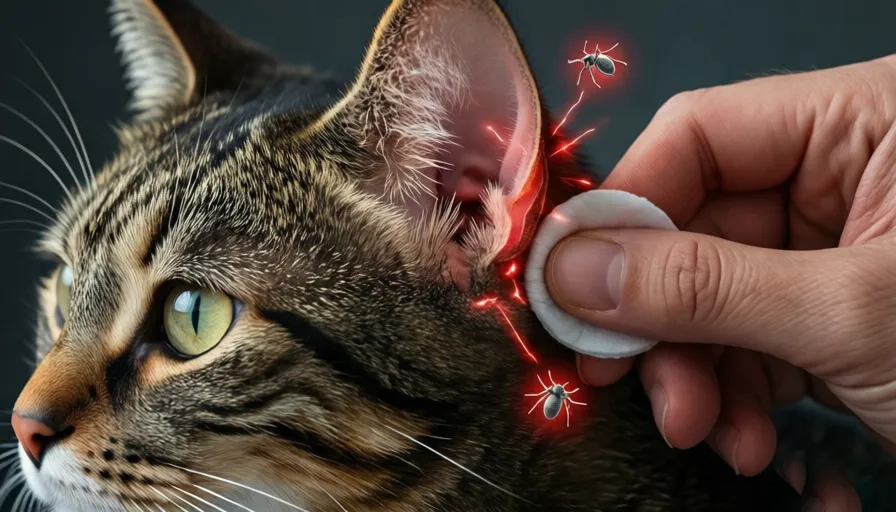
In 2026, we understand that a cat’s ears are not just hearing organs; they are high-precision navigational tools. A cat can hear frequencies up to 64,000 Hz, significantly higher than humans or even dogs. This extraordinary sensitivity means that even a minor fungal infection or a wax buildup can be agonizing for them.
As a devoted “PetLover,” understanding ear care is a bridge to improving your cat’s quality of life. An ignored ear issue can lead to vestibular disease, causing your cat to lose balance, feel constant vertigo, or in severe cases, face permanent deafness. This guide is designed to transform you from a casual owner into an informed guardian.
The Biological Wonder: Understanding Feline Ear Anatomy
To clean an ear, you must first understand its architecture. The feline ear is divided into three distinct segments, each with its own vulnerabilities.
A. The Outer Ear (Pinna and Vertical Canal)
The Pinna is the velvet-like funnel that rotates to capture sound. Interestingly, the ear canal in cats is L-shaped. It goes straight down (vertical canal) and then turns inward (horizontal canal). This shape is excellent for hearing but terrible for drainage; it traps moisture, debris, and parasites like a natural cul-de-sac.
B. The Middle Ear (Tympanic Membrane)
This houses the eardrum. If you use a Q-tip too deeply, you risk rupturing this delicate membrane. In 2026, veterinary standards strictly warn against inserting anything solid deep into the canal for this very reason.
C. The Inner Ear (Cochlea and Vestibular System)
The inner ear is responsible for balance. The fluid-filled canals here tell the cat where “up” is. If an infection migrates here, you will see the classic “head tilt” or stumbling.
Recognizing the “Perfect” Healthy Ear
A healthy ear is a quiet ear. It shouldn’t have an odor, and the skin should be a pale “pinkish-white.”
-
Color: Healthy tissue looks like a fresh rose petal. Redness indicates inflammation; yellow/green indicates bacteria; dark brown often points to mites or yeast.
-
Odor: A healthy ear smells like nothing. A “musty” or “yeasty” smell (resembling corn chips) is a sign of fungal overgrowth.
Pathology of the Ear: Mites, Bacteria, and Yeast
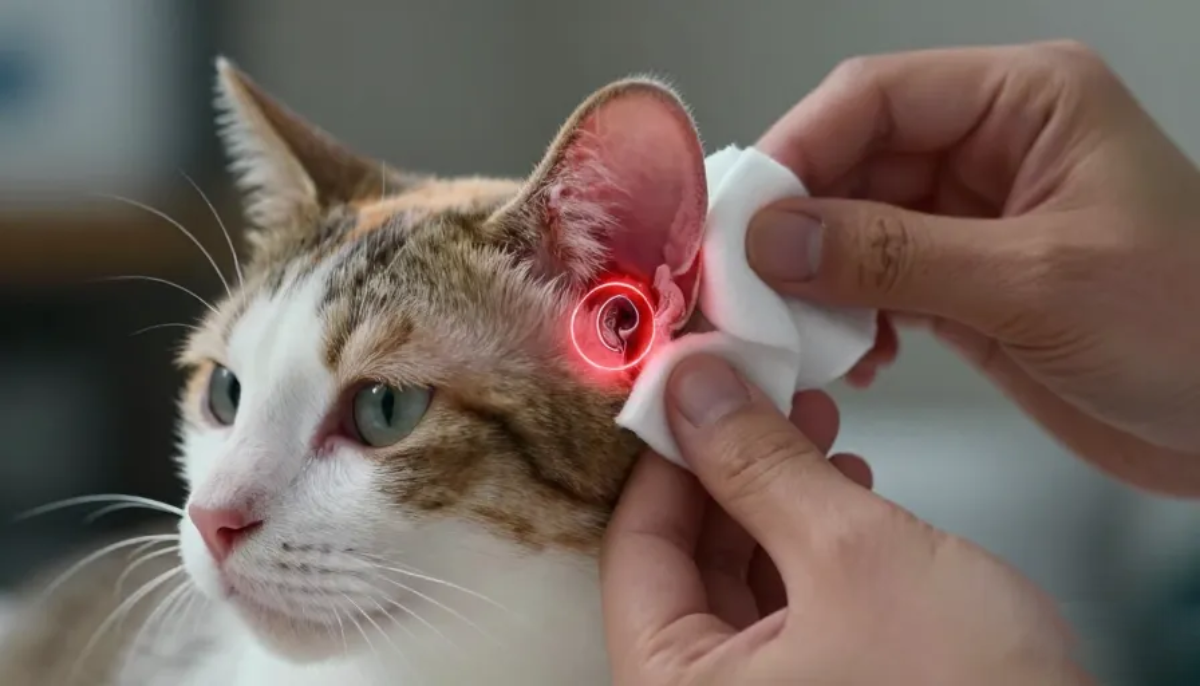
The most common enemy is the Ear Mite (Otodectes cynotis). These microscopic parasites are highly contagious. However, in the 2026 digital era, many owners confuse mites with Otitis Externa (inflammation of the outer ear).
Fungal Infections (The “Telinga Jamuran” Issue)
Fungus, particularly Malassezia, thrives in dark, moist environments. When a cat’s immune system is stressed or they have allergies, this fungus blooms. It creates a dark, waxy discharge that irritates the skin, leading to self-mutilation through scratching.
Step-by-Step Masterclass: Cleaning Without Trauma
Cleaning a cat’s ears is 10% technique and 90% psychology.
-
Preparation: Gather high-quality gauze or cotton pads (avoid cotton buds/Q-tips) and a vet-recommended ceruminolytic (wax-dissolving) cleanser.
-
The “Burrito” Method: If your cat is feisty, wrap them gently in a towel.
-
The Application: Do not squeeze the bottle directly into the ear if the cat is scared. Instead, soak a cotton pad and let the liquid drip in.
-
The Massage: This is the most crucial part. Massage the base of the ear (the “cartilage” feel) for 30 seconds. You should hear a “squishing” sound. This breaks up the deep debris.
-
The Shake: Let your cat shake their head. This uses centrifugal force to bring the gunk out of the “L-bend.”
-
The Wipe: Only wipe what you can see.
Choosing the Right Tools: The 2026 Standards
Not all cleansers are equal. In 2026, we avoid cleansers containing alcohol or hydrogen peroxide, as these can sting inflamed tissue. Look for products containing salicylic acid or lactic acid for mild cleaning, or ketoconazole if fungus is suspected. Always consult a vet if you suspect the eardrum is ruptured, as certain cleansers can be toxic to the inner ear.
Frequently Asked Questions (FAQ)
1. How often should I clean my cat’s ears?
Most healthy cats do not need frequent ear cleaning. Cleaning is usually only necessary when wax buildup, odor, or discharge is present.
2. What do healthy cat ears look like?
Healthy cat ears should appear pale pink, clean, odorless, and free of excessive wax or debris.
3. What causes dark brown debris in cat ears?
Dark brown debris is commonly associated with ear mites or yeast overgrowth, though bacterial infections can also contribute.
4. Can ear infections affect a cat’s balance?
Yes. Severe infections that spread to the inner ear can affect the vestibular system, causing head tilting, dizziness, or loss of balance.
5. Are Q-tips safe for cleaning cat ears?
No. Inserting Q-tips deep into the ear canal can damage the eardrum and push debris further inside.
6. Why do my cat’s ears smell bad?
A musty or yeasty odor often indicates fungal or bacterial overgrowth inside the ear canal.
7. What are ear mites in cats?
Ear mites are tiny contagious parasites that live in the ear canal and cause intense itching, irritation, and dark discharge.
8. Can I use hydrogen peroxide to clean cat ears?
No. Hydrogen peroxide and alcohol-based products may irritate sensitive ear tissue and should generally be avoided.
9. What is the safest way to clean a cat’s ears?
Use a vet-approved ear cleanser, massage the base of the ear gently, allow the cat to shake its head, and wipe only visible debris with gauze or cotton pads.
10. When should I take my cat to the vet for ear problems?
Seek veterinary care if your cat has severe redness, swelling, bleeding, balance problems, pain, or persistent discharge and odor.