The Masterclass Guide to Feline Weaning: Timelines, Caloric Mathematics, and Step-by-Step Nutrition for Growing Kittens
2 weeks ago
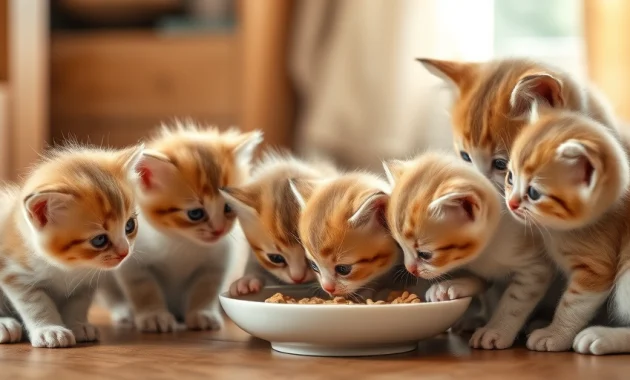
Bringing a new litter of kittens into the world—or stepping in as a surrogate caretaker for orphaned rescues—is one of the most rewarding yet profoundly challenging experiences a cat lover can face. In those first few weeks of life, a kitten’s body undergoes an astonishing biological transformation. They evolve from blind, deaf, completely helpless neonates into agile, curious, and energetic young carnivores.
At the center of this rapid evolution is a critical physiological milestone: the transition from milk to solid food, scientifically known as weaning.
For pet owners, understanding the precise mechanisms of this transition is vital. Feeding a kitten too much too fast, using the wrong type of food, or miscalculating their caloric requirements can quickly lead to severe gastrointestinal distress, nutritional deficiencies, stunted growth, or life-threatening dehydration.
This deep-dive masterclass guide is designed to take the guesswork out of the process. We will break down the natural timeline of feline lactation, map out exact feeding schedules based on development, dive into the precise mathematics of kitten caloric needs, and provide a foolproof, step-by-step roadmap to successfully transition your kittens from their mother’s milk to a lifetime of optimal, solid nutrition.
1. The Biological Timeline: How Long Do Cats Nurse?
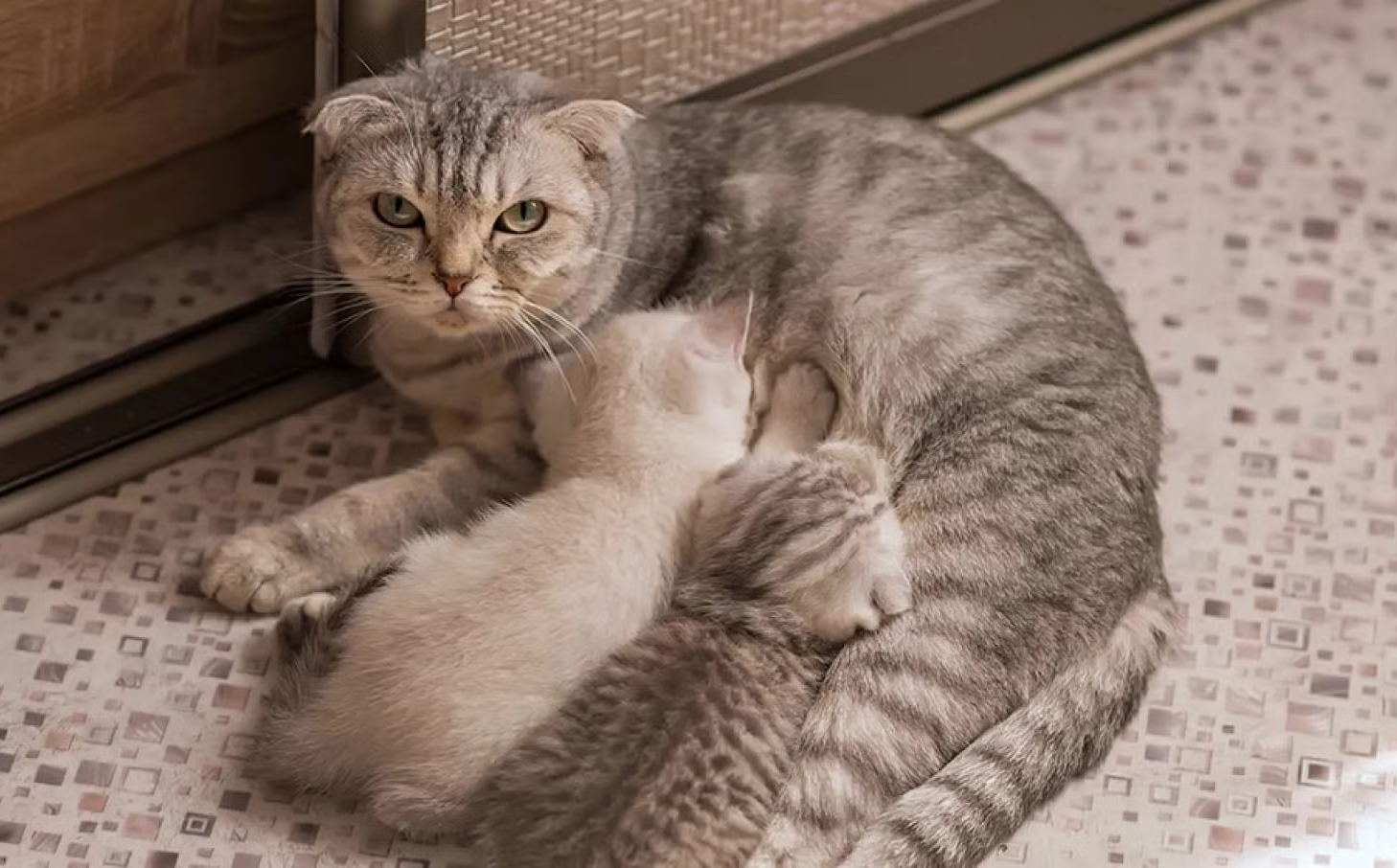
To manage the weaning process effectively, we must first look at how nature intended it to happen. Feline lactation is a finely tuned biological dance between the mother cat (the queen) and her litter.
Feline Nutritional Development Timeline:
Weeks 0 - 3 ➔ 100% Exclusive Lactation (Colostrum & Mature Milk)
Weeks 4 - 5 ➔ Natural Incipient Weaning (Gastrointestinal Shift)
Weeks 6 - 8 ➔ Accelerated Solid Food Integration & Social Learning
Weeks 9 - 12➔ Total Nutritional Independence & Final Separation
The Neonatal Window (Weeks 0 to 3): Absolute Dependence
During the first three weeks of life, kittens are entirely dependent on the queen’s milk.
-
The Power of Colostrum: In the initial 24 to 72 hours post-birth, the queen produces a specialized, thick, yellowish fluid called colostrum. This fluid is packed with maternal antibodies that provide immediate passive immunity to the kittens, shielding their highly vulnerable systems from environmental pathogens.
-
Mature Feline Milk: Following this period, the milk transitions into a highly concentrated, energy-dense formula rich in proteins and fats, perfectly tailored to support rapid skeletal and neurological development. At this stage, a kitten’s digestive system produces massive amounts of the enzyme lactase to break down milk sugars, while their stomach lacks the capacity or the enzymes required to process complex solid proteins or starches.
The Incipient Weaning Phase (Weeks 4 to 5): The Internal Shift
As kittens approach their fourth week, a significant internal and external shift occurs.
-
Deciduous Tooth Eruption: Their tiny, razor-sharp primary (deciduous) teeth begin to push through the gums.
-
Digestive Transition: Simultaneously, the production of lactase begins to drop naturally, while the production of starch- and complex protein-digesting enzymes (like amylase and pepsin) begins to ramp up.
-
Behavioral Prompts: The queen will naturally begin to stand up or walk away during nursing sessions rather than lying down indefinitely, subtly prompting the kittens to look for alternative energy sources.
The Final Cut (Weeks 6 to 12): Achieving Total Independence
Between weeks 6 and 8, kittens will consume a mix of milk and solid food. By week 8, the queen’s milk supply will dry up substantially as the kittens nurse less frequently. While some kittens will still try to nurse for comfort up until week 12, they are nutritionally independent by week 8 to 9. By the twelfth week, the weaning process is officially complete, and the kitten can thrive entirely on a commercial or structurally complete solid diet.
2. Age-Specific Feeding Schedules and Textures
As a kitten transitions away from milk, their tiny, developing stomach requires a highly structured, gradual step-up in food consistency and frequency. You cannot simply place a bowl of hard kibble in front of a four-week-old kitten and expect their digestive tract to process it.
Texture Progression Roadmap:
Pure Liquid Milk ➔ Smooth Liquid Slurry ➔ Thick Oatmeal Consistency ➔ Soft Canned Food ➔ Moistened Kibble ➔ Hard Dry Kibble
The table below outlines the optimal food textures and feeding frequencies required to safely navigate this developmental arc:
| Age of Kitten | Feeding Frequency | Recommended Dietary Texture & Type |
| 0 – 3 Weeks | Every 2 to 3 hours (around the clock) | 100% Queen's Milk / Feline Milk Replacer (KMR). Must be delivered via syringe or specialized small-nil bottle if orphaned. |
| 3 – 6 Weeks | Every 4 hours | The Smooth Liquid Slurry: Premium kitten wet food pulverized and thoroughly blended with warm water or KMR into a lickable, smooth soup. |
| 6 – 12 Weeks | 4 times per day | The Semi-Solid Mash: Un-blended kitten wet food mixed with a tiny splash of water, or small-sized dry kitten kibble thoroughly soaked in warm water until completely soft. |
| 12 Wks – 10 Mos | 3 times per day | Standard Kitten Growth Diet: High-protein, high-fat commercial wet and dry kitten foods formulated for rapid growth. |
| 10 – 12 Months | 2 times per day | Adult Transition: A slow, structured transition from growth-formulated kitten food to adult maintenance recipes. |
3. Caloric Mathematics: Calculating Your Kitten's Daily Intake
Guesswork is the enemy of stable growth. Feeding a kitten purely by eye can result in accidental underfeeding, which leads to hypoglycemia (blood sugar crashes) and lethargy, or overfeeding, which manifests as severe, dehydrating diarrhea.
To determine exactly how much food to offer, you must use a systematic, weight-based caloric calculation.
The Baseline Feline Growth Energy Equation
Growing kittens require significantly more energy per unit of body weight than adult cats because their bodies are simultaneously building bone density, developing muscle tissue, and fueling high-energy play. The baseline standard for a young kitten during the weaning phase is roughly 30 Calories (kcal) for every 1 Kilogram (kg) of body weight per day.
To apply this to your litter, use this simple two-step mathematical formula:
🧮 Practical Calculation Example
Let's say you are caring for a 5-week-old weaning kitten who weighs exactly 500 grams on a digital kitchen scale.
First, convert their weight into kilograms:
$$500\text{ g} \div 1000 = 0.5\text{ kg}$$Next, multiply their weight by the growth factor:
$$0.5\text{ kg} \times 30\text{ kcal} = 15\text{ Calories per day}$$If this specific kitten is on a schedule requiring them to be fed every 4 hours (which equals 6 meals per 24-hour cycle), you simply divide their daily total by the number of meals:
$$15\text{ kcal} \div 6\text{ meals} = 2.5\text{ Calories per portion}$$
By checking the caloric density panel on the back of your commercial wet or dry kitten food label (usually printed as kcal/can or kcal/kg), you can measure out the exact weight or tablespoon fraction of food required to hit this precise caloric target.
4. The Step-by-Step Weaning Process
Transitioning a kitten to solid food requires patience, consistency, and a slow, methodical approach. Follow this step-by-step framework to ensure a smooth transition:
Step 1: The First Taste (Introductions)
When your kittens hit 3.5 to 4 weeks of age, mix a tiny amount of high-quality wet kitten food with warm Feline Milk Replacer (KMR) on a flat, shallow saucer until it forms a very smooth, runny soup.
-
The Finger Technique: Dip your clean fingertip into the mixture and gently smear a small dot onto the kitten's lips or the tip of their nose.
-
The Licking Trigger: The kitten will instinctively lick their face clean, tasting the rich, savory proteins of the meat for the first time. Repeat this process until the kitten associates the scent of the saucer with food.
Step 2: Learning to Lap
Once the kittens recognize the taste, place the shallow saucer directly on the floor. Kittens do not initially know how to chew or bite; they must learn to lap liquids up using their tongues.
-
Avoid Deep Bowls: Never use deep bowls during this phase. Kittens can easily breathe the liquid mixture into their lungs if they accidentally submerge their noses, which can lead to fatal aspiration pneumonia.
-
Keep it Lukewarm: Ensure the slurry is always served warm, as cold food will immediately turn a young kitten off.
Step 3: Increasing Textural Density
Over the course of the next two weeks, slowly alter the ratio of your mixture. Gradually decrease the volume of added liquid (KMR or water) while increasing the amount of solid wet food.
-
By week 5, the food should have the thick, textured consistency of oatmeal.
-
By week 6 to 7, the kittens should be eating straight wet food directly from the saucer with ease.
Step 4: Introducing Dry Kibble
Once the kittens are comfortable with wet food, you can introduce high-quality dry kitten kibble.
-
The Soaking Method: Because their jaw muscles and deciduous teeth are still fragile, place the dry kibble in a bowl and flood it with warm water. Let it sit for 10 to 15 minutes until the kibble swells and takes on a soft, spongy texture.
-
The Crunch Phase: As they approach 8 to 9 weeks of age, gradually reduce the soaking time until they are comfortably crunching dry, un-moistened kibble.
5. Troubleshooting Common Weaning Complications
Even with perfect preparation, the weaning process can occasionally run into developmental roadblocks. Knowing how to identify and react to these issues is essential for keeping your kittens on a safe path to growth.
Issue A: The Weaning Strike (Refusal to Eat)
If a kitten completely turns their nose up at the slurry and runs back to their mother to nurse, do not panic.
-
The Fix: They may simply be developing a bit slower than their littermates. Never force a kitten's face into a bowl, as this triggers panic and food aversion. Step back, return them to exclusive nursing or bottle-feeding, and try the introduction process again 48 hours later.
Issue B: Weaning Diarrhea
A kitten’s gut microbiome is highly sensitive. The sudden introduction of novel solid proteins can occasionally trigger loose, watery stools.
-
The Fix: If the diarrhea is mild and the kitten remains alert and energetic, slow down the weaning process. Go back to a more liquid slurry, or reduce the amount of wet food you are introducing.
-
The Danger Zone: If the diarrhea becomes explosive, bloody, or is accompanied by vomiting and lethargy, seek immediate veterinary intervention. Young kittens can dehydrate to a critical point within a few short hours.
Summary of Feline Weaning Best Practices
Successfully guiding kittens through the weaning process requires a careful balance of observation, safety, and precise nutrition. Keep these core principles in mind:
-
Respect the Timeline: Allow the transition from milk to solids to unfold gradually between week 4 and week 8.
-
Prioritize Texture: Move systematically from smooth, warm liquids to soft mashes before introducing solid, crunchy kibble.
-
Calculate with Precision: Use the growth factor formula ($30\text{ kcal} \times \text{weight in kg}$) to determine exact daily feeding portions.
-
Stay Vigilant: Monitor stool consistency, hydration levels, and weight gain daily to catch potential health setbacks early.
Frequently Asked Questions (FAQ)
1. When do kittens start eating solid food?
Most kittens begin showing interest in solid food at 3.5 to 4 weeks of age. At this stage, they should be introduced to a soft slurry made from high-quality kitten wet food mixed with warm kitten milk replacer (KMR). The transition should always be gradual to avoid digestive upset.
2. At what age are kittens fully weaned?
Most kittens are nutritionally independent between 8 and 9 weeks of age, although some may continue nursing for comfort until around 12 weeks. By this point, they should be eating a complete kitten diet without relying on their mother's milk.
3. How long do mother cats produce milk?
A healthy queen typically produces milk for 6 to 8 weeks after giving birth. Milk production naturally decreases as kittens consume more solid food and nurse less frequently.
4. Can kittens eat dry food immediately after weaning?
Not immediately.
Young kittens should first learn to eat:
- Liquid kitten formula
- Soft food slurry
- Thick mashed wet food
- Soaked kitten kibble
- Dry kitten kibble
Introducing hard kibble too early may make chewing difficult and increase the risk of choking.
5. What should I feed an orphaned kitten?
Orphaned kittens should only receive a commercial kitten milk replacer (KMR) designed specifically for felines.
Never feed:
- Cow's milk
- Goat's milk (unless recommended by a veterinarian)
- Plant-based milk
- Condensed milk
- Human infant formula
These products lack the proper nutritional balance and may cause severe diarrhea.
6. How often should newborn kittens be fed?
Feeding frequency depends on age:
| Kitten Age | Feeding Frequency |
|---|---|
| 0–3 weeks | Every 2–3 hours (day and night) |
| 3–6 weeks | Every 4 hours |
| 6–12 weeks | 4 meals daily |
| 3–10 months | 3 meals daily |
| 10–12 months | 2 meals daily |
Very young orphaned kittens require overnight feedings.
7. How much food does a kitten need each day?
Daily food intake depends on body weight and the calorie density of the food.
A simple guideline is:
Daily Calories = Body Weight (kg) × 30 kcal
Always compare this estimate with the feeding recommendations provided by your kitten food manufacturer and your veterinarian's advice, since energy needs vary with age, growth rate, health status, and activity level.
8. Should kitten food be served warm or cold?
Young kittens generally prefer food served slightly warm or at room temperature.
Cold food taken directly from the refrigerator may reduce appetite. If refrigerated, allow it to warm naturally or add a small amount of warm water before serving.
9. My kitten refuses solid food. What should I do?
Avoid forcing your kitten to eat.
Instead:
- Continue bottle-feeding or nursing if possible.
- Try again after 24–48 hours.
- Warm the food slightly.
- Offer a smoother consistency.
- Introduce food using your fingertip.
If your kitten refuses food for an extended period or appears weak, contact your veterinarian promptly.
10. Is diarrhea normal during weaning?
Mild digestive changes can occur during the transition to solid food.
However, seek veterinary attention immediately if diarrhea is:
- Severe
- Bloody
- Persistent
- Accompanied by vomiting
- Associated with lethargy or dehydration
Young kittens can become critically dehydrated very quickly.
11. Can kittens drink cow's milk after weaning?
No.
Most kittens gradually lose the ability to digest lactose after weaning. Cow's milk commonly causes:
- Diarrhea
- Gas
- Stomach discomfort
- Digestive upset
Fresh water should become their primary drink once they begin eating solid food.
12. When can kittens eat regular adult cat food?
Adult cat food is generally appropriate at around 12 months of age, once kittens have completed most of their growth.
Until then, they should eat food specifically formulated for kittens because it contains higher levels of calories, protein, fat, and essential nutrients needed for healthy development.
13. Should I feed wet food, dry food, or both?
Many veterinarians recommend a combination of both.
Wet food helps:
- Increase water intake
- Improve palatability
- Support urinary health
Dry food provides:
- Convenient feeding
- Longer shelf life
- Crunchy texture that may provide limited dental benefits
Choose a complete and balanced kitten formula regardless of the feeding style.
14. How can I tell if my kitten is eating enough?
Healthy kittens typically:
- Gain weight steadily every week.
- Remain active and playful.
- Have bright eyes and a healthy coat.
- Produce normal stools.
- Show a healthy appetite.
Using a digital kitchen scale to monitor weight weekly is one of the most reliable ways to track healthy growth.
15. What are the biggest mistakes during the weaning process?
Common mistakes include:
- Weaning too early.
- Switching foods too quickly.
- Feeding inappropriate milk.
- Offering dry kibble before kittens can chew properly.
- Overfeeding or underfeeding.
- Ignoring persistent diarrhea.
- Not monitoring weight gain.
- Using deep bowls that increase the risk of aspiration.
A slow, consistent transition gives kittens the best chance for healthy growth.