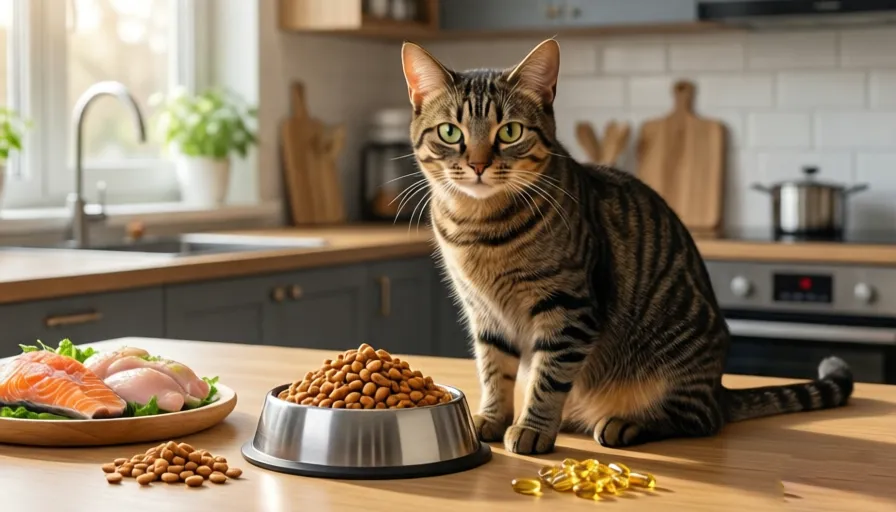
The transition of a feline from the rapid growth phase of kittenhood to the stable physiological plateau of adulthood marks a critical juncture for pet parents. In feline care, nutrition is not merely a means to alleviate hunger; it is a direct, daily modulation of the cat’s metabolic blueprint. Providing improper portions can lead to severe health consequences. Undersupplying nutrients causes cellular starvation and muscle wasting, while oversupplying leads to feline obesity, a clinical gateway to type II diabetes, hepatic lipidosis, and osteoarthritic joint degeneration.
┌───────────────────────────────────────────────────────────────────────────┐
│                      Feline Nutritional Balance                           │
├───────────────────────────────────────────────────────────────────────────┤
│  [ Under-feeding ]  ──► Nutrient Deficiency ──► Muscle Atrophy             │
│  [ Over-feeding ]   ──► Metabolic Overload  ──► Obesity & Diabetes        │
└───────────────────────────────────────────────────────────────────────────┘
As cats mature, their physiological demands change. Understanding adult cat nutrition requires an analytical look at chronological feeding schedules, life-stage macronutrient variations, and targeted dietary therapies designed for specific organ systems.
Chronological Feeding Rhythms: Optimizing Adult Meal Timing

A cat’s daily energy expenditure shifts downward once it crosses the threshold into adulthood (typically at 12 months of age). Kittens require frequent, high-calorie meals throughout a 24-hour cycle to fuel their rapid cellular replication and intense play drives. Adult cats, conversely, exhibit a more sedentary lifestyle with lower metabolic rates.
                           [ Feline Life-Stage Feed Rhythms ]
                                          │
         ┌────────────────────────────────┴────────────────────────────────┐
         ▼                                                                 ▼
  [ Kitten Phase ]                                                 [ Adult Phase ]
  ├── 3 to 4 Feedings per Day                                      ├── 1 to 2 Feedings per Day
  ├── High-Frequency Energy Surge                                  ├── Controlled Macro Allocation
  └── Supports Fast Tissue Build                                   └── Prevents Adipose Storage
-
Frequency: While kittens need three to four small meals daily, healthy adult cats operate best on one to two structured feedings per day.
-
Timing: The standard clinical recommendation is a two-meal split, distributed evenly during the morning and evening. This schedule aligns with a cat’s natural crepuscular hunting instincts (being most active at dawn and dusk).
-
Portion Control: Although adult feeding frequency drops, the volumetric portion size per meal is larger than a kitten’s. However, the caloric density must be carefully managed to prevent the accumulation of excess adipose (fat) tissue.
Deconstructing Macromolecular Profiles: Kitten vs. Adult Formulas
Feeding a cat correctly requires understanding that kittens and adults belong to different nutritional categories. While both are obligate carnivores requiring core animal proteins, the precise ratios of vitamins, minerals, and caloric density vary significantly between life stages.
┌───────────────────────────────────────────────────────────────────────────┐
│                    The Feline Micronutrient Matrix                        │
├───────────────────────────────────────────────────────────────────────────┤
│  • Vitamin A     ──► Absolute Requirement (Maintains Retinal Function)     │
│  • Vitamin C + E ──► Synergistic Antioxidants (Neutralizes Free Radicals)   │
│  • Calcium       ──► Bone Density Stabilization & Structural Maintenance  │
│  • Phosphorus    ──► Drives Muscle Contraction & Cellular Energy Transfer   │
│  • Omega 3 & 6   ──► Lipids for Dermal Moisture & Follicular Shine       │
└───────────────────────────────────────────────────────────────────────────┘
The Kitten Nutritional Matrix
To sustain fast-growing skeletal frames and neural development, kitten formulas are loaded with high levels of proteins, fats, and essential minerals. They require a dense concentration of Calcium and Phosphorus to lock in bone density, alongside elevated fatty acids for early brain development.
The Adult Transition
When a cat reaches maturity, keeping them on a high-calorie kitten diet can overwhelm their system, forcing the liver and kidneys to continuously process excess nutrients they no longer need. Adult cats require a finely balanced ratio of clean proteins and controlled calories.
Furthermore, an adult cat’s diet should feature scientifically proven antioxidants (such as specialized blends of Vitamin E and C) to strengthen the immune system and protect cells from aging and oxidative stress.
Targeted Diets: Addressing Specific Adult Health Needs
As cats age, their bodies develop unique vulnerabilities based on genetics, activity levels, and environment. The adult feline marketplace offers highly specialized diets formulated to target specific health conditions and organ systems:
┌───────────────────────────────────────────────────────────────────────────┐
│                    Targeted Functional Nutrition Lineup                   │
├───────────────────────────────────────────────────────────────────────────┤
│  [ Urinary Tract Support ] ──► Purina ONE® Urinary Care with Chicken      │
│                                (Maintains ideal pH to block stones)       │
│  [ Coat & Palatability ]   ──► PRO PLAN® Fussy & Beauty Salmon            │
│                                (Omega Lipids for Dermal Health)           │
└───────────────────────────────────────────────────────────────────────────┘
A. Renal and Lower Urinary Tract Health
The feline urinary system is highly sensitive. Adult cats naturally have a low thirst drive, which can lead to highly concentrated urine. This environment allows microscopic crystals (like struvite or calcium oxalate stones) to form, potentially causing painful blockages.
Using tailored options like Purina ONE® Urinary Care with Chicken helps regulate urinary pH levels and balances mineral intake, reducing structural stress on the bladder and kidneys.
B. Dermatological and Palatability Support
Felines dedicate a large portion of their awake hours to grooming. A dull, dry coat or constant hairballs indicate a need for adjusted lipid intake.
Formulas such as PRO PLAN® Fussy & Beauty Salmon deliver focused doses of Omega-3 and Omega-6 fatty acids. These healthy fats feed the dermal layers, reinforce the skin barrier, and improve coat shine, while providing an appealing flavor profile for selective eaters.
The Clinical Hazards of Cross-Stage Feeding
A common question among multi-cat owners is: Can an adult cat safely eat kitten food? From a veterinary standpoint, doing this long-term can introduce several distinct health risks.
[ Adult Cat Consumes Kitten Kibble ] ──► Moisture Mismatch + High Calories ──► Digestive Churn & Weight Gain
-
Textural Misalignment: Kitten wet food and kibble are intentionally produced with a soft, moist, or small-kibble texture to accommodate developing baby teeth. Feeding this long-term to an adult cat removes the mechanical crunch required to help scrape away plaque, accelerating the development of periodontal and dental diseases.
-
Gastrointestinal and Renal Strain: Because kitten food is packed with rich fats and concentrated proteins, an adult cat’s mature digestive system can struggle to process it, leading to acute diarrhea, vomiting, or stomach upset.
-
Urinary Tract Risks: The high mineral content found in kitten growth formulas can overload an adult cat’s kidneys, increasing the risk of crystal formation and lower urinary tract issues.
Quick Reference: Life-Stage Nutritional Comparison
To keep your feeding routines organized, use this comparative matrix to guide your daily choices between growth and maintenance formulas:
| Nutritional Variable | Kitten Growth Formulation | Adult Maintenance Formulation |
| Recommended Feeding Frequency | 3 to 4 times per day (Continuous energy) | 1 to 2 times per day (Structured spacing) |
| Caloric & Fat Density | Exceptionally high (Fuels growth and play) | Controlled and balanced (Prevents obesity) |
| Primary Mineral Focus | Elevated Calcium & Phosphorus for bones | Balanced Minerals (Protects kidneys and bladder) |
| Kibble Structural Design | Micro-sized; softer density for baby teeth | Harder texture designed for mechanical plaque control |
| Target Options | General growth and immune support | System-specific (Urinary, skin/coat, weight control) |
Every cat is an individual with specific lifestyle needs. Always consult your veterinarian to customize these guidelines for your pet, and review the feeding charts on your pet food packaging to ensure your adult companion stays healthy, active, and thriving for years to come.