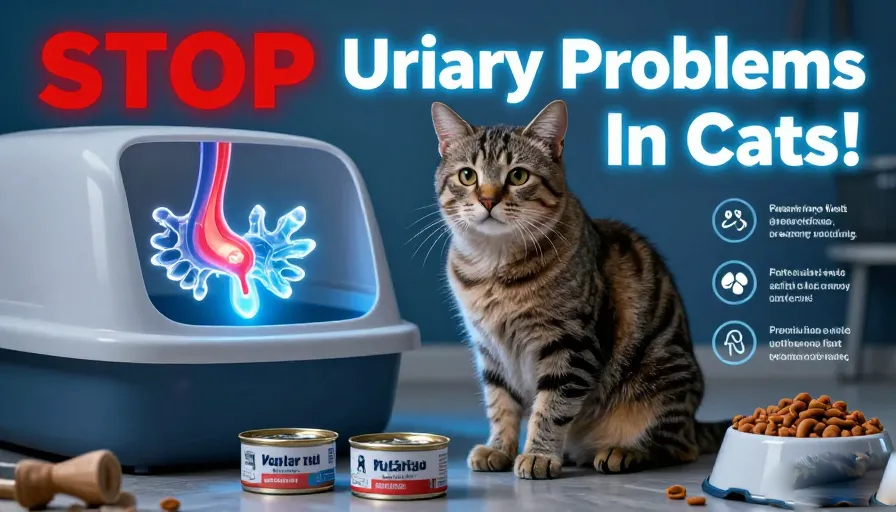
Every cat owner knows the quiet panic of watching their feline companion visit the litter box, scratch around anxiously, strain for a few uncomfortable moments, and walk away leaving behind only a tiny droplet of urine—or nothing at all.
Urinary tract disorders, collectively known as Feline Lower Urinary Tract Diseases (FLUTD), represent one of the most common, complex, and frustrating health challenges in veterinary medicine. Because cats evolved from desert-dwelling ancestors, their bodies are biologically hardwired to conserve moisture. Their kidneys are highly efficient machines designed to concentrate urine to prevent dehydration. However, this remarkable evolutionary adaptation comes with a major physiological cost: highly concentrated urine is the perfect breeding ground for mineral crystallization, painful bladder inflammation, and life-threatening urethral blockages.
As a responsible cat owner, protecting your pet from these agonizing conditions requires more than just filling their water bowl. It demands a precise, scientifically backed understanding of feline nutrition, with a particular focus on dietary mineral loads, hydration kinetics, and moisture-rich meal formulations.
This comprehensive guide breaks down the complex mechanics of feline urinary health, examines the critical role of low-magnesium diets, and provides actionable, human-style guidance on choosing the best possible food to keep your cat happy, healthy, and thriving for years to come.
The Anatomy and Pathology of Feline Urinary Disorders
To understand why specific nutrients like magnesium can completely change your cat’s health, we must first look at the unique biological design of the feline lower urinary tract and how it breaks down under metabolic stress.
                  [ Feline Urinary System Architecture ]
                                     │
         ┌───────────────────────────┴───────────────────────────┐
         ▼                                                       ▼
 [ The Filtration Units ]                                [ The Elimination Storage ]
 ├── Dual Kidneys (Metabolic Waste)                       ├── Urinary Bladder (Expansion)
 └── Ureters (Downstream Flow)                           └── Urethra (Narrow Exit Channel)
The feline urinary system is divided into two primary zones:
-
The Upper Urinary Tract: Comprising the kidneys and the ureters, which filter waste products out of the bloodstream and route them downward.
-
The Lower Urinary Tract: Comprising the bladder (a muscular storage pouch) and the urethra (the narrow exit tube through which urine leaves the body).
When vets talk about FLUTD, they are describing a cluster of clinical conditions that irritate, inflame, or clog this lower elimination zone. Let’s look closely at the primary medical causes behind these failures.
1. Urolithiasis (The Formation of Bladder Stones)
Urolithiasis is the medical term for the formation of macroscopic stones, or uroliths, within the urinary bladder or urethra. These stones start out as microscopic mineral crystals dissolved in the urine. When the urine becomes overly saturated with specific minerals—often due to a combination of high dietary intake, low water consumption, and abnormal urine pH—these crystals begin to precipitate out of solution, clumping together like snowflakes until they form solid stones.
[ High Mineral Intake + Low Fluids ] ──► [ Crystal Precipitation ] ──► [ Microscopic Aggregation ] ──► [ Solid Urolith Stones ]
In cats, these stones typically fall into two distinct chemical categories:
-
Struvite Uroliths (Magnesium Ammonium Phosphate): These stones form primarily in alkaline urine (a pH above 7.0). Because magnesium is a foundational building block of struvite crystals, feeding your cat high-magnesium foods acts like pouring fuel onto a fire, rapidly accelerating stone growth.
-
Calcium Oxalate Uroliths: These stones form primarily in highly acidic urine (a pH below 6.0). Unlike struvite, calcium oxalate stones cannot be dissolved with dietary changes and almost always require surgical removal by a veterinarian.
2. Feline Idiopathic Cystitis (FIC)
Surprisingly, more than half of all cats showing signs of urinary distress do not have bladder stones or bacterial infections at all. Instead, they suffer from Feline Idiopathic Cystitis (FIC). The word idiopathic is a medical term meaning “of unknown cause.”
FIC is a complex condition involving a neurohormonal imbalance. It essentially causes a severe breakdown of the protective mucous layer (the glycosaminoglycan, or GAG layer) that lines the inside of the bladder. When this protective coating wears thin, the highly concentrated, acidic urine comes into direct contact with the raw, sensitive tissue of the bladder wall. This triggers intense inflammation, pain, and spasms, even when no infection or stones are present. Stress is a massive trigger for FIC, making mental and environmental enrichment just as important as a proper diet.
3. Traumatic Nerve Injury and Structural Tumors
Beyond chemical imbalances and stress, structural issues can also disrupt normal urination:
-
Neurological Trauma: Spinal cord injuries—often caused by physical accidents like falling from a height or being struck by a vehicle—can damage the delicate nerves that control the bladder’s muscle contractions. This can lead to urinary retention, where the bladder cannot empty fully, creating stagnant pools of urine where bacteria can multiply rapidly.
-
Neoplasia (Tumors): Though less common in young cats, older felines can develop tumors (such as transitional cell carcinomas) within the bladder or urethra. These physical masses create structural blockages that make it painful or impossible for urine to pass freely.
The Critical Link Between Magnesium and Urinary Crystals
For decades, veterinary nutritionists have studied the direct impact of dietary minerals on feline bladder health. Among all the elements listed on a cat food ingredient label, magnesium requires the most careful management.
                      [ The Struvite Crystal Equation ]
                                      │
         ┌────────────────────────────┼────────────────────────────┐
         ▼                            ▼                            ▼
[ Ionic Magnesium (Mg2+) ]   [ Ammonium Ions (NH4+) ]    [ Phosphate Ions (PO43-) ]
   (Dietary Mineral Loading)    (Protein Breakdown Waste)   (Essential Structural Element)
         │                            │                            │
         └────────────────────────────┼────────────────────────────┘
                                      ▼
                      [ Alkaline Urine Environment (pH > 7.0) ]
                                      │
                                      ▼
                      [ Solid Struvite Crystal Matrix ]
Magnesium ($\text{Mg}^{2+}$) is a vital macro-mineral that your cat needs for hundreds of biochemical reactions, including muscle function, nerve transmission, and bone development. However, because cats concentrate their urine so heavily, any excess magnesium absorbed from their food that the body doesn’t need is filtered out by the kidneys and sent directly to the bladder.
When magnesium concentrations in the bladder spike, it pairs up with ambient ammonium ($\text{NH}_4^+$) and phosphate ($\text{PO}_4^{3-}$) ions. If the urine’s pH shifts into an alkaline state (above 7.0), these three components bind together to form magnesium ammonium phosphate, commonly known as struvite.
Initially, these microscopic crystals float harmlessly in the urine. But if your cat continues to eat a high-magnesium diet and doesn’t drink enough water to flush them out, these tiny crystals act as a structural base. More and more mineral layers build up around them, eventually forming jagged, painful bladder stones that scratch the bladder lining and can block the exit canal entirely.
The Low-Magnesium Dietary Standard
To break this cycle, cats prone to urinary issues need food with strictly controlled mineral levels. Veterinary clinical standards state that an ideal preventative urinary diet should maintain a magnesium level of approximately 0.08% on a dry matter basis.
Keeping magnesium at this precise target level provides the body with enough of the mineral to keep nerves and muscles working perfectly, without leaving behind any excess in the bladder to feed crystal growth.
The Pillars of Feline Urinary Nutrition
When shopping for cat food, looking for a “low magnesium” label is a great start, but it’s only one piece of the puzzle. A truly effective urinary care strategy relies on a balance of four primary nutritional pillars.
                       [ Four Pillars of Urinary Health ]
                                       │
        ┌──────────────────┬───────────┴───────────┬──────────────────┐
        ▼                  ▼                       ▼                  ▼
[ Low Magnesium ]  [ High Moisture ]       [ Balanced Protein ] [ Omega-3 Oils ]
 Restricts stone    Flushes out tiny        Reduces stress on    Reduces bladder
 raw materials.    mineral crystals.       kidney tissue.       wall inflammation.
Pillar 1: Controlled Mineral Architecture
Managing mineral levels requires balancing multiple elements at once. If you drop magnesium levels too low while letting calcium and phosphorus skyrocket, you may stop struvite crystals only to cause an outbreak of calcium oxalate stones instead.
A high-quality urinary food carefully balances all three minerals to keep the urine’s pH in a safe, neutral zone (ideally between 6.0 and 6.5). This sweet spot is acidic enough to dissolve early struvite crystals, but not so acidic that it encourages calcium oxalate stones to form.
Pillar 2: High Moisture Intake (The Hydration Variable)
You could buy the most advanced low-mineral dry kibble available, but if your cat is chronically dehydrated, their urinary tract health will still suffer. Moisture intake is arguably the most important factor in preventing urinary issues.
High Moisture Food Intake ──► Higher Total Urine Volume ──► Lower Urine Specific Gravity (Dilution) ──► Frequent Bladder Flushing
When a cat eats wet food with a moisture content of 80% or higher, they take in a substantial amount of water with every single bite. This naturally increases their total urine volume and lowers its specific gravity (making the urine more dilute).
In dilute urine, dissolved mineral molecules are spaced far apart, making it very difficult for them to bump into each other and bond into crystals. Furthermore, a well-hydrated cat fills their bladder quickly and urinates frequently, safely flushing out micro-crystals before they have a chance to grow into stones.
Pillar 3: Balanced and Highly Digestible Protein
Cats are obligate carnivores, meaning their bodies are biologically designed to process meat, not plants. They need high-quality animal protein to maintain lean muscle mass, support their immune system, and fuel their daily energy needs.
However, processing low-quality, poorly digestible protein sources generates excessive amounts of nitrogenous waste products, like urea and ammonia. These wastes put extra strain on the kidneys and raise the ammonium levels in the bladder, providing the raw ingredients needed for struvite stones.
To prevent this, look for foods that use real, high-quality meats (like whole chicken, turkey, or salmon) rather than cheap plant fillers or low-grade animal by-products. High-quality meats are easily absorbed by your cat’s digestive tract, leaving minimal waste behind.
Pillar 4: Anti-Inflammatory Omega-3 Fatty Acids
When a cat suffers from FLUTD or FIC, the inner lining of their bladder becomes raw, red, and severely inflamed. This constant inflammation causes deep tissue pain, triggers painful muscle spasms, and damages the protective GAG barrier.
Dietary Omega-3 Infusion (EPA/DHA) ──► Down-Regulates Inflammatory Pathways ──► Quiets Bladder Tissue Spasms ──► Accelerates GAG Protection
Integrating marine-derived Omega-3 fatty acids—specifically Eicosapentaenoic Acid (EPA) and Docosahexaenoic Acid (DHA), commonly found in high-quality fish oils—provides powerful, natural anti-inflammatory support. These beneficial fatty acids work at a cellular level to calm inflamed bladder tissue, soothe painful muscle spasms, and give the bladder’s protective lining a chance to heal.
Wet Food vs. Dry Food: Making the Right Choice
One of the most common debates among cat owners is whether to feed dry kibble or wet canned food. For a cat with urinary vulnerabilities, this choice can have a profound impact on their long-term health.
                      [ Feline Food Type Comparison ]
                                     │
         ┌───────────────────────────┴───────────────────────────┐
         ▼                                                       ▼
 [ Dry Kibble Formula ]                                  [ Wet Canned Formula ]
 ├── Moisture: 10% (Low)                                 ├── Moisture: 80% (Optimal)
 ├── High calorie/nutrient density                       ├── Natural hydration delivery
 └── Requires active water drinking                      └── Effortless bladder flushing
The Dry Kibble Landscape
High-quality dry foods offer a lot of benefits: they are convenient, shelf-stable, easy to portion out, and highly nutrient-dense. Many advanced dry formulas are specially engineered to manage urinary health by using precise mineral blends that control urine pH and keep magnesium levels right at the recommended 0.08% mark.
The challenge with an all-kibble diet is its low moisture content—typically hovering around 10%. Because cats have a naturally low thirst drive, they often don’t drink enough freshwater from a bowl to fully compensate for a dry diet, which can lead to highly concentrated urine. If you prefer feeding dry food, it’s highly beneficial to add an automatic pet water fountain to your home. Cats are naturally drawn to moving water, which encourages them to drink more frequently.
The Wet Food Advantage
Wet food is an excellent choice for urinary tract health because it closely mirrors the high-moisture diet cats would eat in the wild. With a natural moisture content of around 80%, a wet food diet ensures your cat takes in plenty of water automatically with every meal.
This consistent fluid intake keeps their urine diluted and encourages regular bladder flushing, making it much harder for mineral crystals to form.
The Hybrid Solution
For many busy pet parents, a hybrid feeding model offers the perfect balance. You can feed high-quality, low-magnesium dry kibble in the morning for convenience, and serve a moisture-rich wet food formula in the evening to boost their daily hydration. This approach gives your cat the benefits of both worlds while keeping their urinary tract well-protected.
Premium Nutritional Solutions: The Pro Plan Urinary Series
Finding a food that balances low magnesium levels, high-quality proteins, and optimal moisture can be a challenge. To simplify daily care for pet owners, Purina’s veterinary nutritionists developed the Pro Plan Urinary Series—a specialized line of foods scientifically formulated to protect your adult cat’s urinary tract health.
                   [ The Pro Plan Urinary Protection Duo ]
                                      │
         ┌────────────────────────────┴────────────────────────────┐
         ▼                                                         ▼
 [ Pro Plan Urinary Care (Dry) ]                           [ Pro Plan Urinary Tract Health (Wet) ]
 ├── Real chicken protein base                             ├── High moisture volume (~80%)
 ├── Low magnesium content (0,08%)                         ├── Targeted Omega-3 fatty acids
 └── Live probiotcs for gut health                         └── Inulin fibers & antioxidants
1. Pro Plan Urinary Care (Dry Kibble)
Pro Plan Urinary Care is a premium dry formula designed to provide daily protection for adult cats prone to urinary tract stress.
-
Controlled Mineral Balance: It keeps magnesium levels strictly at 0.08%, reducing the raw materials available to form struvite crystals and protecting long-term kidney function.
-
High-Quality Real Meat: Made with real chicken as the number one ingredient, providing a highly digestible, delicious protein source that helps maintain lean muscle mass without overloading the body with metabolic waste.
-
Digestive and Immune Support: Formulated with guaranteed live probiotics to improve nutrient absorption, balance gut bacteria, and strengthen your cat’s natural immune defenses.
2. Pro Plan Urinary Tract Health (Wet Food)
Pro Plan Urinary Tract Health is a premium wet formula designed to maximize hydration and calm urinary inflammation.
-
Optimal Hydration Support: Packaged with an 80% moisture level, making it easy to boost your cat’s daily fluid intake, dilute their urine, and promote regular, healthy bladder flushing.
-
Anti-Inflammatory Action: Rich in essential marine-derived Omega-3 fatty acids to soothe irritated bladder tissue and help repair the bladder’s natural protective lining.
-
Advanced Nutrition: Features inulin, a beneficial prebiotic fiber that supports healthy digestion, alongside vital antioxidants to reduce cellular stress and protect your cat’s overall health.
Clinical Identification: Spotting Urinary Distress Early
When dealing with urinary conditions, especially in male cats, time is of the essence. Because a male cat’s urethra is much longer and narrower than a female’s, it can easily become completely blocked by a tiny stone or a plug of crystal sludge.
A complete urethral blockage is a life-threatening medical emergency. If urine cannot leave the body, toxins rapidly build up in the bloodstream, which can cause kidney failure or heart failure within 24 to 48 hours. Every cat owner should memorize these common warning signs of urinary distress:
                     [ FLUTD Clinical Danger Signals ]
                                     │
         ┌───────────────────────────┼───────────────────────────┐
         ▼                           ▼                           ▼
 [ Behavioral Shifting ]     [ Vocal Expression ]        [ Physiological Marks ]
 ├── Litter box aversion     ├── Piercing howling        ├── Blood-tinged urine
 ├── Frequent entry/exit     ├── Groaning while straining ├── Excessive licking of genitals
 └── Urinating on rugs/beds  └── General restless pacing └── Lethargy and vomiting
-
Inappropriate Urination: If a normally well-trained cat suddenly starts urinating on your rugs, tile floors, or bed sheets, they aren’t acting out. They often associate the litter box with the pain of their condition and are searching for a soft, cool surface where they hope it won’t hurt as much.
-
Frequent Litter Box Visits: Walking back and forth to the litter box every few minutes, digging restlessly, and straining to pass only a few small drops of urine.
-
Vocalizing During Urination: Loud crying, meowing, or howling while inside the litter box, caused by acute pain as the bladder wall contracts against stones or raw inflammation.
-
Excessive Genital Licking: Constantly grooming their rear end in an attempt to soothe the burning sensation and irritation inside the urethra.
-
Hematuria (Blood in the Urine): Finding pinkish or red-tinted urine in the litter box, caused by jagged mineral crystals scratching the delicate lining of the bladder.
-
Advanced Systemic Illness: If a cat becomes completely blocked, they will quickly become lethargic, lose interest in food, and begin vomiting as metabolic toxins build up in their bloodstream. If you notice these signs, bring your cat to an emergency veterinarian immediately.
Full Nutritional Comparison Matrix
To help you choose the best option for your pet, here is a quick summary of how different food types address feline urinary health:
| Nutritive Specification | Standard Mass-Market Kibble | Specialized Low-Mg Dry Food (e.g., Pro Plan Urinary Care) | Premium Canned Wet Food (e.g., Pro Plan Urinary Tract Health) |
| Magnesium Percentage | High or unmonitored ($\ge 0.12\%$) | Strictly controlled (0.08%) | Very low dry matter mineral load |
| Moisture Content | Low ($\approx 10\%$) | Low ($\approx 10\%$) | Optimal ($\approx 80\%$) |
| Target Urine pH | Uncontrolled (Often highly alkaline) | Balanced (6.0 – 6.5) | Balanced (6.0 – 6.5) |
| Inflammation Support | Minimal or absent | Baseline fatty acid profile | High (Rich in marine Omega-3s) |
| Primary Protein Quality | High use of plant grains and fillers | Highly digestible real meat sources | Highly digestible real meat sources |
Conclusion: A Proactive Approach to Lifelong Bladder Comfort
Your cat’s urinary tract health is directly shaped by the choices you make at mealtime. Because their bodies naturally produce highly concentrated urine, feeding a standard, unmonitored diet can easily lead to painful crystals, inflammation, and dangerous blockages.
By taking a proactive approach—choosing a high-quality, low-magnesium formula like Pro Plan Urinary Care, mixing in moisture-rich wet foods, and encouraging good hydration—you can break the crystal cycle and protect your cat’s health. Keep a close eye on their litter box habits, create a low-stress home environment, and invest in high-quality nutrition. Your feline companion will thank you with a lifetime of comfort, health, and happy purrs.
Frequently Asked Questions (FAQ)
1. What is FLUTD in cats?
Feline Lower Urinary Tract Disease is a broad term used to describe several urinary system disorders affecting a cat’s bladder and urethra. Common conditions include bladder inflammation, urinary crystals, urethral blockages, and bladder stones.
2. Why is magnesium important in cat urinary health?
Magnesium plays a major role in the formation of struvite crystals and bladder stones. Excess dietary magnesium can combine with phosphate and ammonium in alkaline urine, increasing the risk of urinary crystal development.
3. What magnesium level is considered safe in cat food?
Veterinary urinary-support diets typically aim for around 0.08% magnesium on a dry matter basis. This level helps support normal body functions while minimizing excess mineral buildup in the bladder.
4. Is wet food better than dry food for urinary health?
In many cases, yes. Wet food contains significantly higher moisture levels, usually around 80%, which helps dilute urine and flush out crystals before they become problematic. Hydration is one of the most important factors in urinary tract prevention.
5. Can dry food still be safe for cats with urinary issues?
Yes, specially formulated urinary-care dry foods can help maintain healthy urine pH and controlled mineral levels. However, cats eating dry food should always have access to fresh water, and many veterinarians recommend combining dry food with wet food for optimal hydration.
6. What are struvite crystals in cats?
Struvite crystals are mineral formations made from magnesium, ammonium, and phosphate. They commonly develop in alkaline urine and can grow into painful bladder stones if not properly managed.
7. Are male cats more vulnerable to urinary blockages?
Yes. Male cats have a narrower and longer urethra compared to females, making them much more susceptible to life-threatening urinary obstructions caused by crystals or inflammatory debris.
8. What are the warning signs of urinary problems in cats?
Common symptoms include:
- Frequent litter box visits
- Straining to urinate
- Crying during urination
- Blood in the urine
- Excessive genital licking
- Urinating outside the litter box
- Vomiting or lethargy in severe cases
9. Is a urinary blockage in cats an emergency?
Absolutely. A complete urinary blockage can become fatal within 24–48 hours if untreated. Cats showing signs of inability to urinate require immediate emergency veterinary care.
10. Can stress cause urinary problems in cats?
Yes. Stress is strongly linked to Feline Idiopathic Cystitis, a painful inflammatory bladder condition. Environmental stress, sudden routine changes, boredom, and multi-cat conflicts may all contribute to flare-ups.
11. How can I encourage my cat to drink more water?
You can improve hydration by:
- Feeding wet food regularly
- Using a pet water fountain
- Placing multiple water bowls around the house
- Offering fresh water daily
- Adding water or broth to meals
12. Are Omega-3 fatty acids good for urinary health?
Yes. Marine-based Omega-3 fatty acids like EPA and DHA may help reduce bladder inflammation and support healing of the bladder lining in cats with urinary irritation.
13. Can urinary crystals be dissolved naturally?
Some struvite crystals may dissolve through prescription urinary diets and increased hydration. However, calcium oxalate stones generally cannot dissolve and often require surgical removal.
14. What urine pH is ideal for cats?
Most urinary-support diets aim to maintain urine pH between 6.0 and 6.5. This range helps reduce the risk of both struvite and calcium oxalate crystal formation.
15. How often should cats with urinary issues see a veterinarian?
Cats with recurrent urinary problems should receive regular veterinary checkups, urine testing, and dietary monitoring. Early detection greatly reduces the risk of severe complications.
16. Can kittens develop urinary tract disease?
Although urinary disorders are more common in adult and senior cats, kittens can still develop urinary issues due to infections, congenital abnormalities, or improper nutrition.
17. Is tap water safe for cats with urinary problems?
In most regions, clean tap water is safe. However, some owners prefer filtered water if local mineral content is unusually high. Consistent hydration matters more than the water source itself.
18. What is the best diet for long-term urinary health?
A balanced urinary-support diet should include:
- Controlled magnesium levels
- High moisture content
- High-quality animal protein
- Balanced urine pH support
- Omega-3 fatty acids
- Proper hydration support
19. Can cats recover fully from FLUTD?
Many cats recover successfully with proper nutrition, hydration, stress reduction, and veterinary care. However, some cats may experience recurring episodes and require lifelong dietary management.
20. When should I contact a veterinarian immediately?
Seek emergency veterinary care if your cat:
- Cannot urinate
- Produces only tiny urine drops
- Cries in pain while urinating
- Becomes weak or lethargic
- Stops eating
- Starts vomiting alongside urinary symptoms